



Set for release on October 22 after a postponement caused by the war, the new Lebanese film “Charbel” brings the life of Saint Charbel Makhlouf to cinemas. In an interview with The Beiruter, director Nadim Mehanna discusses his vision, the challenges of portraying a saint, and why he believes the film will surprise audiences.
Saint Charbel returns to the big screen

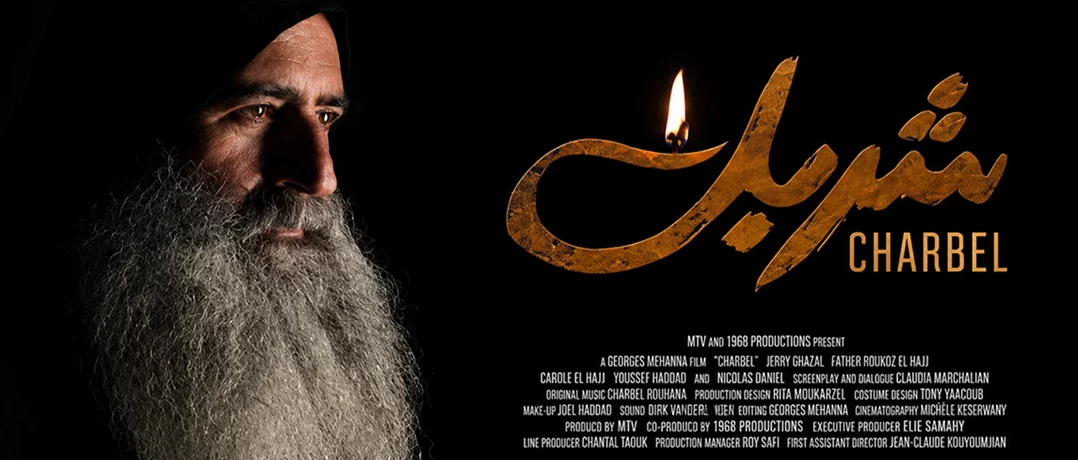
For nearly two centuries, Saint Charbel Makhlouf's story has travelled far beyond the small Lebanese village where he was born. His name has become associated with faith, healing and devotion, drawing believers from different religions and nationalities. Now, his life is being brought to the big screen in Charbel, a new Lebanese film directed by Nadim Mehanna and produced by MTV and NMPRO, scheduled to open in cinemas on October 22, 2026.
For Mehanna, the project is more than another religious biography. It is an opportunity to portray a Lebanese figure whose influence, he believes, transcends geography and religion.
"As a filmmaker, I always look for heroes. I consider Charbel Lebanon's superhero," Mehanna told The Beiruter.
The director describes Saint Charbel as the most important man Lebanon has produced throughout its history. Rather than approaching the film exclusively through a religious framework, he wanted to explore the saint as a central cinematic character, treating his life with the same dramatic attention given to heroes in other films.
"I wanted to tell his story without confining it to a specific religious context," he explained.
I approached him as a hero, as a character, just as we would approach any protagonist in a film.
Born in Bekaa Kafra in northern Lebanon in 1828, Saint Charbel went on to become one of the country's most widely venerated religious figures. His influence has crossed borders, languages and religious communities, with more than 30,000 miracles reportedly documented and attributed to his intercession, according to figures cited by the filmmakers.
"He was born in Bekaa Kafra, a small village, but he reached the entire world. He transcended religions, languages and seas," Mehanna said.
Reimagining a familiar story
Saint Charbel's life has been portrayed on screen before, but Mehanna believes each generation can reinterpret historical figures through evolving cinematic techniques and perspectives.
"The works produced at the time belonged to their era," he said, acknowledging that his own film may be viewed differently in 20 years. He points to advances in cinematography, image resolution, music, set design, locations and casting.
The film stars Jerry Ghazal, Father Roukoz El Hajj, Carole El Hajj, Youssef Haddad and Nicolas Daniel, with a screenplay and dialogue by Claudia Marchalian and an original score by Charbel Rouhana. Production involved approximately 100 actors, more than 100 crew members and over a year of preparation and filming.
Beyond technical advances, Mehanna emphasizes the film's distinct narrative approach. "Charbel is such a great figure that you cannot capture him in a single work," he said, noting that major historical figures can inspire different artistic interpretations across generations.
His version blends documented events with dramatic, emotional and spiritual storytelling. "There are historical facts that we are obliged to document and include," he explained. "But we also added dramatic, emotional and spiritual elements."
One challenge was portraying Saint Charbel's 23 years in solitude as a hermit, devoted to prayer and contemplation, with limited historical details about his daily life. "He lived in the hermitage for 23 years. Who knows what he did there?" Mehanna asked. "So we imagined what he might have done."
Balancing historical accuracy with artistic interpretation, the film seeks to reveal the man behind the saint through a contemporary cinematic perspective.
I wanted to bring him to people in a new, beautiful and artistic way, the way I see him. I hope people will be able to feel that.
A release delayed by war
Originally scheduled for March 2026, Charbel was postponed due to the outbreak of war. With conditions stabilizing, the film is now set for release on October 22, a date chosen for both symbolic and practical reasons.
For Saint Charbel's devotees, the 22nd of every month holds special significance, marking the monthly pilgrimage to his shrine in Annaya. Mehanna explained that October was selected because families and students have returned to their routines, bringing audiences back to cinemas after the summer season.
Ahead of its theatrical release, the film will have its official launch on October 9 at MTV's Black Box in Beirut Media Zone, under the patronage of President Joseph Aoun, with a live broadcast on MTV and One TV beginning at 6:45 p.m.
Expectations beyond Lebanon
Mehanna is confident about the film's reception and commercial success. "The film will surprise people, and the box office numbers will surprise you," he said.
With ambitions extending beyond religious audiences and Lebanon, Charbel aims to introduce the saint's story to international viewers while offering longtime devotees a fresh perspective. Earlier production announcements also outlined plans to dub the film into five foreign languages for international distribution.
While its box office performance remains to be seen, Mehanna's ambition is both artistic and commercial: to bring the story of a nineteenth-century Lebanese monk, whose influence has crossed borders and generations, to life through modern cinema.
For the director who calls Saint Charbel "Lebanon's superhero," the goal is not simply to recount his life, but to present his familiar story in a new, emotionally compelling way.
-
-

-
The Beiruter
-
