



Founded by four Lebanese Australians in Sydney, the Lebanese Film Festival Australia has grown into a national platform celebrating Lebanese cinema, culture and storytelling.
The Lebanese Australians who built a film festival from the ground up
The Lebanese Australians who built a film festival from the ground up
By Adella Beaini | October 17, 2026

Reading time: 6 min
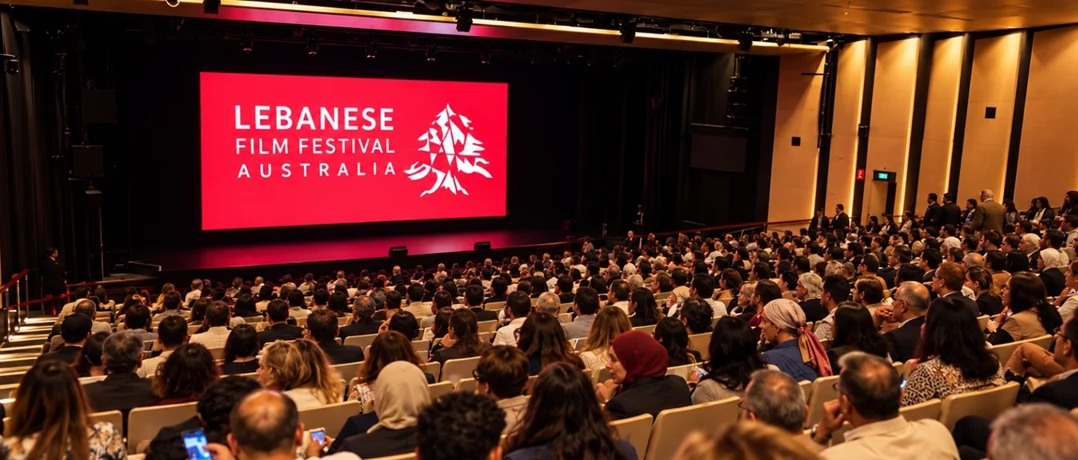
What began as an idea shared by four Lebanese Australians in Sydney has grown into a national cultural platform, with the Lebanese Film Festival Australia now having screened more than 400 films to more than 60,000 Australians.
The festival was founded in 2011 by husband-and-wife Camille and Julia Lattouf, Jessica Zeait and Priscilla Fayad before launching the following year, with the four founders still serving today.
“We weren't simply creating a film festival. We were creating a cultural platform where Lebanese stories could have a permanent place in Australia's cultural conversation,” Julia said.
“Fourteen years later, those objectives remain as relevant as ever.”
Starting with a gap in Western Sydney
The founders were residents of Canterbury-Bankstown, home to Australia’s largest concentration of Lebanese diaspora communities, when they identified a gap in the Australian cultural landscape.
At the time, there was no national platform dedicated to contemporary Lebanese cinema, and they wanted to create something that could reach both the Lebanese community and Australians who had little connection to Lebanon.
“Not only was there a gap in showcasing Lebanese cinema in Australia, but we also felt there was an opportunity to broaden understanding of Lebanese people, culture and identity beyond the limited narratives many Australians were exposed to,” Julia said.
From the beginning, the ambition stretched beyond screening films in a cinema.
“We wanted to create a premier arts and cultural event in Western Sydney that would encourage curiosity, challenge perceptions, foster understanding and celebrate the richness of Lebanese culture and storytelling,” Julia said.
“We also wanted to reconnect communities with their heritage, support accessibility and participation in the arts, and create opportunities for Lebanese creatives to have their voices heard.”
Fourteen years of building something together
The festival remains a 100 per cent volunteer-led not-for-profit organisation, meaning its founders have built the event around full-time careers, families and responsibilities outside the festival.
“We always believed in the vision, but we couldn't have predicted the scale of what it would become,” Julia said.
“What many people don't realise is that the Festival has always been a 100% volunteer-led not-for-profit organisation. Every person involved gives their time because they genuinely believe in the impact it creates.”
The festival is also deeply intertwined with the founders’ family lives, with Camille and Julia running it as husband and wife and Jessica working alongside her sister.
That has meant learning how to protect both their relationships and the shared purpose that brought them together.
“Working alongside family brings obvious challenges. The lines between professional and personal life can easily blur,” Julia said.
“At the same time, it has taught us the importance of boundaries, respect and staying focused on our shared north star, which is the impact of the Festival and the community we serve.”
From a Bankstown backyard to the Opera House
Some of the festival’s biggest milestones have reflected the journey from grassroots community project to national cultural event.
Its first launch in 2012 was held in the backyard of patron Bryan Brown, a well known Australian actor, with a live cross to ABC News and the Sydney Harbour Bridge in the background.
“Bryan, an original Bankstown boy, believed in the Festival from day one and has remained our Patron ever since,” Julia said.
The founders have since watched their original vision for Bankstown become a reality, with the festival activating multiple venues across the area while developing a national footprint.
“From the beginning, we wanted Canterbury-Bankstown to become a genuine festival destination, attracting visitors from across Australia and beyond,” she said.
“Today, the Festival activates multiple venues across Bankstown while expanding nationally.”
Another milestone came this year when Lebanese cinema was screened at the Sydney Opera House, with Cyril Aris’ A Sad and Beautiful World among the films presented at the iconic venue.
“Presenting A Sad and Beautiful World at the Sydney Opera House was undoubtedly a standout moment and an important milestone in the Festival's evolution,” Julia said.
“Bringing Lebanese cinema to one of the world's most iconic cultural venues was a proud moment for the Festival and for our community.”
An audience change
While the festival initially drew much of its audience from within the Lebanese community, its audience has increasingly expanded beyond it.
The founders say they are now seeing students, educators, film lovers and younger Australians attending, including people without any Lebanese connection.
“When we launched, much of our audience naturally came from within the Lebanese community. Today, our audience reflects modern Australia,” Julia said.
The growth of younger audiences has been particularly important to the founders, with increasing engagement from second and third-generation Lebanese Australians.
They are also seeing younger Australians without a Lebanese background actively seeking out different perspectives.
“We're seeing increasing engagement from second and third generation Lebanese Australians, as well as younger Australians who may not have a Lebanese connection at all but are actively seeking diverse stories and new perspectives,” she said.
“We're also seeing strong growth in non-Lebanese audiences, which means the Festival is increasingly attracting people well beyond the Lebanese community.”
For the founders, that growth is about more than ticket numbers.
They believe it demonstrates an appetite for stories that go beyond the way Lebanon is often portrayed in mainstream coverage.
“People want more than the mainstream media narrative of a country, people and culture,” Julia said.
“For us, youth engagement is directly linked to sustainability.”
Keeping Lebanese stories alive
The founders see cinema as a way to preserve Lebanese identity while also showing audiences a more complicated and contemporary picture of the country.
“Lebanese cinema offers complexity. It reminds audiences that Lebanon cannot be reduced to a single narrative,” Julia said.
“For diaspora communities, cinema also serves as a cultural archive.”
“It preserves language, memory and identity while helping younger generations maintain meaningful connections to their heritage, but also to the contemporary Lebanese landscape.”
That focus also extends to emerging filmmakers, with the festival dedicating a day each year to short films and documentaries, often made by emerging or student filmmakers.
“Emerging filmmakers need audiences, visibility and opportunity,” Julia said.
“We see ourselves as a bridge between Lebanon and Australia, not only culturally but creatively.”
What comes next
After 14 years, the founders say it is the impact of the festival that continues to motivate them.
They have seen filmmakers reach new audiences, communities connect and younger Lebanese Australians find new ways to engage with their heritage.
“What motivates us today is exactly what motivated us in the beginning: impact,” Julia said.
“The Festival has the power to touch people in so many ways.”
In 2027, the festival will celebrate its 15th edition – a significant milestone for an organisation that has remained volunteer-led throughout its journey.
Looking further ahead, the founders want the festival to become a lasting institution for Lebanese cinema outside Lebanon while remaining connected to the community that created it.
“Success isn't simply about growth. It's about relevance and legacy,” Julia said.
“We would love to see the Lebanese Film Festival Australia recognised as the leading platform for Lebanese cinema outside Lebanon, while remaining deeply connected to the community that built it.”
And for the next generation of Lebanese filmmakers, their message is simple.
“Be ambitious,” Julia said, “And tell the stories only you can tell. Because every generation inherits a culture, but it is through storytelling that they shape its future.”
Because after 14 years of creating a place for Lebanese stories in Australia, the founders believe the next generation will determine where those stories go next.
