



What lies behind the sacred images adorning churches and homes? Through the stories of two young Lebanese iconographers, discover an ancient art where faith meets creativity, every brushstroke tells a story, and tradition comes to life.
The sacred art of iconography in Lebanon

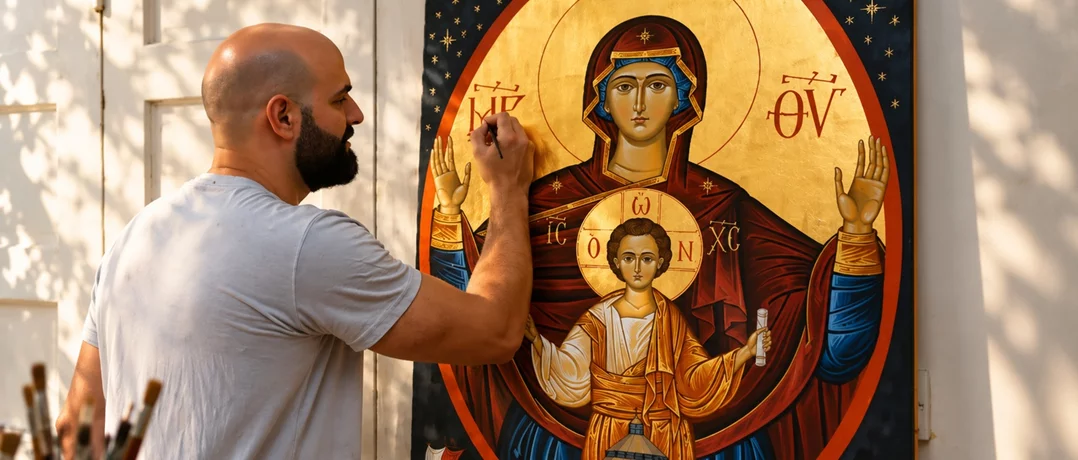
An icon is not simply an image to be admired. It is a sacred representation meant to lead the viewer towards something beyond what the eyes can see. Rooted in centuries-old religious traditions, iconography brings together artistic discipline, symbolism and spirituality, transforming the act of writing an icon into something closer to prayer.
For an iconographer, the process requires more than technical skill. It demands patience, concentration and peace of mind. Writing an icon can take weeks or even months, requiring the artist to step away from everyday distractions and enter a space of contemplation, where faith and art meet in every stroke.
The meticulous process of bringing an icon to life
According to The Museum of Russian Art (TMORA), writing an icon is a meticulous process rooted in centuries-old artistic traditions. It begins with a wooden panel covered with linen cloth and several layers of a chalk-based preparation, creating a smooth surface for the artwork. Once the surface is ready, the composition is outlined, establishing the foundation for the sacred image.
Color is then applied using traditional tempera, made by mixing mineral pigments with egg yolk and water. The iconographer builds up successive, translucent layers of colour, allowing light to reflect through the paint and giving the image a sense of inner luminosity. Gold or silver leaf may also be used for the background, adding radiance and emphasizing the sacred character of the figures represented.
The process requires precision and patience at every stage, from preparing the wooden panel to applying the finest details. A protective varnish may be added to preserve the finished work. Beyond its technical complexity, traditional icon writing brings together craftsmanship, symbolism and religious devotion, transforming the creation of an image into an artistic practice deeply rooted in spiritual tradition.
Joseph Al Masri: A journey guided by faith
In an interview with The Beiruter, Joseph Al Masri, a young iconographer, recalls how his journey began around 2007, when he was still in school. His love of drawing had already drawn his attention to the icons he encountered in church. A nun at the Our Lady of the Annunciation in Zouk, who knew of his interest in art, invited him to join her iconography workshop.
Under her guidance, what began as a hobby gradually became a lifelong pursuit. His path, however, was far from straightforward. He studied agricultural engineering before pursuing philosophy and theology, as he considered a religious vocation and spent time in seminary. Throughout these years, iconography remained close to him, even though he did not initially consider it a profession.
That changed during the COVID-19 pandemic and Lebanon's economic crisis. Facing difficulties finding work in agricultural engineering, Al Masri decided to share his icons online. His page attracted followers, commissions began arriving, and his hobby gradually became his main occupation.
.png)
For Al Masri, the rising cost of imported materials, natural pigments and real gold makes it difficult to keep his work affordable while earning a living. Lebanon's economic crisis and the war have also affected commissions. Orders from Lebanese people living abroad have helped him continue his work and maintain a connection with the country.
Today, he describes his relationship with his work in deeply personal terms. “In general, I put my whole heart into every icon I create,” he explains, comparing his creations to his children. For him, the relationship extends beyond the artist and the client. He prays for the people who commission his work, knowing that an icon may accompany a family for generations. His patron saint, Saint Joseph, holds a particularly special place in his heart: the first icon he wrote while learning was an icon of the saint himself.
Al Masri also believes that an iconographer has a responsibility to remain faithful to the Church's teachings. An icon is not simply an opportunity for artistic expression; it is a visual language through which believers can contemplate the Gospel and deepen their faith.
Jérôme Farah: Tradition with a contemporary touch
In an exclusive interview with The Beiruter, Jérôme Farah a well-known iconographer, describes his journey into iconography as a personal calling. Having studied architecture and drawn since childhood, he initially worked with landscapes and portraits. Around the age of eighteen or nineteen, however, he began directing his artistic talent towards religious subjects.
“I felt an inner calling,” he recalls, describing his decision to dedicate his talent to God and religious art.
As people began commissioning his work, he realized that his icons could help them pray and reflect in their homes. Their appreciation encouraged him to continue, eventually making iconography his priority over architecture.
Farah writes icons within the Byzantine tradition but does not want his work to feel rigid or distant. Rather than abandoning established conventions, he seeks to make them more emotionally accessible. “I've remained faithful to the symbols and traditions of iconography,” he explains, while adding a more human and artistic touch. He believes that icons can preserve their traditional symbolism while expressing greater emotion, allowing viewers to feel a closer connection with the figures before them.
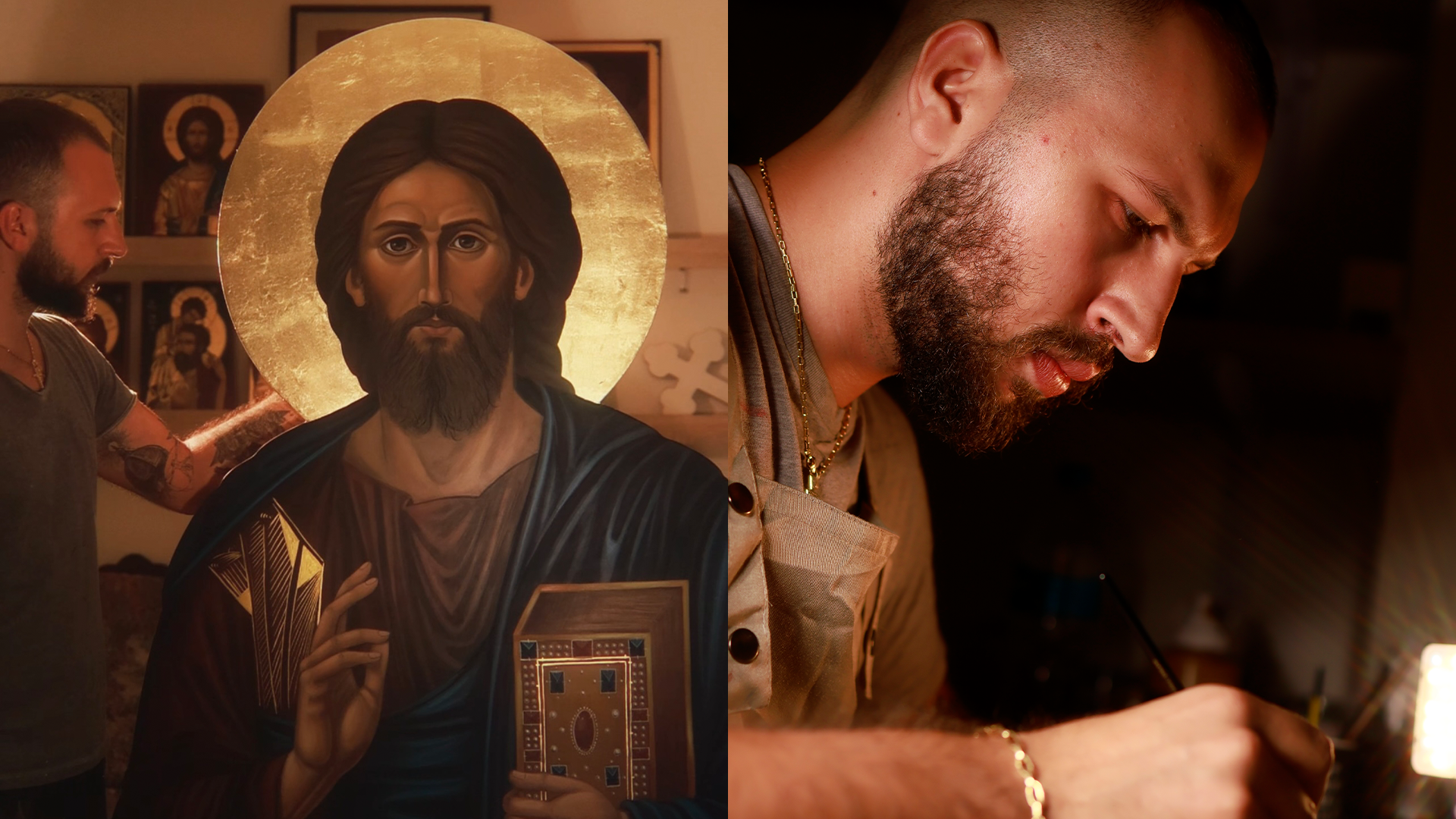
Farah, sees each icon as a new challenge, requiring him to develop his technique and approach every subject with care. His advice to aspiring iconographers is simple: love and patience matter as much as talent. He believes that people can learn the art if they are willing to dedicate themselves to it.
One of his most meaningful experiences involved writing an intricately decorated icon of the Virgin Mary. He remembers asking her to help him throughout the process, which he found particularly challenging. When he finally completed it, he felt that he had experienced something beyond his own technical abilities. His work can be found in several religious institutions in Lebanon, including the Melkite Greek Catholic Archdiocese of Beirut, Nabi Elias in Chekka, and Saydet El Saha in Jdeideh.
Farah has since realized another dream: creating works for churches. His icons can now be found in several churches in Lebanon and abroad, and he has also expanded into church murals.
A language of faith
An icon is never merely an object. It carries a tradition, tells a sacred story and invites contemplation. Through its colours, symbols and details, it preserves a visual language that has connected generations of believers for centuries. Whether displayed in a church or kept in someone's home, each icon offers a way to encounter faith beyond words.
The work begins with a brush, but its meaning reaches far beyond the wooden panel. In the hands of an iconographer, art becomes an act of devotion, one that demands not only a steady hand, but also patience, sincerity and a quietness of soul.
-
-
-
Yara SalibaJunior Writer/Translator
-
