



IKEA’s reinvention tests whether the furniture giant can adapt to changing shopping habits, economic pressures and geopolitical shifts while preserving its distinctive identity.
Navigating a changing world: Leadership insights from IKEA
Navigating a changing world: Leadership insights from IKEA
By Peter Thommen | October 21, 2026

Reading time: 6 min
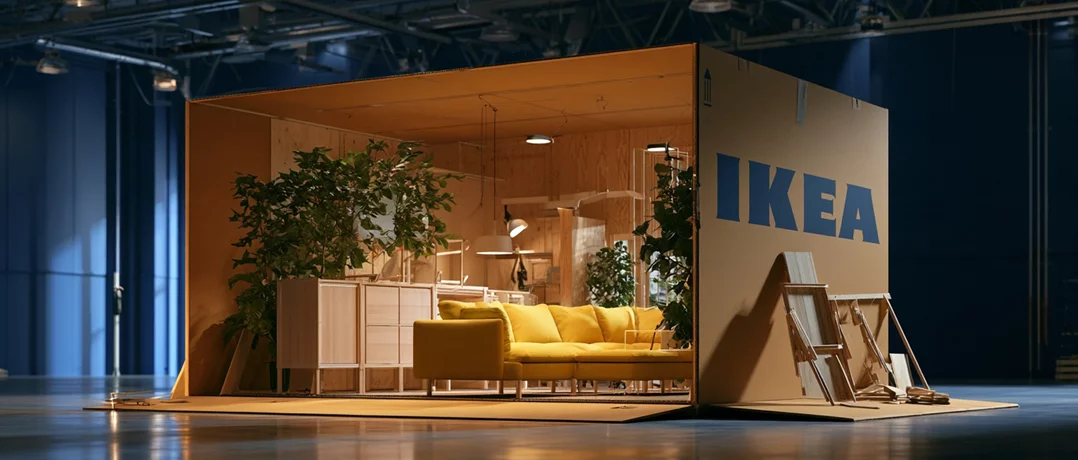
Over several decades, IKEA has established itself as arguably one of the world's most successful retailers, combining global expansion with a distinctive business model.
Sceptics ask whether this seemingly never-ending success story is approaching its end. They point to Ingka Group's revenue declining by 6.4% from its peak in 2023 to €41.5 billion in 2025, and operating margins falling from 4.7% in 2021 to 3.5% in 2025. They see the company affected by geopolitical shifts, including the closure of 17 stores in Russia in 2022. And they question its traditional business model, seeing the closure of seven stores in China as an early warning signal.
Optimists see a different picture. As a global retailer, IKEA inevitably reflects shifts in the world economy. Despite declining revenue, IKEA sold 1.6% more products in 2025, following a deliberate investment of over €2.1 billion in lowering prices in 2024. Both physical store visits and online traffic continued to grow, with the share of online sales increasing from 26% in 2023 to 30% in 2025. Operating profit recovered by 17% in 2025, while the company continued investing in smaller stores, digital capabilities and new retail formats.
In any case, IKEA is a fascinating case. That assessment comes with a possible bias: the author's 30 years at IKEA before leaving in 2020. But it also comes with an insider's understanding of what made the company successful.
The world IKEA was built for is changing
IKEA is facing three fundamental challenges:
Generational shift and omnichannel retail: The generation driving to IKEA's suburban stores and transporting furniture home is gradually giving way to a younger, urban, often car-free generation expecting IKEA to be everywhere. In city centres, online, through apps and social media, with ordering from anywhere and delivery to homes or pick-up points. IKEA must shift from customers coming to IKEA to IKEA coming to its customers.
Economic pressures: When wallets get thinner, furniture purchases are among the first to be postponed. Inflation, rising living costs, higher interest rates and weaker housing markets put pressure on consumers' purchasing power. IKEA must balance its low-price promise with rising costs and pressure on profitability. Germany, IKEA's largest market, illustrates the pressure: a stagnating economy and squeezed household budgets have contributed to declining IKEA sales since its peak in 2023.
Shifting world order: Geopolitical tensions, trade barriers, tariffs and disrupted supply chains challenge IKEA's globally integrated business model. The withdrawal from Russia illustrates how quickly established markets can disappear, while changing trade relationships require IKEA to constantly rethink sourcing, production and supply chains.
IKEA was late to adapt, but not blind to change
From the outside, it is easy to conclude that IKEA started its omnichannel transformation too late. But the explanation is more complex. IKEA had always adapted to local living situations and market conditions, while largely preserving its core offer and business model. Country by country, its success was built on being different. Consumers adapted to IKEA, even where local market experts had warned that the model would not work.
The belief that «IKEA creates its market» was deeply rooted. At global level, the supervisory board rejected an early move into e-commerce, despite the leadership team's ambitions. The same reluctance to change the established model was evident in Japan. Between 2007 and 2010, the management team, including the author, proposed changing the supply model because almost all customers ordered home delivery rather than collecting furniture themselves. The proposal was not supported.
IKEA understood that the world was changing. What took longer was accepting that its successful business model needed to change with it.
Why IKEA has the strength to adapt
Somewhat late, but then bold. Three strong foundations give IKEA the strength to adapt.
The cultural foundation: Questioning why, never accepting the status quo and constantly adapting and improving are deeply rooted in IKEA's DNA. Once this mindset was applied to the business model itself, the transformation gained momentum. The retail direction for 2018-2021 was built around «creating a new IKEA in three years», with priorities including the store of tomorrow, a new world of IKEA in city centres and a simple, unique digital customer meeting. Since then, IKEA has been undergoing a fundamental transformation.
Financial independence: Probably Ingvar Kamprad's greatest legacy. Financial independence was one of his guiding principles. Profits were retained to finance expansion and build substantial reserves for rainy days. Even investments beyond retail, from production in the 1990s to renewable energy in the 2000s and forestry in the 2010s, were closely connected to the core business. The purpose remained the same: offering well-designed home furnishings at low prices to create a better everyday life for the many people.
Sustainability: Perhaps rooted in Ingvar Kamprad's philosophy that what is good for customers is also good for IKEA. Long-term results rather than short-term profit maximisation, developing the business and people together, and responsible use of resources are part of this heritage. Environmental ambitions gained prominence in the 2000s, well ahead of most other retailers, when CEO Anders Dahlvig promoted his credo that doing good business and being a good company were not in conflict. This broader understanding of sustainability is reflected in Ingka Group's four value-creation dimensions: Better Homes, Better Lives, Better Planet and Better Company.
IKEA's culture, financial independence and long-term commitment to sustainability provide the foundations for its bold reinvention.
This is visible in smaller urban stores, new retail formats, e-commerce and fulfilment capabilities. Even traditional large stores are being rethought, as illustrated by Decathlon opening inside IKEA Croydon in April 2026, with a second partnership announced for Hamburg-Altona. It shows how IKEA is finding new uses for retail space as shopping shifts across physical and digital channels.
The global furniture retail landscape is largely divided between traditional brick-and-mortar retailers and digital platforms. Both are moving towards omnichannel retail. Building digital capabilities on an existing physical network may be easier than building a global store network from scratch. Could IKEA become the first furniture retailers to be a leader in both worlds?
Changing without becoming ordinary
«Nobody can guarantee a company or concept eternal life, but no one can accuse me for not having tried to.» These words from Ingvar Kamprad reflect his determination to build something that would last beyond his lifetime. Not only through financial independence and a unique ownership structure, but also through a culture of challenging conventions and doing things differently.
Without his personal influence, preserving that distinctiveness becomes an increasingly important leadership responsibility. External expertise and consultants can bring valuable capabilities to the transformation. But there is also a risk that established management practices gradually replace the unconventional thinking that made IKEA successful.
IKEA has the resources, people and foundations to navigate a changing world. It became one of the world's most successful retailers because it did not follow the established rules. It created its own.
Its greatest challenge may not be navigating a rapidly changing world, but finding a way to do so while remaining unique rather than becoming just another retailer.
-
-
-
Peter ThommenColumnistFinance-rooted Futures Strategist with 30 years of international leadership experience at IKEA, including 25 years in C-level and board roles across Finance, Strategy and Global Business Services.
-
