



Lebanon seeks to revive its industrial sector by attracting investment, expanding exports, and positioning manufacturers within European supply chains.
Reviving the industrial sector at the heart of Lebanon’s recovery
Reviving the industrial sector at the heart of Lebanon’s recovery
By The Beiruter | October 21, 2026

Reading time: 6 min
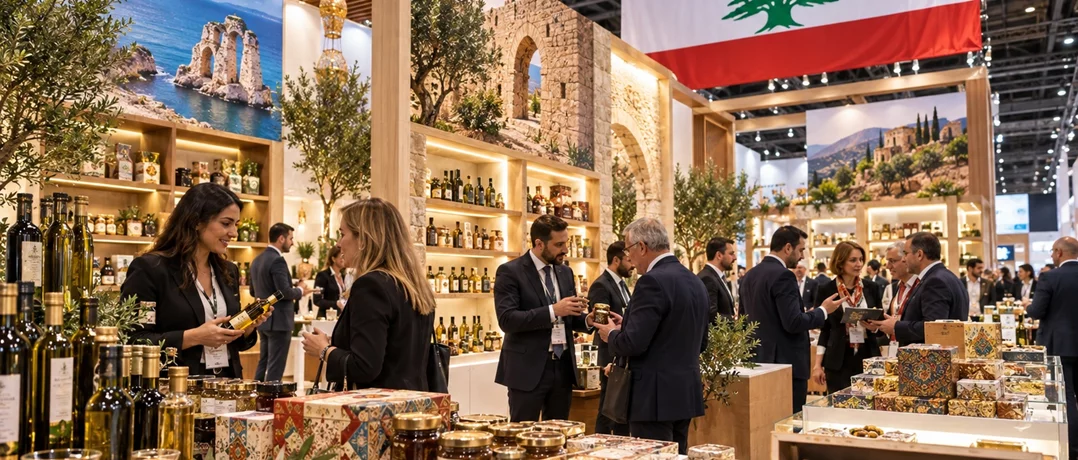
Lebanon is seeking to reposition itself as a competitive manufacturing and industrial partner for Europe, with the government intensifying efforts to attract foreign investment and integrate Lebanese manufacturers into international supply chains.
Industry representatives have welcomed the initiative, describing sustained engagement with international investors as essential if Lebanon is to expand exports, create jobs, and strengthen one of the country’s most resilient productive sectors. However, they stress that promotional efforts abroad must be accompanied by structural reforms at home.
Paris meetings and SIAL exhibition target industrial partnerships
During his visit to the French capital, Lebanese Minister of Industry Joe Issa El Khoury met Patrick Martin, President of the Mouvement des Entreprises de France (MEDEF), which represents more than 240,000 companies across various sectors. Discussions focused on attracting French investment, particularly in advanced manufacturing and technology industries, while exploring production partnerships that capitalize on Lebanon’s engineering expertise and industrial capabilities.
The talks also examined opportunities for nearshoring and offshoring models, allowing French companies to relocate part of their production closer to European markets while benefiting from Lebanon’s skilled workforce and competitive manufacturing potential. The minister argued that Lebanon possesses the human capital and industrial know-how needed to become a strategic production partner for European firms.
Issa El Khoury invited Martin to lead a delegation of French industrialists to Lebanon early next year to explore investment opportunities firsthand. Discussions also covered plans to organize a Lebanese industrial investment forum in Paris, bringing together French investors and Lebanese manufacturers to develop concrete partnerships under the supervision of a joint committee.
The minister additionally met Geoffroy Roux de Bézieux, Honorary President of MEDEF and Honorary President of the Francophone Employers’ Alliance, as part of broader efforts to strengthen Lebanon’s economic ties with France and the wider Francophone business community.
Marketing Lebanon as a manufacturing destination
Paul Abi Nasr, Board Member of the Association of Lebanese Industrialists and Head of the Industrialists’ Group in Keserwan, told The Beiruter that such international outreach should not be viewed as isolated diplomatic visits but as part of a continuous strategy to market Lebanon’s industrial capabilities.
According to Abi Nasr, regular meetings with foreign business communities, trade delegations and participation in international exhibitions are essential to placing Lebanon back on the investment map.
He argued that Lebanon cannot expect international manufacturers to discover its industrial potential independently. Instead, Lebanese institutions and businesses must actively promote their capabilities, repeatedly engaging with prospective partners in the same way companies market their own products.
We have to present what Lebanon can produce, explain our strengths, and demonstrate where cooperation is possible.
Rather than competing with major industrial powers such as China or Turkey on production volume, Abi Nasr believed Lebanon should position itself as a specialized manufacturing hub capable of producing high-value industrial goods for international companies. “Our objective is to put Lebanon back on the map as a potential production destination for European companies,” he asserted.
High-value sectors offer the greatest potential
Abi Nasr identified several industrial sectors that he believed are particularly attractive for foreign investment.
Among them is the agro-food industry, which has expanded its international presence through participation in major exhibitions such as SIAL. He also highlighted high-tech manufacturing, particularly companies producing electronic components for industrial and commercial applications rather than consumer electronics.
Other sectors with significant export potential include power generation equipment, electrical transformers, cosmetics, pharmaceuticals and industrial machinery.
According to Abi Nasr, these industries possess several competitive advantages. Lebanese manufacturers are already familiar with European technical standards and regulatory requirements, while the country's highly skilled engineers, technicians and specialized workforce enable companies to deliver sophisticated products with strong added value.
Our advantage lies in our highly qualified human capital, producing high-value industrial components and specialized products for global companies.
Several Lebanese firms have already demonstrated their ability to compete internationally within these specialized manufacturing niches.
Nearshoring presents new opportunities
Abi Nasr believed that one of Lebanon’s greatest opportunities lies in becoming part of European supply chains through nearshoring.
He noted that many European companies no longer manufacture all components in a single country. Instead, production is increasingly distributed across multiple locations, allowing businesses to reduce costs while maintaining flexibility.
Lebanon’s geographic proximity to Europe provides a significant logistical advantage compared with manufacturing hubs in East Asia. Shipping products from Asia can require between 45 and 60 days, while disruptions affecting global maritime routes have further highlighted the vulnerabilities of long-distance supply chains.
By contrast, Lebanese manufacturers can offer considerably shorter delivery times, faster product modifications and closer communication with European clients. Abi Nasr argued that cultural familiarity, multilingual capabilities, and an ability to quickly adapt products to European customer requirements further strengthen Lebanon’s competitiveness.
Domestic reforms remain essential
Despite these advantages, Abi Nasr warned that promotional campaigns alone will not transform Lebanon into a regional manufacturing hub unless long-standing structural obstacles are addressed.
Promoting Lebanon abroad is only one part of the equation. We must also solve the structural problems that prevent our manufacturers from competing.
He thus identified three principal challenges.
First, Lebanon must continue expanding international exposure through trade fairs, industrial exhibitions and reciprocal business delegations so foreign companies become aware of the country’s manufacturing capabilities.
Second, production costs remain excessively high. Electricity prices represent one of the most significant burdens on manufacturers, while transportation costs, logistics and industrial land expenses further undermine competitiveness. Abi Nasr noted that transporting goods from factories to Beirut’s airport can sometimes cost manufacturers more than international shipping itself.
Third, Lebanon’s regulatory and administrative framework continues to discourage investment. Complex customs procedures, bureaucratic delays and outdated regulations make it difficult for companies to move industrial components efficiently in and out of the country.
For manufacturers seeking to integrate into international supply chains, such uncertainty presents significant commercial risks, particularly when contractual delivery deadlines carry financial penalties.
Industry calls for greater national support
Abi Nasr argued that manufacturing should occupy a far more central place in Lebanon’s economic strategy.
He described industry as one of the country’s principal sources of foreign currency through exports while simultaneously supporting numerous related economic sectors. Internationally, he noted, highly developed economies often maintain industrial sectors accounting for approximately 20% to 22% of gross domestic product (GDP).
No country can sustain its economy without a strong industrial sector.
He also criticized what he described as the limited public resources allocated to industrial development. According to Abi Nasr, the Ministry of Industry receives only a very small share of the national budget (less than 0.05%) despite manufacturing generating around one-quarter of state revenues and representing one of Lebanon’s largest formal employers and contributors to the National Social Security Fund (NSSF).
Abi Nasr thus argued that increased investment in industrial promotion (to account around 5% to 10% of the national budget), international exhibitions, export support, and energy reforms would generate returns far exceeding their initial cost. This is essential if Lebanon is to translate international interest into long-term investment, higher exports, and durable economic growth.
-
-

-
The Beiruter
-
