



Spontaneity hasn’t disappeared, but it does require a reservation. As modern life becomes more meticulously organized, even an impromptu coffee can demand weeks of preparation.
Spontaneity is now by appointment only

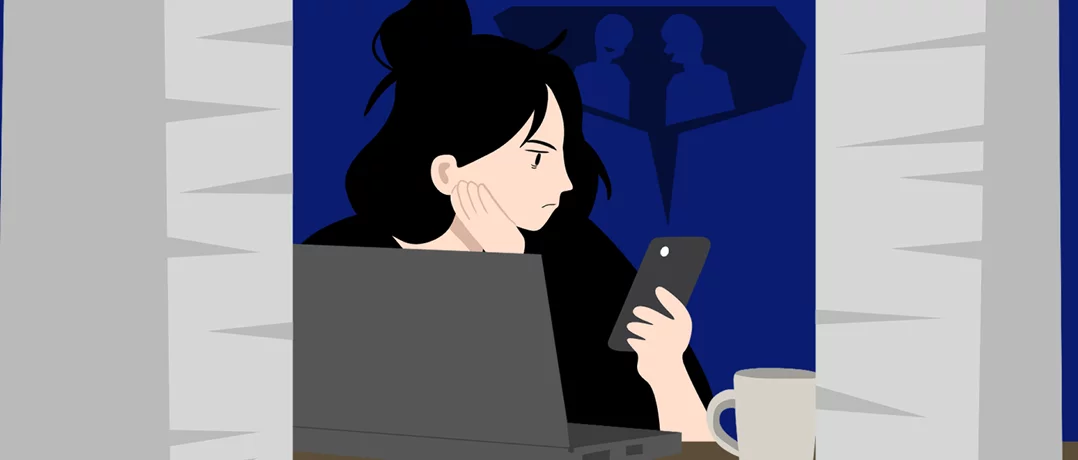
A casual coffee with a friend once required little more than a phone call and a free afternoon. Today, it can resemble a minor diplomatic negotiation, complete with competing calendars, rescheduled commitments, and the inevitable promise to “find a date soon.” By the time everyone is available, the original invitation may be several weeks old. The disappearance of such impromptu gatherings is difficult to measure directly, but evidence suggests that the social habits supporting them are weakening. According to the U.S. Bureau of Labor Statistics’ 2025 American Time Use Survey, 30% of Americans socialized or communicated with others on an average day, down from 38% in 2015. Average daily time devoted to these activities fell from 41 to 35 minutes over the same period. These figures do not distinguish planned gatherings from spontaneous encounters, but they suggest that social interaction is occupying less of everyday life. As demanding schedules, rising living costs, and digital communication change how people organize their relationships, the simple pleasure of an unplanned afternoon may be becoming harder to accommodate. Spontaneity, it seems, now requires an appointment. To the idealistic, and perhaps romantically inclined, ear, spontaneity sounds effortless (“Fancy a drink?”), but it comes with practical requirements. An unexpected dinner invitation is considerably easier to accept when transportation is affordable, work finishes at a predictable hour, and the evening does not threaten an already stretched budget. Research from the American Friendship Project, reported by the University of Kansas in July 2026, underlines just how substantial these practical barriers can be. Among respondents, 38.2% identified insufficient money as a barrier to spending time with friends, while 30.8% cited being too busy or tired and 29.7% reported insufficient time. Mental health concerns were another obstacle, cited by 31.2%. An evening out can involve transportation costs, restaurant bills and the expense of activities that make staying home considerably more attractive. Even supposedly casual gatherings can require financial calculations that leave little room for last-minute decisions. Even when money and schedules cooperate, geography may have other ideas. Education, employment and migration disperse friendship networks across neighborhoods, cities and countries, turning what might once have been a spontaneous visit into an exercise in coordinating commutes and time zones. By the time the logistics are settled, the spontaneous moment has usually passed. Modern life offers no shortage of tools for organizing a good time. Digital calendars coordinate availability, reservation platforms secure dinner tables and fitness applications ensure that even relaxation arrives at its appointed hour. Sounds relaxing, doesn’t it? The convenience is undeniable. Nobody particularly enjoys arriving at a restaurant only to discover a two-hour wait. It’s an inconvenience at best and an evening wasted at worst. Yet the proliferation of booking systems has also introduced a curious contradiction into leisure: making activities intended to provide relief from responsibilities feel like responsibilities themselves. The enthusiasm for “intentional living” adds another dimension. Carefully designed routines, productivity applications, and meticulously planned weekends promise greater control over limited free time. An empty calendar, once a welcome invitation to possibility, can instead appear as an opportunity waiting to be used more efficiently. The growing complexity of meeting friends does not necessarily mean relationships are deteriorating. Digital communication has made maintaining friendships across geographical distances easier than at almost any previous point. A January 2025 Pew Research Center report found that 74% of American adults with close friends communicated with one at least several times a week through digital channels, telephone conversations or in-person meetings. Yet only 29% saw a close friend in person that frequently, while 61% exchanged text messages at least several times weekly. Friendships can now continue through group chats, voice notes and video calls, even when participants live on different continents. The conversation rarely needs to end, although the opportunity to continue it around the same table may be considerably less frequent. An analysis published by Our World in Data in May 2025 found that Americans ages 15 to 29 spent approximately 45% more time physically alone in 2023 than in 2010, increasing from roughly four to six hours daily. The measure includes time spent communicating remotely, highlighting the distinction between staying connected and being physically together. Digital contact can preserve familiarity and emotional closeness, but it cannot fully reproduce the incidental encounters that occur when people share physical spaces without a particular agenda. There is, however, a danger in romanticizing spontaneity. For people managing careers, children and friendships scattered across different locations, recurring arrangements can provide the consistency that last-minute invitations rarely guarantee. The American Friendship Project also challenges the assumption that spending less time with friends necessarily produces greater loneliness. Its researchers found that people who prioritized both friendships and family relationships reported higher life satisfaction and lower loneliness, suggesting that meaningful connection cannot be measured by the frequency of social outings alone. In the face of modern life's competing demands, planning and spontaneity need not be opposites. Regular arrangements can create the conditions for unexpected experiences, even when finding time for them requires considerable coordination. Perhaps the answer is not to abandon the calendar altogether, but to resist filling every empty space. After all, an evening with no plans is not necessarily an evening wasted. It might be the beginning of a particularly good one.The cost of being spontaneous
The optimization of leisure
Connection without proximity
Making room for the unexpected
-
-

-
The Beiruter
-
