



Iraqi Prime Minister Ali al-Zaidi’s visit to Damascus signals efforts by Iraq and Syria to deepen economic and energy cooperation.
Iraq and Syria seek a new economic partnership
Iraq and Syria seek a new economic partnership
By The Beiruter | October 28, 2026

Reading time: 2 min
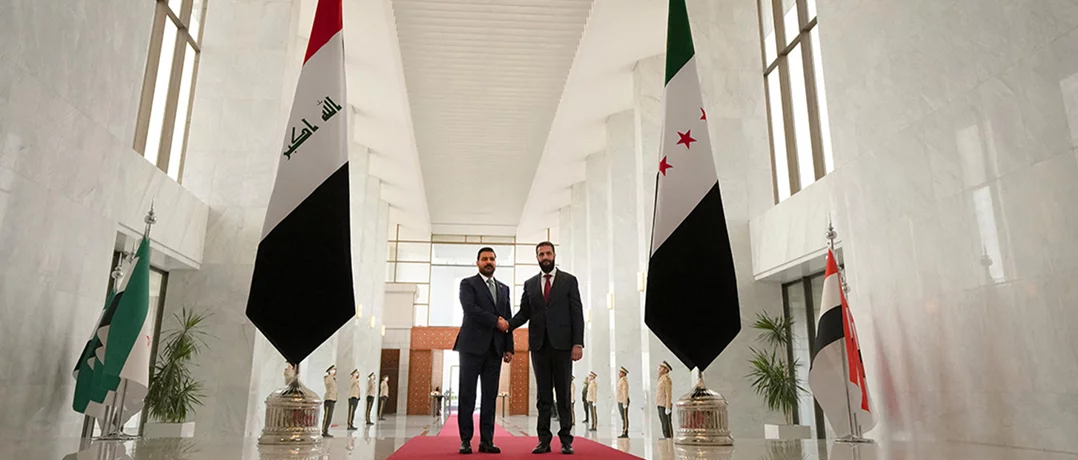
Source: AFP
Iraqi Prime Minister Ali al-Zaidi arrived in Damascus on October 28 and was met by President Ahmed al-Sharaa, Syrian state media said, as the neighbours seek to bolster economic and energy cooperation.
It is the first visit by an Iraqi prime minister since Sharaa's Islamist authorities took power after toppling longtime Syrian ruler Bashar al-Assad in December 2024 following more than 13 years of civil war.
Baghdad had initially dealt cautiously with the new Syrian authorities, though senior Iraqi political, intelligence and judicial officials have visited Damascus since Assad's ouster.
Sharaa received Zaidi and his accompanying delegation at Damascus international airport, Syrian state television reported.
Iraq is seeking to strengthen ties with a neighbour with whom it shares a 600-kilometre (370-mile) border, while Syria is working to become a transit hub for global trade, particularly as countries look for alternatives to the Strait of Hormuz.
Sharaa and Zaidi also met last month in New York on the sidelines of the United Nations General Assembly.
In an interview broadcast on Tuesday by Iraqi television channel Dijlah, Sharaa welcomed Zaidi's visit and said that "in the past year and a half, something positive has been built in Syrian-Iraqi relations, particularly in economic matters".
He said his Sunni-Muslim majority country sees ties with predominantly Shia-Muslim Iraq in terms of their "great historical and economic commonalities" rather than sectarian terms.
Iraq recently began exporting limited quantities of oil through Syria, after maritime traffic through the Strait of Hormuz was disrupted following the outbreak of the Middle East war earlier this year.
In July, Damascus and Baghdad signed a memorandum of understanding to revive a pipeline for transporting oil from Iraq to Syria's coast, linking Iraqi production to export markets in the Mediterranean and beyond.
In February, the United States transferred over 5,700 Islamic State group detainees from more than 60 countries to Iraq, after they had been held for years at prisons in north and northeast Syria administered by Kurdish forces.
In Tuesday's interview, Sharaa said some of the around 3,000 Syrian detainees transferred to Iraq had "no connection" to IS, with efforts underway to categorise them, examine Syria's responsibility and possibilities for repatriation.
Last year Sharaa, a former jihadist who was imprisoned in Iraq for years after the US-led invasion of 2003 on charges of belonging to Al-Qaeda, missed an Arab League summit hosted by Baghdad after several powerful Iraqi politicians voiced opposition to his visit.
Syrian Foreign Minister Asaad al-Shaibani attended instead.
-
-

-
The Beiruter
-
