



Deer reserves in Lebanon are attracting visitors eager to discover these gentle animals and learn more about their behavior. These initiatives highlight the importance of wildlife conservation while offering visitors a chance to experience Lebanon’s natural beauty.
Lebanon’s deer reserves: A new destination for animal lovers
Lebanon’s deer reserves: A new destination for animal lovers
By Yara Saliba | October 31, 2026

Reading time: 5 min
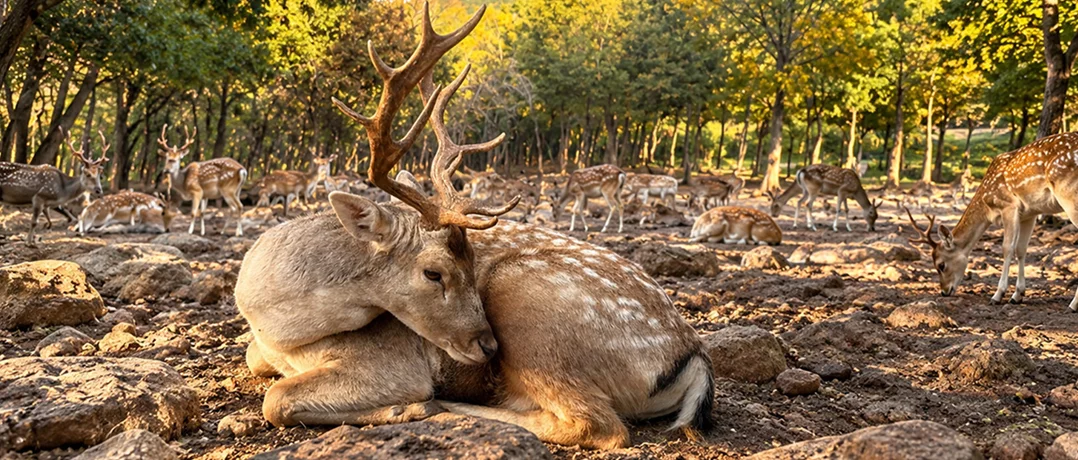
Did you know that we once had deer in Lebanon? Well, yes, we did! A century ago, deer roamed Lebanon’s deep forests, but their population unfortunately became extinct due to hunting. Today, in Tannourine and in Faqra, two newly established deer reserves are helping revive deer populations while contributing to Lebanon’s economy and tourism. In a country where deer have suffered from hunting and habitat loss, protected reserves offer an opportunity to learn more about these animals and the importance of conserving them.
There is more to deer than their graceful appearance. Here are a few facts you may not know about them:
Deer are fascinating herbivores that feed on grass, leaves, fruits and other plants, adapting their diet to the seasons. During the mating season, male deer can become much more aggressive. They compete for females through displays of strength, chasing rivals and locking their antlers in intense fights. These confrontations can be physically exhausting, as males use their antlers to push and wrestle until one retreats. Antlers themselves are remarkable structures: they grow anew every year in many deer species, eventually hardening before being shed after the mating season.
The relationship between deer mothers and their young is equally fascinating. A newborn fawn's spotted coat helps it blend into the vegetation, while its instinct to remain still and quiet can help protect it from predators. Mothers may leave their young hidden for periods while they search for food, returning to nurse them.
A new home for deer in Tannourine
In the mountains of Tannourine, a deer reserve has become an unexpected attraction for visitors exploring North Lebanon. “We had a villa in Taazaniyeh where we kept deer. Their numbers started increasing, so we didn’t want to slaughter them. We decided to move them somewhere more comfortable for them,” Bernard Gebrayel, the owner of the reserve, explained in an interview with The Beiruter.
The reserve, established three years ago, initially included around 30 deer. Their population has since grown to 54. A caretaker lives on the property and looks after their daily needs, while a veterinarian visits once a month to monitor their health and adjusts their diet if necessary. But, caring for the deer comes with challenges. Birth complications and injuries can lead to losses, with an average of seven or eight deer each year. The animals’ legs are particularly delicate, and accidents can sometimes result in serious injuries as well.
The reserve has also brought more visitors to Tannourine. People have started organizing trips from Batroun to see the deer, which created an opportunity for the area to benefit from tourism. Visitors can observe and feed the animals. “We made it free; we’re not charging people and it became a destination, and I think we reached our target,” Gebrayel said.
Gebrayel recounted a funny incident that happened when the caretaker accidentally left the reserve’s gate open, which allowed all the deer to escape. Even though many of them eventually returned on their own, around ten deer remained missing, so the team had to search for them and bring them back. Unfortunately, two deer were never found and were believed to have wandered into the nearby forests.
A quiet refuge for deer in Faqra
In the high mountains of Lebanon hides RedRock, a privately owned reserve in Faqra. This reserve was established a few years ago and the owner of the project has a strong interest in animals and continues to develop the reserve over time. According to a representative of the reserve, the deer were initially brought from abroad, possibly from Europe. “There were between 20 and 35 deer at first,” the representative explained in an interview with The Beiruter.
Since then, the deer have reproduced, and their population has grown to approximately 120. The reserve covers an area estimated at between 5,000 and 7,000 square metres. “There are employees who take care of them and feed them every day,” the representative said, explaining that the deer are looked after daily.
Their care also includes providing shelter from the weather. The reserve is enclosed, so it is protected from wild animals. It even has small wooden shelters where the deer can seek refuge during colder or harsher conditions. The representative noted that deer are able to tolerate the cold, but the shelters offer them an additional place to take cover.
Access is generally limited to people who live there and their visitors, who have the chance to encounter the deer up close. According to the representative, people may come across them while walking around the area, and some visitors are even able to feed the animals. The deer’s friendly nature makes these encounters particularly memorable, offering a rare opportunity to observe them at close range.
These reserves have attracted visitors from different regions of Lebanon recently, all excited to catch a glimpse of these gentle animals. Their growing popularity reflects people’s interest in discovering and caring for wildlife. With free entry, the reserves are not driven by profit but by a desire to share this experience with the public and offer people a chance to discover another beautiful side of Lebanon which reminds us that protecting wildlife can bring people closer to nature and help preserve the country’s natural heritage.
-
-

-
Yara SalibaJunior Writer/Translator
-
