



Why simply buy a coffee when you can buy an atmosphere? As businesses turn ordinary transactions into curated experiences, the line between consumption and social life is becoming harder to distinguish.
When did everything become an experience?

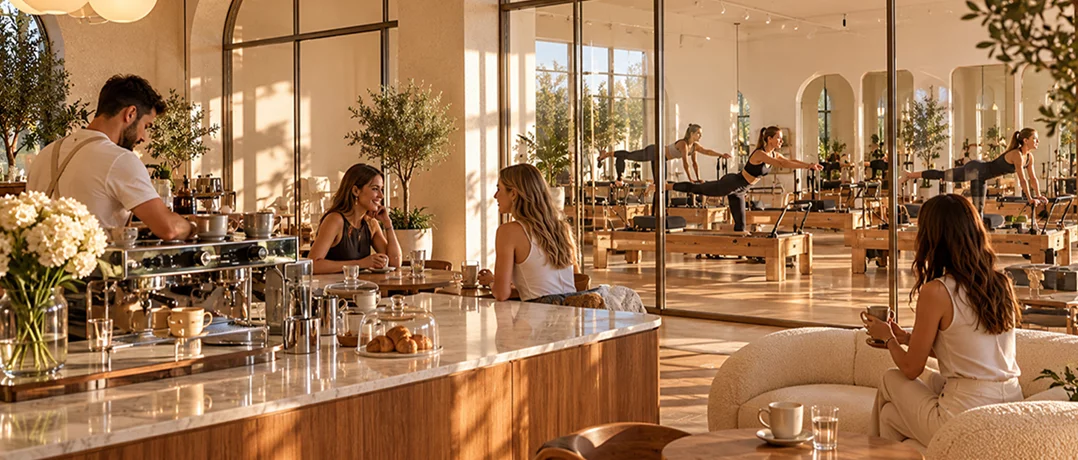
A cup of coffee now comes with a lot more than just caffeine. Gone are the days of humble corner cafés with plastic chairs and fluorescent lighting. In their considerably more photogenic, if somewhat less affordable, place stand intricately designed cafés, where the furniture (Scandinavian minimalism, naturally), music (soft Indie rock, perhaps), and clientele (digital nomads, to be sure), are as much a part of the appeal as the drink itself. What might appear to be an elaborate exercise in branding is also a response to changing consumer preferences. According to McKinsey's April 2026 report, Shopping in the Age of AI, more than 40% of American Gen Z and millennial consumers said experiential retail made them more likely to shop at a particular retailer, nearly twice the proportion of Gen X respondents and four times that of baby boomers. Amid digital convenience and seemingly limitless choice, businesses are distinguishing themselves through curated environments offering identity, connection and belonging alongside their products Why simply buy something when you can experience it? The commercialization of experience has a longer history than its contemporary manifestations suggest. In their influential 1998 Harvard Business Review essay, Welcome to the Experience Economy, B. Joseph Pine II and James H. Gilmore argued that businesses were entering a new stage of economic competition in which memorable experiences could command value independently of the goods and services accompanying them. Their argument has acquired renewed relevance as online shopping makes transactions easier without visiting stores McKinsey's April 2026 research, conducted with the International Council of Shopping Centers among 3,004 U.S. consumers, distinguishes purchases motivated by convenience from those driven by discovery. For routine purchases, customers prioritize availability, efficiency and price. For discretionary visits, when shopping is motivated by leisure or discovery rather than necessity, curated merchandise and opportunities for personal interaction can make physical stores more attractive. The distinction has important commercial implications. Businesses cannot always match online convenience, but physical environments offer something digital transactions cannot reproduce. If consumers are going to make the effort to visit a store in person (how inconvenient), the experience had better be worth the trip. The transformation is particularly visible in spaces traditionally associated with informal social interaction. Enter the coffee shop. Cafés have long functioned as gathering places, but many now deliberately cultivate particular cultural identities through interior design and social media. The product provides an entry point into an environment that customers may associate with creativity, productivity, or belonging. Research published by consumer insights company Attest in 2025, subsequently updated in June 2026, examines how younger coffee drinkers use cafés for socializing, working, and spending time. The same café might serve as an office in the morning, a meeting place in the afternoon and a social destination by evening, the research found. The cultivation of experience-driven consumption is hardly confined to coffee shops.Independent bookstores organize readings and discussion groups, while boutique fitness studios encourage members to participate in events and activities outside scheduled classes. Such relationships encourage repeat visits and distinguish otherwise interchangeable products.” For French fashion retailer Sézane, selling clothes is only part of the attraction. Its boutiques, known as appartements, resemble Parisian homes rather than conventional clothing stores. Literary gatherings, seasonal events, and curated launches encourage customers to engage with the brand as a cultural destination. The growing emphasis on experience also coincides with changing expectations about how people spend their leisure time. JLL, a global real estate services firm, found in its 2025 Global Consumer Experience Survey, which covered 12,000 respondents across 19 markets, that 72% expected businesses to contribute positively to local communities. Nearly two-thirds sought spaces offering opportunities to disconnect from digital technology. Such preferences suggest that the attraction of commercial destinations cannot be explained solely by novelty, exclusivity, or opportunities for online visibility. Consumers may also be seeking environments that facilitate ordinary social interaction at a time when many aspects of work and consumption take place through screens. For retailers, however, meeting this demand introduces a contradiction: the atmosphere of spontaneity and authenticity that customers value is often the product of deliberate commercial planning. Commercial success and genuine social connection are not necessarily incompatible, but their convergence raises questions about the growing dependence of social life on privately operated spaces. The enthusiasm surrounding experiential consumption nevertheless has limits, particularly when customers must choose between atmosphere and everyday necessities. A customer looking for toothpaste alone is unlikely to pay a premium for mood lighting and a carefully curated playlist. McKinsey's 2026 survey found that 37% of respondents ranked reliable product availability among their three most important reasons for choosing a retailer, while 33% selected convenient location, and 25% identified a wide range of price points. Experiential elements were selected by only 5%. Consumers, evidently, have not abandoned conventional measures of value. Instead, businesses appear to be developing different approaches for different kinds of transactions, emphasizing efficiency when customers know what they want and engagement when they are seeking discovery or recreation. For businesses, the challenge is to create environments that justify customers' time and money without losing sight of the products and services that originally brought them there. For consumers, the appeal may be more fundamental. In a world where almost anything can be purchased without leaving home, the opportunity to encounter other people, discover something unexpected, or simply spend time somewhere inviting has acquired its own value. Sometimes, the experience really is worth the price of admission.From products to experiences
The commercialization of community
The appeal of authenticity
When experience meets practicality
-
-

-
The Beiruter
-
