



Low-wage workers once offered developing countries a path to industrialization, but aging populations, rising labor costs and advancing automation are making it harder to compete on inexpensive labor alone.
Is the world running out of low-wage workers?
Is the world running out of low-wage workers?
By The Beiruter | November 04, 2026

Reading time: 4 min

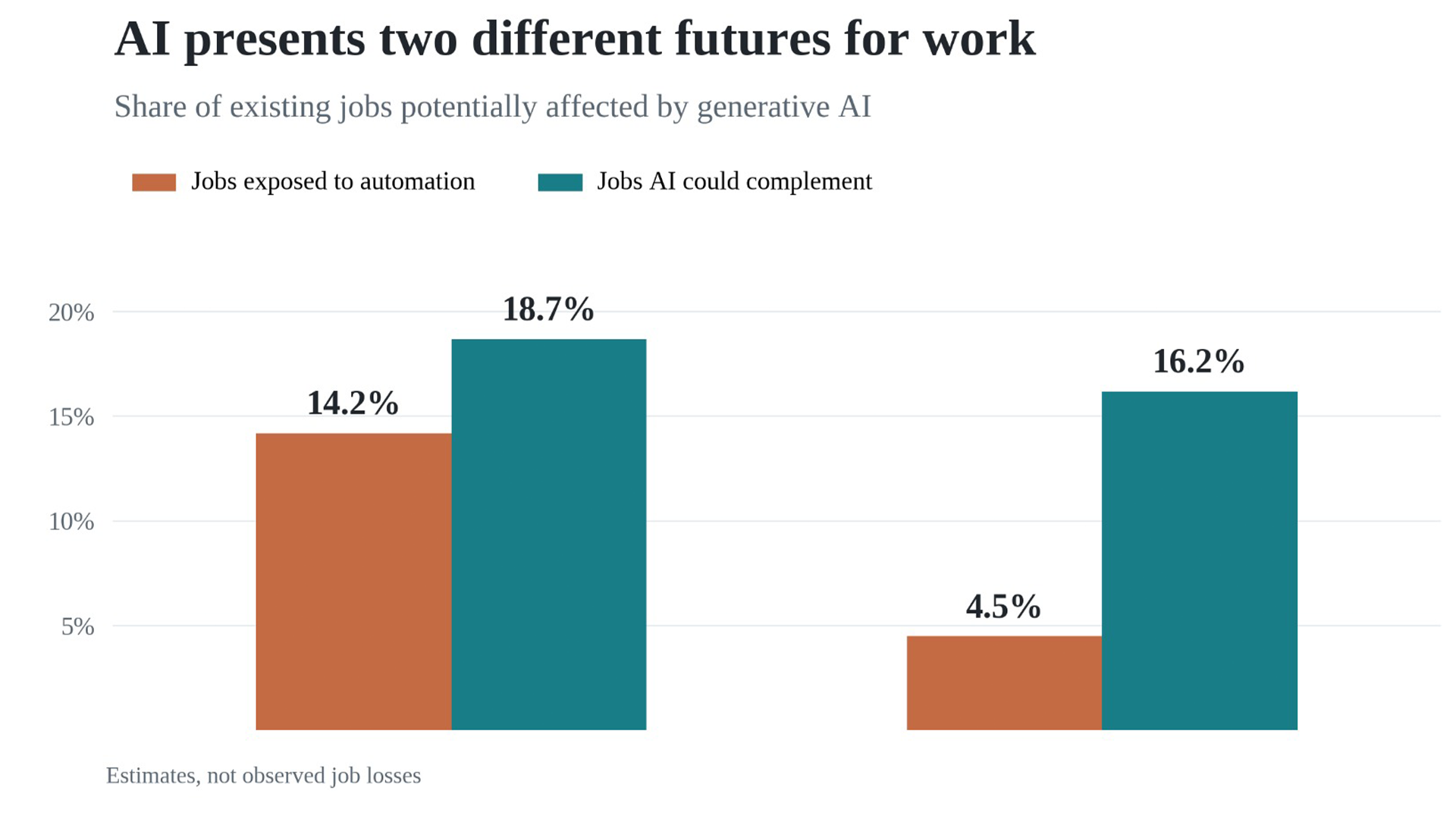
The global economy is confronting an unusual contradiction. Some of the world's largest industrial economies are running short of workers, while millions of people elsewhere are struggling to find employment. Inexpensive labor has long determined where factories were built and investment flowed. According to the Organisation for Economic Co-operation and Development (OECD) Employment Outlook 2025, the working-age population, defined as people aged 20 to 64, across member countries is projected to decline by 8% by 2060, with more than a quarter of those countries facing reductions that exceed 30%. Developing economies, meanwhile, have growing populations of young people, many of whom face limited employment opportunities. The growing capacity of machines to perform human work is complicating this economic divide. As artificial intelligence and robotics allow companies to produce more with fewer employees, access to inexpensive workers may no longer guarantee industrial competitiveness. Yet technological advances are not distributed equally, raising the possibility that wealthy economies could compensate for labor shortages while poorer countries struggle to capitalize on their demographic advantages. The world may not be running out of cheap labor, but it may be entering an era in which cheap labor, on its own, is no longer enough. Population aging is becoming an economic constraint across much of the industrialized world, particularly in Europe and East Asia, where declining fertility and longer life expectancy are reducing the share of people available to work. The OECD projects that its members' working-age population will decline by 8% by 2060, although the demographic pressure varies considerably between countries. South Korea's working-age population is projected to shrink by approximately 46%, compared with 31% in Japan, while countries such as the United States and Canada face a considerably different outlook. These demographic pressures are forcing governments and businesses to reconsider how they recruit, retain and compensate workers, particularly in industries that depend heavily on human labor. A shrinking workforce, however, does not automatically translate into higher earnings or better employment conditions. Migration restrictions, skill mismatches, and differences in bargaining power continue to influence how labor shortages affect wages. While wealthier economies confront shrinking labor forces, many developing countries face the opposite problem: Their populations remain relatively young, and the supply of workers often exceeds the number of productive jobs available. Historically, abundant labor encouraged industrialization. Competitive wages helped countries attract manufacturers, develop export industries and gradually move toward more sophisticated production. Think China in the 1980s and 1990s, or Bangladesh and Vietnam in the 2000s. But inexpensive labor alone cannot guarantee competitiveness. Infrastructure, workforce skills and access to international markets also influence investment decisions. A country offering low wages may still struggle to attract factories if unreliable transport or energy supplies raise production costs. For developing countries, the risk is that the industries which once employed millions of low-wage workers will become less dependent on human labor, leaving a growing generation of jobseekers with fewer opportunities to enter the global economy. As labor shortages intensify and wages rise, automation offers companies an alternative to an increasingly expensive workforce. Machines do not retire or depend on immigration policies, but replacing workers introduces economic problems of its own. A July 2025 World Bank assessment of technological change in East Asia and the Pacific estimated that robots displaced approximately 1.4 million low-skilled workers between 2018 and 2022, while contributing to the creation of 2 million skilled positions. For displaced manufacturing workers, new technical positions offer little reassurance without training. The benefits depend partly on education, technological capabilities, and the ability of displaced employees to move into new occupations. The spread of artificial intelligence threatens to bring similar pressures to occupations once considered relatively insulated from automation. The World Bank's World Development Report 2026, published in August, estimates that 14.2% of jobs in high-income countries are amenable to generative AI automation, compared with 4.5% in low- and middle-income economies. Wealthier economies have more workers performing tasks AI can automate, while poorer countries rely more heavily on manual occupations. Yet automation is only part of the picture. The same report estimates that generative AI could complement work in 16.2% of jobs in low- and middle-income countries, compared with 18.7% in high-income economies. Source: World Development Report 2026 (World Bank) The countries best positioned to automate are often those facing the greatest labor shortages. Wealthier economies can invest in technologies that compensate for shrinking workforces, while poorer countries may struggle to access the same productivity gains. For developing economies, the danger is that factories and service industries will need fewer workers before millions of young people have found employment. Cheap labor will remain abundant, but the opportunities to turn it into economic growth could become increasingly scarce.The demographic squeeze
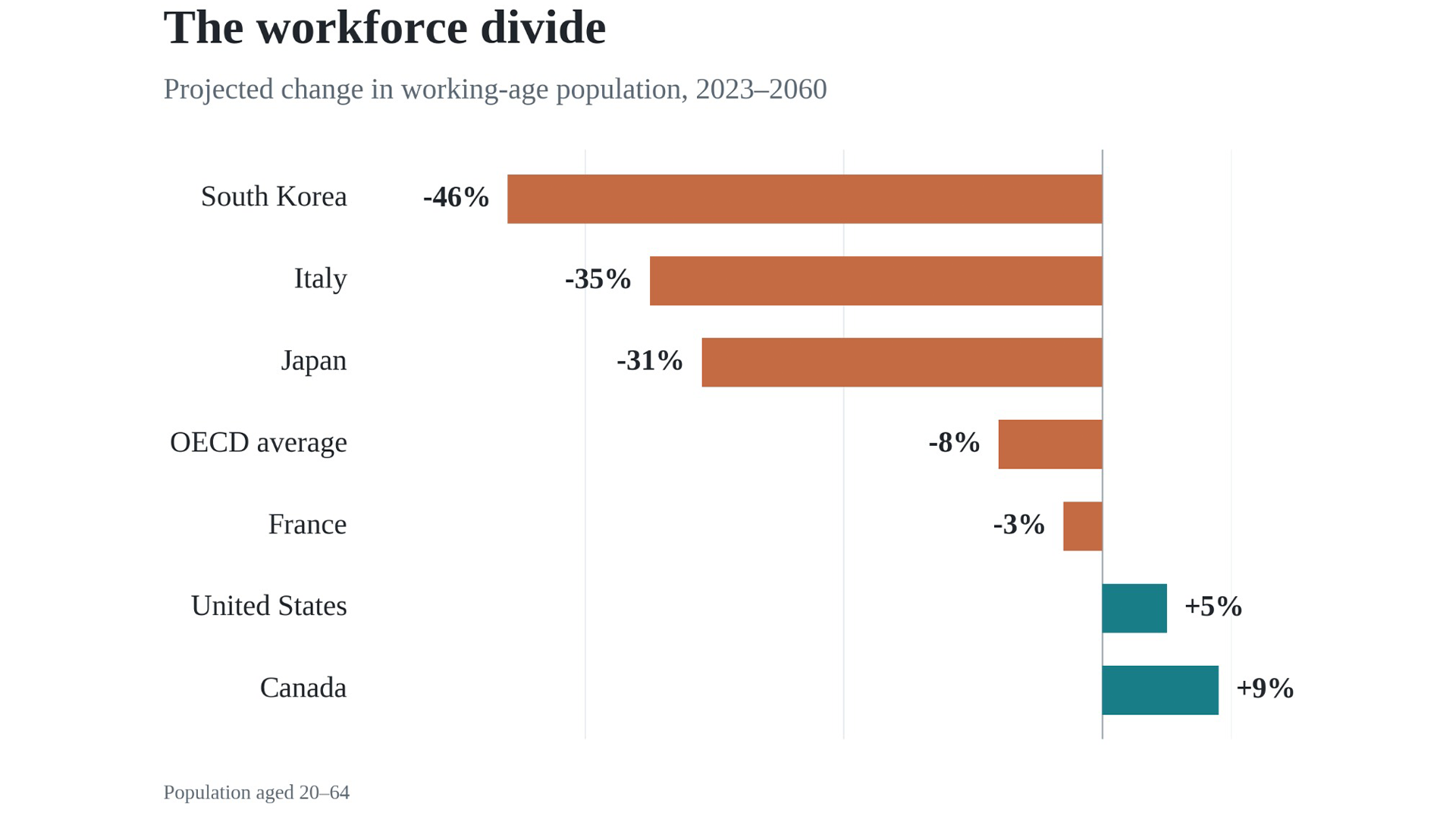 Source: Employment Outlook 2025 (OECD)
A world divided by workers
When machines become competitive
-
-

-
The Beiruter
-
