



Democrats' takeover of Congress will test the limits of presidential authority, as competing constitutional powers complicate Trump's ability to govern during his final two years.
The US mechanism of decision-making


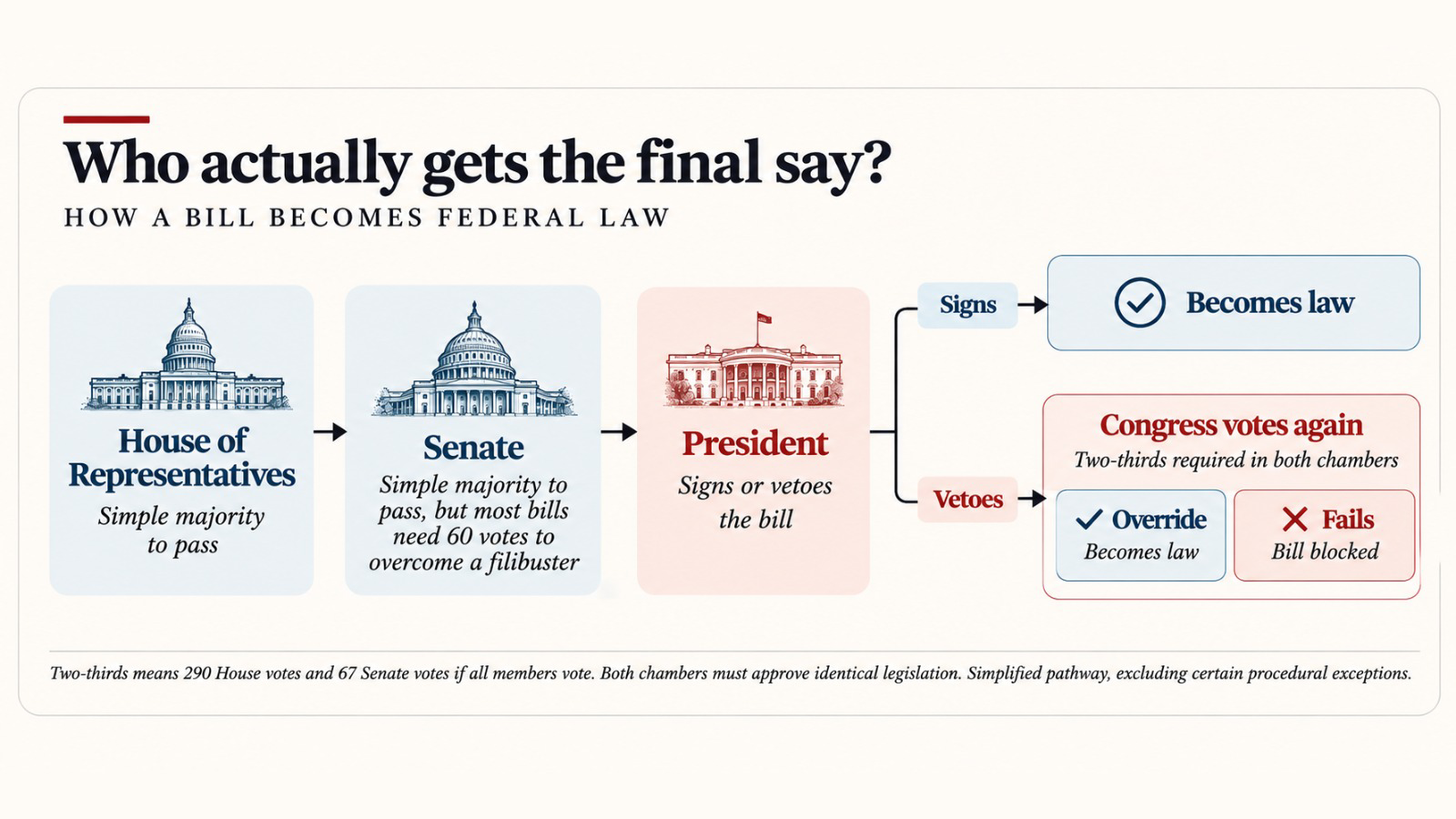
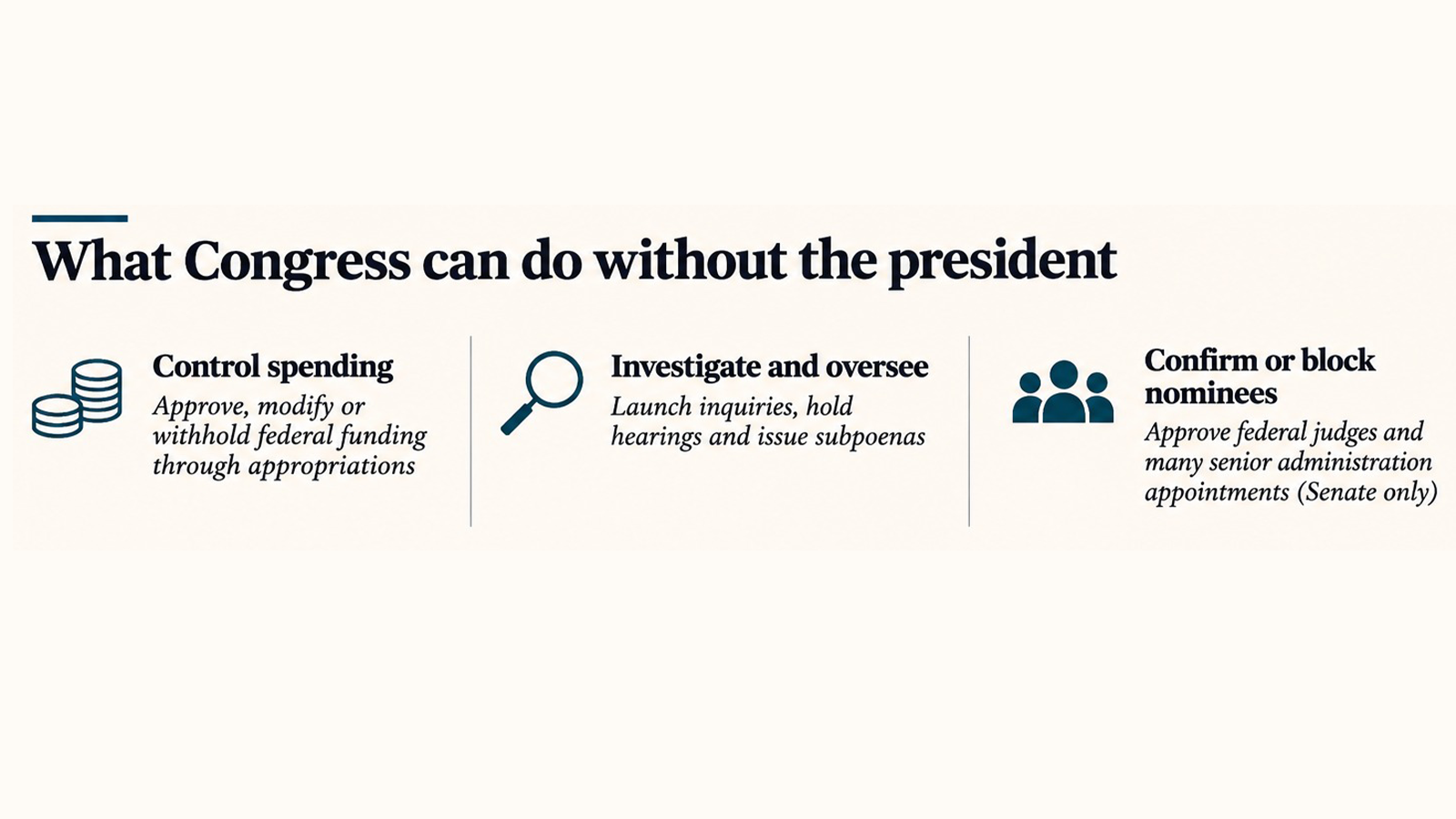
Following a sweeping Democratic victory in the November 3 midterms, President Donald Trump will spend the final two years of his presidency negotiating with a Congress controlled by his political opponents. The party and its independent allies secured 54 Senate seats and at least 240 seats in the House, according to the latest election returns, establishing Democratic majorities in both chambers without the supermajorities needed to override presidential vetoes or remove a president from office. Divided government, with opposing parties controlling the presidency and Congress, is hardly unfamiliar to American politics. Bill Clinton and George W. Bush both lost control of Congress in their second-term midterms, in 1994 and 2006 respectively. Republicans held the House for Obama's final six years, gaining the Senate in 2015, while Trump lost it House during his first presidency in 2018. The Constitution grants Congress legislative and spending authority, while the president directs the executive branch and can veto legislation. Divided government places these competing powers in direct confrontation. The Democrats have won control of Congress. For the next two years, translating that victory into political influence will be a considerably more complicated undertaking. Winning control of Congress gives a political party considerable power, but passing legislation still requires navigating rules that can frustrate even a congressional majority. The Constitution distributes federal authority across three branches, assigning legislative powers to Congress under Article I and executive power to the president under Article II. Passing legislation requires approval from both the House and Senate before reaching the president, who can sign or veto it. A presidential veto, however, is not necessarily final. Congress can override a veto with a two-thirds majority in each chamber, requiring 290 votes in a full 435-member House and 67 in the Senate if all members vote. How legislation moves through Congress, and the powers available to the president to approve or reject it. Such overrides are uncommon. According to the US Senate's historical records, Congress has overridden just 112 of 2,599 presidential vetoes since 1789, or approximately 4.3%. Only one of Trump's 10 first-term vetoes was overridden, involving a defense authorization bill in January 2021. Legislation can also encounter resistance before reaching the president. In the Senate, the “filibuster” allows lawmakers to delay or block legislation. Overcoming a filibuster generally requires 60 senators to agree to hold a final vote, although passage itself requires only a simple majority. In 1964, Southern senators used the filibuster to obstruct the Civil Rights Act for 60 working days before a bipartisan majority finally ended debate. In September 2025, Democrats blocked a Republican funding bill despite its 55–45 majority, contributing to a 43-day government shutdown, the longest in American history. For Democrats, controlling Congress offers an opportunity to challenge Trump's policies without passing new legislation, particularly through their control over federal spending. Under Article I, Section 9 of the Constitution, federal funds cannot be withdrawn from the Treasury without congressional appropriations. Beginning in January, Democrats can use funding negotiations to seek concessions on immigration enforcement and other administration priorities. After Republicans captured the House in 2010, debt-ceiling negotiations with Obama produced the 2011 Budget Control Act's spending caps and contributed to America's first sovereign credit downgrade. Yet control over future budgets does not cancel previously approved funding, and prolonged negotiations risk government shutdowns. Annual appropriations remain necessary for many federal activities, including defense. Democratic committee chairs can also investigate government contracts, military operations and federal spending, summon administration officials and issue subpoenas. Their Senate majority can similarly reject judicial nominees, Cabinet secretaries and senior military appointments requiring confirmation. Beyond legislation, Congress can influence federal spending, investigate the executive branch and approve or reject presidential appointments. Their influence over the judiciary, however, has its limits. Democrats can also block future Supreme Court nominees, although its existing 6–3 conservative majority remains intact unless a vacancy arises. Congressional investigations could also lead to impeachment proceedings, which Democrats can initiate with a simple House majority, as occurred twice during Trump's first presidency. Conviction and removal, however, require a two-thirds Senate majority, making substantial Republican support indispensable. Congressional opposition will complicate Trump's legislative ambitions, but it will not prevent him from pursuing much of his existing agenda. The presidency retains considerable authority over federal agencies, foreign policy and the implementation of laws already enacted. Trump can advance domestic priorities through executive orders without new legislation, provided they remain within existing legal authority and withstand judicial scrutiny. His trade agenda illustrates the limits of that discretion. In February 2026, the Supreme Court ruled that an emergency-powers statute did not authorize certain Trump tariffs. The decision restricted one avenue for imposing tariffs without eliminating other presidential trade powers established by Congress. Congressional opposition may also have limited immediate effect on policies already financed through earlier legislation. According to the Congressional Research Service, laws enacted in 2025 and June 2026 allocated substantial multiyear funding for immigration enforcement, including ICE, with some appropriations available through 2029. Trump could therefore continue deportation and detention operations despite Democratic opposition, although their implementation remains subject to legal restrictions. The division of authority also complicates Washington's international commitments. Trump's defense cooperation arrangements with Saudi Arabia do not constitute a mutual-defense treaty, while the administration's civilian nuclear agreement with Riyadh is subject to congressional review. In October, Senators Jeff Merkley and Ed Markey introduced a resolution opposing the nuclear agreement, but blocking it through legislation could require overcoming a presidential veto. Democratic control of Congress will therefore constrain Trump's ability to secure new legislation and funding without necessarily disrupting policies already authorized. Much of his remaining presidency may depend on how far existing executive authority and previously approved resources can carry his agenda. Political crises have repeatedly tested the boundaries of congressional and presidential authority. After Vietnam and Watergate, Congress sought to strengthen its oversight of the presidency. In 1973, Congress enacted the War Powers Resolution over President Richard Nixon's veto, attempting to limit unilateral military intervention. Amid the war with Iran, the distinction between military action authorized by Congress and operations undertaken through presidential authority remains especially consequential. Congress can likewise restrict new military assistance to Israel or Ukraine, although existing appropriations and commitments remain in place. Any attempt to reduce future assistance would encounter disagreements within both parties, alongside the possibility of a presidential veto. The incoming Congress therefore inherits considerable constitutional powers alongside practical limitations on their exercise. For Washington's international partners, divided government will complicate trade negotiations, foreign assistance and diplomatic commitments, where presidential discretion coexists with congressional control over funding. The midterms have changed who controls Congress, that much is clear. The resulting confrontation could force Washington toward political compromise or deepen its legislative paralysis.The arithmetic of divided government
The power to block and investigate
Governing without Congress
When constitutional powers meet political realities
-
-

-
The Beiruter
-
