



Rising transportation costs and inadequate road safety measures are exposing Lebanese students to growing risks on their daily journeys to and from school, highlighting the need for stronger enforcement, safer infrastructure and greater awareness.
When getting to class becomes a safety risk

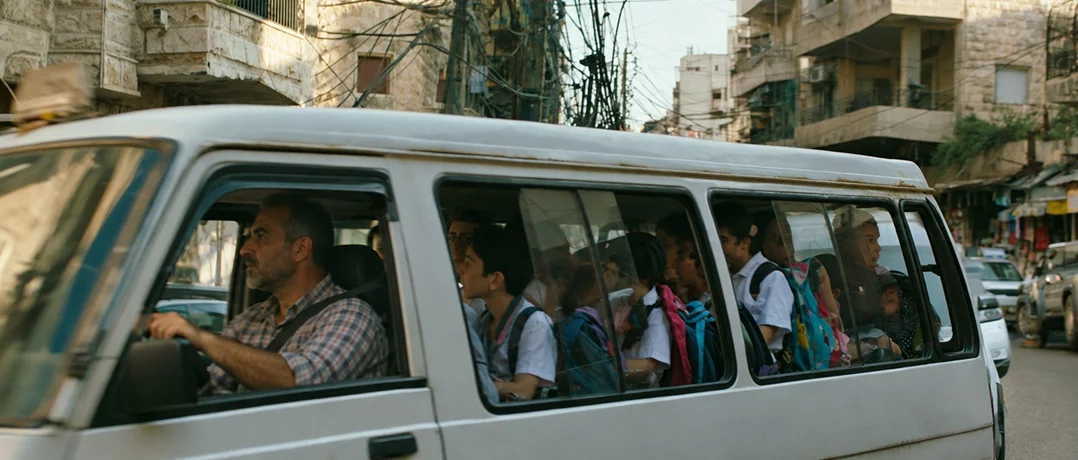
Rising fuel prices, particularly gasoline, are no longer simply driving up the cost of living. They are also having a direct impact on road safety, especially for students. Parents are increasingly searching for the cheapest ways to get their children to school or university. Minivans, motorcycles, private cars and, in some cases, walking have become common alternatives. In neighbourhoods and streets plagued by traffic chaos, with traffic signs almost entirely absent and pavements occupied by parked cars and other obstacles, getting to school safely has become an essential skill that students must learn from an early age. Traffic safety experts are proposing solutions and launching initiatives, but are these efforts enough to ensure students' safety during their daily journeys to and from school?
In a country where traffic chaos overlaps with inadequate road safety measures and weak enforcement of traffic laws, getting children to school safely has become a constant source of concern for parents. School buses, which are generally monitored by school administrations, operate under school transportation regulations and offer a reasonable level of safety. However, their costs have become unaffordable for many families, pushing parents to seek cheaper alternatives, sometimes at the expense of their children's safety. As a result, the daily journey to and from school has become fraught with risks and a source of anxiety, raising serious questions about who is responsible for providing safer roads for students and ensuring that school surroundings protect them.
“We are all responsible for road safety,” Brigadier General Joseph Muslim, Head of the Public Relations Division at the Internal Security Forces (ISF), told Nidaa Al Watan. “Even if the security forces fall short in certain areas or are unable to maintain a presence on the ground because of the circumstances the country is going through, every individual's life is at stake, whether they are drivers, passengers or pedestrians. Everyone must therefore be aware and act responsibly to protect themselves and others.
Citizens demand that the state take the initiative to repair and maintain roads, provide street lighting and address other infrastructure needs before asking them to comply with the law. This is a completely legitimate demand. But if these services are absent for reasons we all know, does that give us the right to drive recklessly, speed, drive under the influence of alcohol or use our phones while driving and lose concentration? Of course not. This is everyone's responsibility.
“As citizens, we need greater awareness and a stronger road safety culture, beginning with students. This is why initiatives launched by the security forces in cooperation with road safety experts and companies committed to social responsibility are so important. One example is the VIA initiative launched by TotalEnergies to educate students and build a generation that believes in road safety principles, understands their importance and recognizes the risks, while also seeking to improve road safety around their schools. Our shared goal should be to build a generation of drivers who know how to protect themselves and others from danger.”
The journey to and from school
According to ISF sources, pedestrians account for approximately 40% of road accident fatalities, while around 38% of deaths and 45% of injuries involve people under the age of 30. According to the World Health Organization (WHO), road traffic accidents are the leading cause of death among children and young people aged 5 to 29. More than half of all road traffic fatalities involve the most vulnerable road users: pedestrians, motorcyclists and cyclists.
These figures raise an urgent question: are the children, teenagers and young adults who travel to their schools and universities every day protected from these accidents, or are they among those most exposed to them?
Kamel Ibrahim, President of the Lebanese International Road Safety Academy (LIRSA), explains the road safety challenges and risks facing students. He identifies two main areas of concern: the dangers associated with travelling between home and school, and the risks surrounding school premises themselves.
On the roads, the causes of danger are numerous, ranging from poor road conditions and traffic chaos to disregard for traffic laws, speeding and driver distractions. The risks associated with low-cost transportation have now added another dimension to the problem.
Minivans, for example, pose greater risks than school buses because they are not subject to strict supervision. With mechanical inspections often lacking and maintenance costs rising, operators may neglect to replace tyres or maintain brakes. They may also increase the number of students they carry to generate additional income and offset higher gasoline costs. The risks are naturally multiplied when students travel on motorcycles, which may carry more than one child with virtually no protective measures.
Around schools in urban areas, particularly in poorer neighbourhoods where students often walk or are dropped off by cars and buses nearby, the dangers stem from the almost complete absence of basic road safety infrastructure and a lack of awareness among car, bus and motorcycle drivers, as well as students themselves.
Pedestrian crossings connecting pavements and providing students with safe crossing routes are missing. Pavements are occupied by obstacles, forcing children to walk alongside traffic and weave between cars. Roads leading to schools often lack speed bumps to force drivers to slow down, speed limits, traffic lights and clear signs to regulate movement and protect both students and motorists.
In some areas, municipal police officers are also absent from intersections, leaving traffic unmanaged. The situation is further complicated by motorcycles that sometimes travel against traffic and weave between cars or onto pavements, creating considerable confusion and danger for pedestrians and drivers.
The risks become even greater when a school or university is located beside a highway, where crossing from one side to the other can be extremely dangerous. Over the years, fatal accidents have occurred repeatedly on several highways near schools and universities. Examples include the Tahwita highway near the Faculty of Education, the Hamat highway near the University of Balamand, and the Zahle highway near the Lebanese University.
The dangers surrounding schools are therefore numerous, and responsibility for addressing most of them falls primarily on municipalities and, secondly, on school administrations.
Municipalities are responsible for providing pavements and pedestrian crossings, installing traffic signs around schools and connecting school premises to surrounding pavements and neighbourhoods to establish clear, safe routes free of obstacles for students.
Experience has shown that when pavements are clearly defined, properly maintained and free of obstructions, and pedestrian crossings are wide and safe, students can be encouraged to walk to school, particularly as transportation costs continue to rise.
Schools, for their part, are required to implement the School Transportation Law, Law No. 551, issued in 1996, and its implementing Decree No. 4018 of 2010. They must also put pressure on municipalities to ensure smooth and safe traffic around their premises, while fulfilling their own responsibilities by organizing the entry and exit of cars and buses and ensuring students can move safely when arriving at and leaving school.
Raising students' awareness
Most importantly, students must be educated about the importance of road safety so they can identify sources of danger, assess risks on the roads, pinpoint hazardous areas and urge the relevant authorities to address them.
They must also be encouraged to adopt safe behaviour that protects them from danger, such as avoiding crossing roads carelessly, wearing seat belts, keeping their heads inside vehicle windows and refraining from weaving between cars, among other practices that are commonly witnessed on Lebanese roads.
This is where awareness initiatives become essential.
In Lebanon, the initiative was launched in 2022 and has reached 36,200 students to date. Its objective is to encourage and train young people to become ambassadors for safe mobility, helping improve the safety of their daily journeys to and from school alongside their peers. So far, the initiative has contributed to establishing safer transportation habits among students across different parts of Lebanon.
What makes this awareness programme particularly relevant and effective for students is that they know their voices are heard, their recommendations are taken into consideration and they have the opportunity to compete locally and internationally to achieve the best results in road safety.
The educational journey for students at participating schools follows three stages, offering a model that other awareness initiatives could follow.
The first is the observation stage, during which students identify and document the actual risks they encounter around their schools.
The second is the recommendations stage, in which participating students develop practical solutions to improve the safety of their daily journeys to and from school.
Finally, students move on to implementing awareness campaigns to raise road safety awareness both within their schools and in their local communities.
