



Libya’s eastern parliament approves the 2019 Turkey deal, reigniting the Eastern Mediterranean’s maritime rivalry.
Turkey–Libya maritime agreement redraws the Eastern Mediterranean
Turkey–Libya maritime agreement redraws the Eastern Mediterranean
By Peter Chouayfati | November 06, 2026

Reading time: 5 min
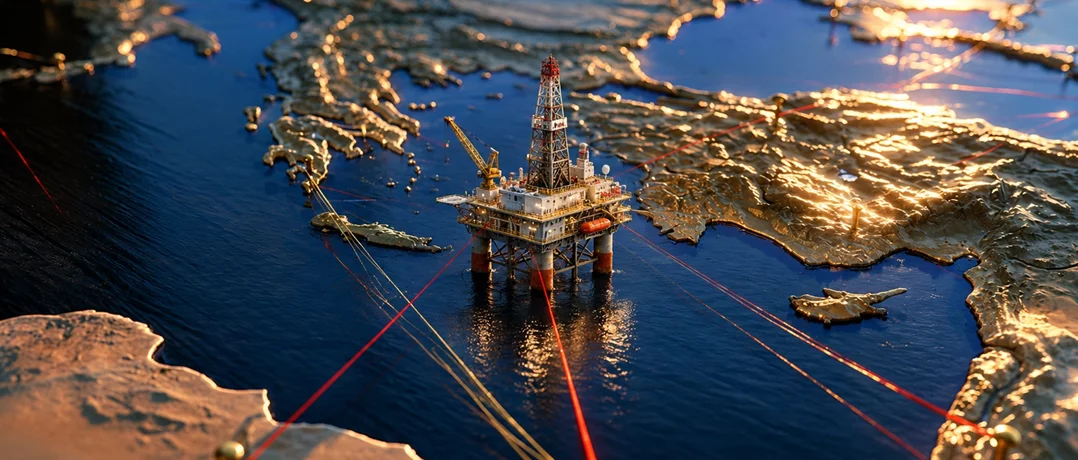
Last Thursday, Greek Prime Minister Kyriakos Mitsotakis condemned the maritime agreement recently signed between Turkey and Libya’s eastern parliament as “blatantly illegal, null and void,” saying it “completely disregards the geography.”
In an interview with Reuters, Mitsotakis also urged an immediate “international truce” to safeguard shipping in the Black Sea, following the sinking of a Greek-owned container ship on Wednesday.
Turkish President Tayyip Erdogan defended Ankara’s eastern Mediterranean policy, saying the EU and others had no legitimate grounds to object to the approval of the agreement, which was first reached in 2019.
The Greek response came as Libya's eastern parliament in Benghazi approved the 2019 maritime agreement with Turkey, reversing years of opposition reopening one of the Eastern Mediterranean's most contentious disputes. Greece, Egypt and Cyprus have protested, and Ankara has shown no sign of backing down.
Turkish President Erdoğan said opposition to the Libya memorandum, particularly from the European Union, had no legitimate basis. "Even if it means paying a price, we never hesitate in doing the right thing for Türkiye, for the Turkish nation. I remind those trying to exclude Türkiye from the Eastern Mediterranean to respect the joint will of Türkiye and Libya."
Turkey's isolation from the Eastern Mediterranean gas forum
The agreement had been awaiting approval since 2019. For Ankara, bilateral deals like this one are the main way it exerts influence in a region where it has been shut out of the main multilateral forums. The clearest example is the East Mediterranean Gas Forum (EMGF). Egypt, Israel, Cyprus, Greece, Italy, Jordan and the Palestinian Authority set up the forum to coordinate energy policies and build a regional gas market. Turkey was left out because of its ongoing maritime boundary disputes with Greece and the Republic of Cyprus over energy exploration and exclusive economic zones.
Continental vs. island approach
Greece outright rejected the deal as it sees growing Turkish influence in the region and in the Aegean Sea as a direct threat to its interests.
The dispute is not new. he Turkish-Greek rivalry has been a constant throughout history, rooted in both historical grievances and ideology. Today, that rivalry has translated into opposing approaches to maritime demarcation.
Turkey argues that its long Mediterranean coastline entitles it to maritime jurisdiction areas. In its view, Greek islands close to the Turkish mainland should not disproportionately restrict those areas. Greece counters that its islands, especially Crete and Rhodes, generate maritime entitlements of their own. Athens says the Turkish-Libyan agreement disregards the entitlements of Crete and the other Greek islands between the Turkish and Libyan coastlines.
Under Article 121 of UN Convention on the Law of the Sea (UNCLOS), islands generate a territorial sea, continental shelf and exclusive economic zone (EEZ) just as mainland territory does. Rocks that cannot support human habitation or economic life of their own get no EEZ or continental shelf. Both countries currently claim 6 nautical miles (nmi) of territorial waters in the Aegean, although UNCLOS allows coastal states up to 12. Greece wants to extend its waters to the full 12 nmi, which would increase its share of the Aegean from about 43.5% to more than 70%. Turkey has not signed UNCLOS and has declared that any Greek expansion beyond 6 nmi would be a casus belli, or cause for war. It argues that such a move would cut off its access to international waters.
Athens relies on the convention to claim full maritime rights for all its islands, from Crete and Rhodes to small islets, and favors boundaries drawn along median lines between coasts. Ankara argues that Greek islands lying close to its shores unfairly block its maritime claims. It wants boundaries based on equity that give priority to mainland coastlines.
This dispute explains why the Turkey–Libya agreement has caused such alarm in Athens. The deal draws a maritime boundary that ignores the effect of Greek islands.
Libyan deadlock resolved
Libya's UN-recognized government accepted the agreement in 2019, but the eastern parliament rejected it at the time. Its approval now is a significant breakthrough and rare common ground between Libya's divided factions.
That unity also serves Turkey because internal instability in Libya can stall the implementation of agreements and raise costs. It also opens the door to further geopolitical competition from opposing parties.
The eastern parliament has long been largely under the control of General Khalifa Haftar, commander of the Libyan Arab Armed Forces (LAAF). In 2019, Turkey opposed Haftar and backed the UN-recognized government.
The shift came on October 6, when the eastern parliament voted to oust Aguila Saleh who had been speaker for 12 years and opposed the maritime agreement with Turkey. His replacement, Al-Salhan al-Obeidi, formerly chaired the parliament's Libyan-Turkish friendship committee. Alongside approving the agreement, the parliament also revoked Law No. 6/2020, which had severed ties with Turkey.
Egypt and Cyprus
Greece, Egypt and Cyprus, backed by the EU and Israel, say the agreement is illegal under international law, while Turkey's foreign minister maintains that it falls within international maritime laws.
According to Greece's foreign minister, Greece and Egypt are discussing extending their Exclusive Economic Zone eastward toward Cyprus. The talks follow the eastern Libyan parliament's ratification of the disputed agreement. The two countries signed an agreement in 2020 delimiting an Exclusive Economic Zone in the Eastern Mediterranean.
At the same time, Turkey has renewed its offer to negotiate a maritime boundary agreement with Egypt. Ankara says Cairo could gain jurisdiction over more than 15,000 additional square kilometres (5,792 square miles) compared with a potential agreement with Greece. The offer stands despite Egypt's continued opposition to the Turkey-Libya pact.
On October 28, Turkey’s Defense Ministry repeated its proposal at its weekly press briefing, led by spokesman Rear Adm. Zeki Aktürk. The statement came eight days after Libya’s eastern-based parliament ratified the 2019 agreement, a deal that had drawn diplomatic objections from Egypt, Greece and Cyprus.
The dispute is also testing Ankara's reconciliation with Cairo. Turkey has repaired relations with Egypt in recent years after a period of hostility. On August 7, 2026, Saudi Arabia, Turkey and Pakistan signed the Mecca Pact, a collective defense framework modeled on NATO's Article 5. Egypt has not joined, but says membership is under active consideration rather than rejected outright. How far that rapprochement can go may now depend on the maritime question.
-
-

-
Peter ChouayfatiPolitical Analyst and Researcher
-
