



How Iran built an armed proxy in Lebanon, from Baalbek 1982 to the war for Tehran in 2026.
The making of a proxy.. 44 years that changed Lebanon
The making of a proxy.. 44 years that changed Lebanon
By Dr. Elie Elias | November 08, 2026

Reading time: 6 min
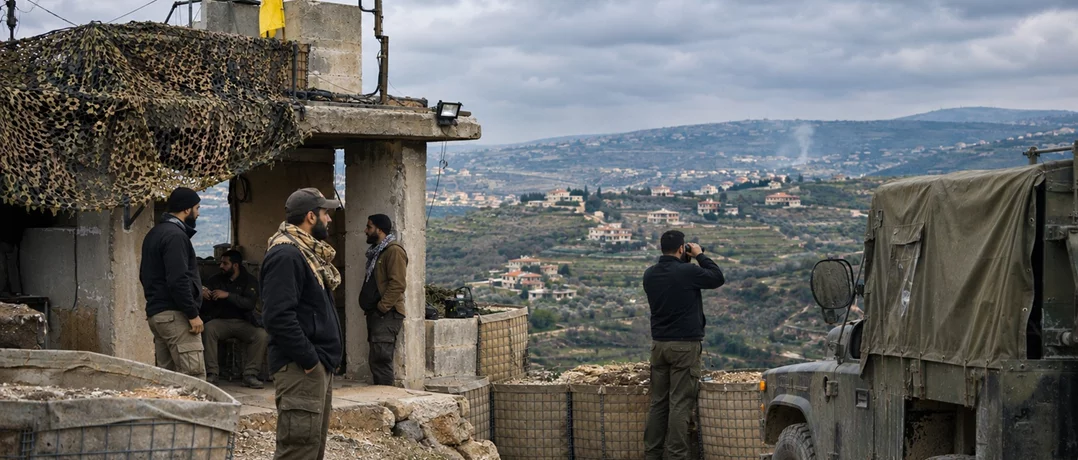
On 28 February 2026, the United States and Israel struck Iran and killed its Supreme Leader, Ali Khamenei. Two days later, at dawn on 2 March, Hezbollah fired rockets into Israel. Prime Minister Nawaf Salam declared any military action by the party illegal. It made no difference. Israel invaded, more than a million Lebanese were displaced, and Tehran made Lebanon's ceasefire a condition of its own deal with Washington. A Lebanese party had taken Lebanon to war to avenge a foreign ruler, against the explicit decision of the Lebanese state.
That morning was not an accident. It was the finished product of a project Iran began forty-four years earlier: to build, inside Lebanon, an armed force answering to Tehran and a community organised around it.
The opening came in 1978-79. On 31 August 1978 Imam Musa al-Sadr, who had led the Shi'a toward fuller participation in the Lebanese state, disappeared in Gaddafi's Libya. On 1 February 1979 Khomeini returned to Tehran. The Shi'a lost their Lebanese voice just as a foreign one offered itself, with a doctrine, wilayat al-faqih, that placed the jurist-guardian above borders and constitutions.
The fighters came first. After Israel invaded Lebanon on 6 June 1982, Damascus let Iranian Revolutionary Guards into the Bekaa. They seized the Lebanese army's Sheikh Abdullah barracks above Baalbek and turned it into a training school, while Iran's ambassador in Damascus, Ali Akbar Mohtashemi, oversaw the project. When Nabih Berri joined President Elias Sarkis's National Salvation Committee that month, Hussein al-Moussawi called it treason and broke with Amal to found Islamic Amal. As Theodor Hanf records, an "Islamic Republic of Baalbek-Hermel" was soon proclaimed and the cedar flag torn down on National Day. In 1983 the suicide bombings against the US Marines and French paratroopers showed what the new force was for, and gave a young commander from the southern suburbs, Imad Mughniyeh, his career.
The doctrine followed. On 16 February 1985 the Open Letter announced Hezbollah to the world. It defined its members as part of a transnational Islamic nation, bound to obey a single leader, Khomeini, and described the Lebanese system as an order to be uprooted. For the first time, a mass Lebanese party openly placed the source of its legitimacy outside Lebanon.
Then the rivals were removed. Between 1988 and 1990 Hezbollah fought Amal for the South and the southern suburbs, Shi'a killing Shi'a over whether their politics would answer to Syria or Tehran. Ta'if in 1989 ordered every militia dissolved, but under Syrian tutelage Hezbollah kept its arms as a "resistance". Even its decision to enter parliament in 1992 was settled by Khamenei's approval.
The secretary-general would serve as the Supreme Leader's religious representative in Lebanon.
The deeper work was social. Iran did not want only fighters; it wanted a society that would produce them. Its institutions were transplanted almost by name: the Martyrs' Foundation, a branch of Iran's own, to support the families of the dead; the Imam Khomeini Relief Committee for the poor; Jihad al-Binaa to rebuild what wars destroyed; the Islamic Health Committee; the al-Mahdi schools and scouts; the al-Qard al-Hassan lending network; al-Nour radio and al-Manar television. A Shi'a family could be born, schooled, treated, employed, financed and buried inside this system without ever meeting the Lebanese state. In June 2016 Hassan Nasrallah said it openly: the party's budget, salaries, weapons and missiles came from the Islamic Republic of Iran.
The bargain was simple. Iran paid for the schools and the hospitals; the community supplied the sons. Portraits of Khomeini and Khamenei rose in villages that had once hung pictures of the Speaker and the President. Loyalty was organised from the cradle, through the scout troop and the mosque, to the martyr's poster. Lebanese citizenship survived as a passport; allegiance moved to Tehran. The community became the proxy's base, and also its hostage.
Once built, the proxy was put to use. Israel withdrew from the South in May 2000; the weapons stayed and turned inward. In 2020 the Special Tribunal for Lebanon convicted a Hezbollah member, Salim Ayyash, for the 2005 assassination of Rafic Hariri. On 12 July 2006 a cross-border raid decided by the party dragged Lebanon into a war its government had not chosen. On 7 May 2008 the weapons occupied West Beirut. From 2012 Hezbollah fought for Bashar al-Assad in Syria, from Qusayr in 2013 onward, and lent cadres to Iran's allies in Iraq and Yemen. Lebanese Shi'a were now dying on fronts that had nothing to do with Lebanon.
On 8 October 2023 the party opened a "support front" for Gaza without any decision by the Lebanese state. The war that followed killed Hassan Nasrallah in September 2024 and destroyed dozens of Shi'a villages before the ceasefire of 27 November 2024. Sixteen months later came the war for Iran itself, and with it the final proof: when Tehran was struck, Lebanon was made to bleed, and when Tehran negotiated, Lebanon became a card on its table. At every step the decision was Iranian, and the price was paid in Shi'a lives and Shi'a villages.
This was never the whole of Shi'a Lebanon. Sheikh Muhammad Mahdi Shamseddine, Sadr's successor at the Higher Islamic Shi'a Council, used his Testaments, published after his death in January 2001, to urge Shi'a everywhere to integrate into their own national states and refuse separate projects. Sayyed Hani Fahs and Sayyed Ali al-Amin kept that line alive. It was not erased; it was silenced and outgunned.
Today the ground has shifted. The Assad regime that opened the door to the Revolutionary Guards in 1982 fell in December 2024. In August 2025 the Lebanese cabinet ordered its army to bring all weapons under the authority of the state, and under the 2026 ceasefire the government undertook to prevent Hezbollah and every other armed group from acting outside the state. The man in whose name Hezbollah was founded, and the man who succeeded him, are both gone.
Dismantling the proxy means dismantling both of its halves. Collecting the missiles is not enough if the schools, the clinics, the loans and the salaries still come from Tehran. The Lebanese state must reach the South and the Bekaa with what Musa al-Sadr demanded half a century ago: roads, schools, hospitals, reconstruction, and an army that protects the villages instead of a militia that spends them. In return, it must hold what no sovereign can share: exclusive authority over arms and over war and peace. Only then will the Shi'a of Lebanon stop being Iran's Lebanese and become, once again, Lebanon's own.
-
-
-
Dr. Elie EliasUniversity Lecturer & Political Historian
-
