



Rising jet fuel, insurance costs and regional tensions are making Christmas flights to Lebanon more expensive, putting family reunions out of reach for many.
Flying home for Christmas: The sky-high cost of coming back to Lebanon
Flying home for Christmas: The sky-high cost of coming back to Lebanon
By Christiane Tager | November 09, 2026

Reading time: 10 min
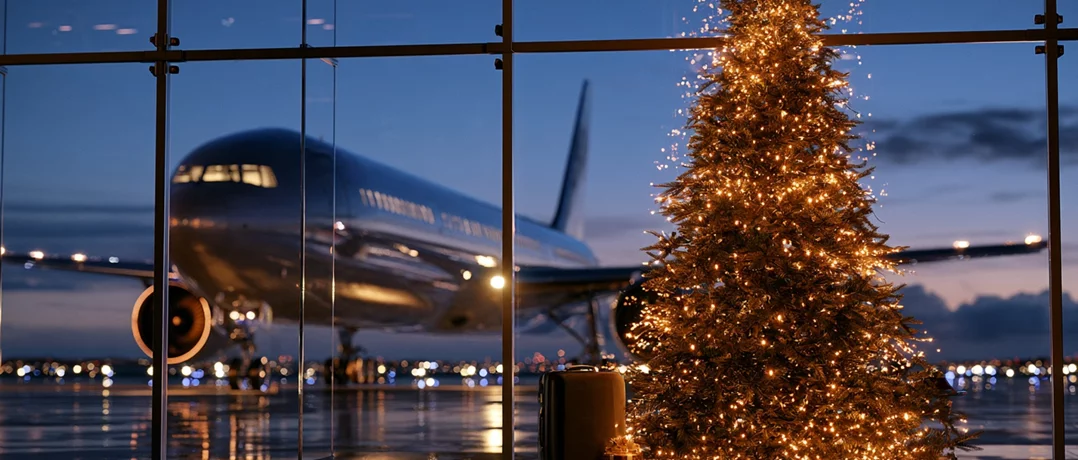
Airfares are climbing as fuel prices soar, insurance costs rise and airlines grapple with geopolitical uncertainty. For Lebanon’s far-flung diaspora, the annual journey home is becoming an increasingly expensive act of love. This Christmas, how much will families have to pay to reunite around the table?
Aviation has transformed the global economy, connecting people, businesses and markets on an unprecedented scale. Yet the industry that makes the world feel smaller is facing a major cost shock, and passengers are increasingly picking up the bill.
According to the International Air Transport Association (IATA), airlines are expected to carry 5.1 billion passengers worldwide in 2026, generating total industry revenues of approximately $1.165 trillion. The industry’s contribution extends far beyond airline balance sheets: the Air Transport Action Group estimates that aviation supported 86.5 million jobs globally in 2023 and contributed approximately $4.1 trillion to the world economy, including tourism-related activity, equivalent to around 3.9% of global GDP.
But the economics of flying are becoming more difficult. IATA expects global airline net profits to fall from $45 billion in 2025 to $23 billion in 2026, while the industry’s net profit margin shrinks from 4.2% to just 2%. In other words, airlines could generate more than a trillion dollars in revenue and still retain only a small fraction of that amount as profit.
For travelers, the consequences are increasingly visible at the booking stage.
The price of kerosene: the biggest pressure point
Fuel is one of the largest expenses facing an airline. And in 2026, it has become a particularly painful one.
IATA forecasts that the global average price of jet fuel will reach $152 a barrel in 2026, almost 70% above the 2025 average of $90. The association expects airlines’ total fuel bill to climb from $252 billion to $350 billion, an increase of nearly $100 billion in a single year.
The latest available weekly figures paint an even more striking picture. On October 18, Gulf News, citing IATA data, reported that the global average jet-fuel price had reached $190.18 a barrel in the week ending October 9, up 111.2% year on year.
The shock has been compounded by disruptions to energy supplies and refining capacity following the escalation of the conflict in the Middle East. In its June 2026 outlook, IATA reported that jet-fuel prices had roughly doubled since late February and that the premium for jet fuel over crude oil had reached a record $80 a barrel in April.
Why does this matter to passengers? Aircraft burn enormous quantities of fuel, and even a modest increase in the cost of each liter can add substantially to the operating cost of a long-haul flight. Airlines may respond by raising fares, introducing or increasing fuel surcharges, reducing less profitable routes or cutting frequencies.
IATA expects fuel to account for 31.4% of total airline operating expenses in 2026, compared with 25.4% in 2025. That is nearly one-third of the industry’s entire operating bill.
And fuel is only the beginning.
Insurance, salaries, maintenance: the bill behind the ticket
The price displayed on a booking website is the end result of a complicated calculation. Fuel is a major factor, but airlines must also pay for aircraft, crews, maintenance, airport services, navigation, insurance and regulatory compliance.
Insurance has become particularly sensitive to geopolitical risk. Aircraft are valuable assets, and airlines operating in or near conflict zones face additional exposure to damage, disruption and liability. An aviation insurance market review published by Marsh in September 2026 describes a market under pressure from higher claims costs, more expensive repairs, supply-chain disruption and geopolitical uncertainty.
For Lebanon, the issue is especially acute. A report quoted Middle East Airlines chairman Mohamad El Hout as saying that the airline’s war-risk insurance coverage had fallen by about 80% following the regional conflict. The report also described a Geneva–Beirut return ticket that had risen from a usual price of about €800 to €1,200 during the summer, an increase of 50%.
That example does not establish a universal price increase across all routes, but it illustrates how the cost of reaching Lebanon can rise when security concerns, insurance and limited capacity converge.
Then there are salaries. Pilots, cabin crew, engineers, ground staff, air-traffic specialists and maintenance teams are essential to every flight. IATA forecasts that airline labor costs will reach $271 billion in 2026, up 4% from the previous year. Airlines directly employ approximately 3.33 million people worldwide.
Aircraft maintenance and leasing add further pressure. Aircraft and spare parts remain expensive, supply chains are constrained, and older fleets require more maintenance. Airlines also face higher lease rates as competition for available aircraft remains intense. Airport and air-navigation charges have risen too, while new environmental requirements add to operating costs.
Insurance, salaries and maintenance are genuine costs, but they do not automatically justify every fare charged. Airlines use different cost structures, insurance arrangements, fuel-hedging strategies and pricing policies. The final ticket price also reflects demand, the number of seats available, competition and how close the departure date is.
Why are tickets to Lebanon so expensive?
For the Lebanese diaspora, the issue is more than a question of holiday spending. It is about maintaining family ties with a country that millions still consider home, even when their lives are built elsewhere.
Lebanon faces a particular combination of pressures: regional insecurity, uncertainty over flight operations, insurance concerns and the concentration of travel demand around a limited number of peak dates. When fewer seats are available and many people want to travel at the same time, fares can rise sharply.
Airlines and passengers must also account for operational risk. On September 30, 2026, the European Union Aviation Safety Agency extended its conflict-zone information bulletin for Lebanese airspace until November 16, 2026. The bulletin advised affected operators to avoid Lebanese airspace, with limited exceptions for flights to and from Beirut International Airport under specified conditions.
Such advisories do not mean that all airlines must cancel flights to Beirut. They do, however, demonstrate the additional operational considerations facing carriers and the uncertainty surrounding regional air travel.
The result is a difficult equation: higher costs on the airline side, fewer convenient options for some travelers, and intense demand from families determined to return home.
Christmas: the most expensive family reunion?
The timing could hardly be more painful. Christmas is one of the most emotionally important periods for Lebanese families, particularly those separated by continents. It is also a peak travel period, when demand for flights to many destinations rises.
Airline websites already show how widely prices can vary according to route and dates. They can change quickly as seats are sold, and baggage, seat selection or other extras may increase the final cost.
Even so, the figures help illustrate the scale of the expense. For a family of four travelling from France, a return fare of $1,000 per person would amount to $4,000 in airfare alone, before accommodation, gifts, local transport or festive meals. If the family needs more expensive dates or less convenient connections, the total could climb further.
For parents abroad, the dilemma is familiar: pay the fare and come home, or postpone the reunion and hope that next year will be easier.
And for young Lebanese living overseas, the decision may mean using a substantial share of their savings or annual leave budget simply to spend a few days with their families.
The Lebanese airport tells another part of the story
The pressure on travel is also reflected in passenger numbers. According to Credit Libanais, traffic through Beirut–Rafic Hariri International Airport fell 21.57% year on year in the first nine months of 2026, to approximately 4.24 million passengers, compared with 5.40 million during the same period in 2025.
The decline reflects a difficult environment for travel to and from Lebanon, including security concerns and the caution of expatriates and tourists. It cannot be attributed to ticket prices alone, but it underlines the broader challenge facing the country’s air connectivity.
The economic consequences extend well beyond the airport. Fewer visitors can mean less spending at hotels, restaurants, shops, car-rental businesses and tourist attractions. For a country that relies heavily on its diaspora and seasonal visitors, expensive or uncertain air links can affect the wider economy.
Are airlines simply passing on their costs?
The answer is not straightforward. Airlines are facing genuine cost pressures, and the industry’s expected 2% net margin for 2026 suggests that rising revenues do not necessarily translate into exceptional profits.
At the same time, airfares are not calculated by adding a fixed percentage to fuel, salaries and insurance. They are also shaped by demand and supply. A flight with only a handful of seats left before Christmas can command a much higher fare than the same route booked months in advance. Competition, the availability of alternative connections and the number of flights operated all matter.
IATA expects passenger-ticket revenues to reach $839 billion in 2026, up 9.2% from $768 billion in 2025, while passenger demand is expected to grow by about 2.1%. The association forecasts passenger yields to rise by 7%, reflecting the pressure to recover higher costs.
But the burden is not shared equally. Travelers with flexible dates, alternative airports or the ability to book early may find more affordable options. Families tied to school holidays; Christmas celebrations or a limited period of leave have far less flexibility.
For Lebanon, the challenge is compounded by the fact that the emotional value of the journey is difficult to replace. A video call can connect relatives across continents, but it cannot recreate a family gathering around the Christmas table.
The real cost of coming home
The global aviation industry is indispensable to modern life. It supports millions of jobs, moves valuable goods and connects economies that would otherwise be far more distant. Yet its current cost pressures are making international travel increasingly difficult for some households.
For the Lebanese diaspora, that pressure carries a particular emotional weight. Returning home is not always a holiday in the conventional sense. It may be the only chance in a year to see parents, embrace siblings, introduce children to their grandparents or spend a few precious days in the place they still call home.
This Christmas, a family might find itself weighing the cost of four return tickets against rent, tuition fees and other obligations abroad. The arithmetic can be brutal.
And then there is the kebbé.
At current fares, flying home to kiss Mum, sit around her table and eat the kebbé that nobody else can quite replicate may require the financial planning of a small corporate acquisition. The kebbé itself may be priceless; getting to the table is another matter.
Behind the joke lies a serious question: if the cost of air connectivity keeps rising, will more Lebanese families be forced to celebrate Christmas apart?
For airlines, the priority is to remain safe, operationally resilient and financially viable. For passengers, it is to find a ticket they can afford. For Lebanon, keeping the country accessible to its diaspora is not merely a matter of sentiment. It is an economic, social and cultural necessity.
Because the journey home should not become the most expensive item on the Christmas menu.
