



Beijing’s restrictions on American AI chips expose the tension between its ambitions for technological independence and its industry's continued dependence on foreign computing power.
China’s Nvidia dilemma

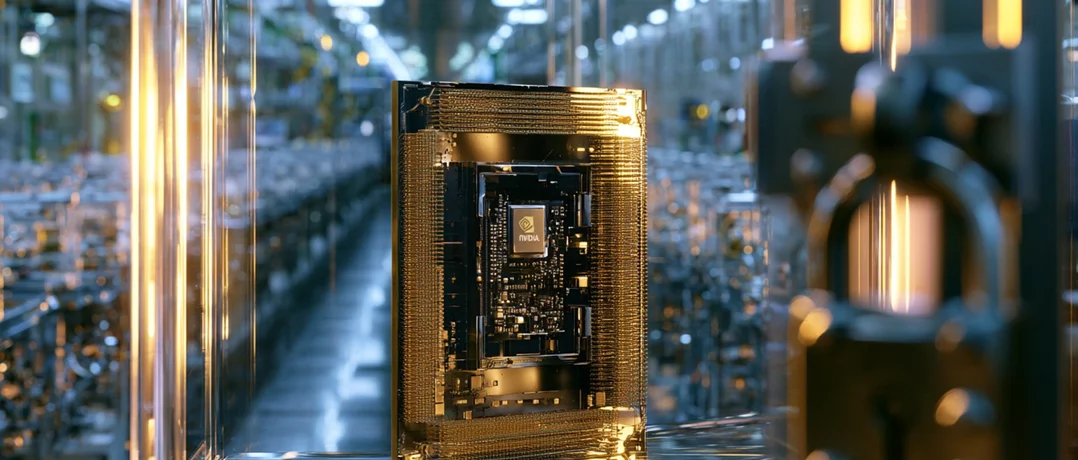
Computing power has become a critical measure of technological competitiveness, but access to the most advanced processors is increasingly determined by government policy. In China, efforts to reduce dependence on American technology risk restricting the very chips its AI industry needs to advance. Approximately 600,000 Nvidia H200 chips are sitting in Hong Kong awaiting authorization to enter mainland China, according to early November Reuters reporting. Produced by Nvidia, the American company that dominates the market for advanced AI processors, the H200 provides the computing power and high-speed memory required to train and operate sophisticated AI models. Beijing's restrictions come despite strong demand from domestic technology companies, even as China invests heavily in semiconductor production to reduce its dependence on foreign suppliers. The contradiction is becoming difficult to ignore. Restricting foreign chips may encourage domestic manufacturers, but it also limits Chinese developers' immediate access to computing power, potentially affecting their ability to compete with international rivals. China's demand for Nvidia processors has persisted despite years of restrictions on advanced semiconductor exports. The H200, although no longer Nvidia's most powerful chip, remains particularly valuable for training sophisticated AI models and operating large computing systems. Although Beijing has permitted limited shipments, Chinese authorities have yet to approve large-volume imports. The shortage has created substantial price distortions. By late October, an eight-chip H200 server was being offered for more than 6 million yuan, approximately $900,000, around three times its price a year earlier, according to Reuters. The restrictions also follow a complicated reversal in American policy. Washington initially prohibited exports of advanced AI processors to China, beginning in 2022, before allowing certain H200 sales through a case-by-case licensing system in January 2026. Under a regulation published in the US Federal Register on January 15, exporters can apply for authorization to sell H200 processors and comparable chips to approved Chinese customers, subject to conditions including security testing and export-compliance requirements. Yet American authorization has not guaranteed access to the Chinese market. In its August 2026 financial filing, Nvidia confirmed that Chinese government restrictions had prevented it from completing all permitted H200 sales. The company reported a $400 million charge associated with excess H200 inventory and purchase obligations during the first half of its fiscal year 2027, while shipments under the licensing program accounted for less than 1% of its latest quarterly data center revenue. China has invested substantially in developing alternatives to Nvidia, particularly through Huawei, the Chinese telecommunications and technology company whose Ascend processors are designed for AI training and inference. Its domestic semiconductor strategy also relies on companies such as Semiconductor Manufacturing International Corporation (SMIC), its leading contract chipmaker, despite restrictions on foreign manufacturing equipment. Nevertheless, technological progress has not eliminated the gap between Chinese and foreign computing capabilities. The difficulty involves more than chip design. Advanced processors require sophisticated manufacturing equipment, reliable production yields, and software capable of coordinating thousands of chips simultaneously. Huawei is attempting to compensate through interconnected computing systems and improvements to its software ecosystem. At its September 2026 technology conference, the company announced advances in its Ascend computing architecture and CANN software platform, which helps developers optimize AI applications for Huawei processors as an alternative to Nvidia's CUDA ecosystem. Announced technical advances, however, do not necessarily establish commercial performance at scale. Beijing's restrictions form part of a much larger industrial strategy intended to reduce China's vulnerability to foreign technology suppliers. The country's Ministry of Industry and Information Technology has identified advanced AI training processors, inference chips, high-speed interconnections and computing infrastructure as priorities. Its industrial AI initiative calls for 1,000 advanced industrial AI agents and 500 demonstration applications by 2027. The government has also used procurement policies and financial support to encourage domestic semiconductor production. According to a March 2026 analysis by the Center for Strategic and International Studies, approximately $150 billion in public funding has been directed toward China's semiconductor development efforts since 2014. Despite that investment, domestically manufactured chips accounted for approximately 30% of Chinese semiconductor consumption in 2025, substantially below the government's earlier 70% localization target. For Chinese technology companies, the trade-off is immediate. Purchasing Nvidia hardware can provide greater computing capacity today, while adopting domestic alternatives supports an industry that could become more competitive over time. Huawei's September announcement of a planned 5 billion yuan investment over three years in its computing ecosystem demonstrates the scale of the effort to close that gap. Yet investment alone cannot guarantee comparable performance or manufacturing capacity. China's semiconductor strategy could eventually reduce its exposure to foreign restrictions and strengthen its position in global technology markets. For now, however, Beijing's restrictions risk leaving Chinese technology companies at a competitive disadvantage while domestic chipmakers work to close the gap with Nvidia. The tension is likely to persist as Beijing attempts to build a competitive AI industry while limiting access to some of the hardware that could accelerate its development.The chips China cannot easily replace
The limits of domestic alternatives
The price of technological independence
-
-

-
The Beiruter
-
