



Children in Lebanon are going online younger than ever, and the risks are reaching them before they can recognize them. Families and schools are trying to keep up, while the law is still catching up with artificial intelligence.
Who is watching? Lebanon’s children online and the gaps in protecting them
Who is watching? Lebanon’s children online and the gaps in protecting them
By Vanessa Kallas | November 15, 2026

Reading time: 6 min
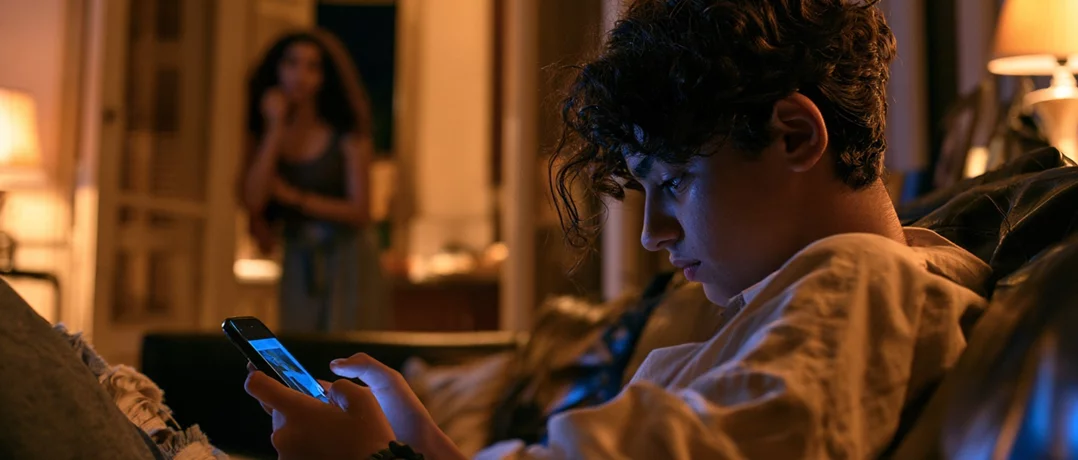
In September, reports emerged about a 13-year-old girl who had started receiving messages from a stranger on TikTok. The chat moved to Snapchat, and soon the threats began. The stranger said he would publish private images of her, along with fake nude pictures made with artificial intelligence.
She asked for help through the Internal Security Forces’ online reporting platform, using her mother’s account. In late August, the ISF’s cybercrime bureau traced the man through an internet connection in Antelias and arrested him.
What made the difference was that she spoke up, and that her mother was there to listen. For many children, that conversation with a parent never happens.
For educator Marianne Melhem Eid, awareness and communication in the household made her son open up to her about the adult content he was exposed to online. “He came to talk about it with his father and his mother,” said Eid, a school educator whose three children are between 11 and 15 years old. “We pushed the awareness further, and we congratulated him for his honesty.”
Her family had prepared for that moment. “My husband and I decided to present them with the advantages and disadvantages of the digital world, starting when they turned 11,” she said. “We agreed with them that they would get a phone at 14.”
However, many children in Lebanon do not have that safety net.
The scale of the problem
UNICEF reported in September that an estimated 20 million children aged 12 to 17 across 21 countries, almost one in five, were subjected to technology-facilitated sexual exploitation and abuse in a single year. In 57 percent of cases, the perpetrator was someone the child already knew. Fewer than 1 percent of cases ever reached the authorities.
Lebanon has no comparable figures, but the Antelias case shows the risks are already here.
At Himaya, a child protection organization that runs a helpline for victims, social worker Katia Ezzeddine said the change is already clear. “We have definitely noticed a change in the number of cases and in the ages of the children,” she said. “Children are using social media and online platforms at much younger ages than before.”
Abuse within circles of trust
Ezzeddine said exploitation often happens within a relationship of trust, sometimes with a classmate or a romantic partner, sometimes with someone even closer to home.
That makes disclosure much harder. A child may be attached to the person and afraid of losing them, or fear how their parents and society will react. “Sometimes the child doesn’t even know they are being exploited,” she said. “They believe they did something wrong, or that they are responsible for what happened.”
Many of the calls reaching Himaya’s line involve threats to publish photos or private chats. “Not every case starts with a direct threat,” Ezzeddine said. “Many start with an ordinary acquaintance or friendship and gradually turn into psychological manipulation or blackmail.”
“AI has opened a very dangerous door,” Ezzeddine said. “Anyone can take a photo of a minor, edit it with AI and make it show inappropriate content. The child becomes the victim of a fabricated image, without having anything to do with it. We must not downplay the seriousness of a case just because the image isn’t real, because the psychological harm and the violation of privacy are very difficult.”
A legal framework with gaps
Bassam Al Kantar, Commissioner for International Relations and Information at Lebanon’s National Human Rights Commission, said Lebanon already has legal tools to act, and that fabricated abuse does not fall into a complete legal vacuum.
Articles 535 and 536 of the Penal Code, amended in 2018, already cover child sexual abuse material, including depictions of someone who only appears to be a minor.
According to Al Kantar, the real gap is the lack of a coordinated system that connects criminal investigations with confidential reporting and support for survivors. “A child needs more than an offense written into law: they need a safe way to seek help and an effective response.”
A 2026 proposal would go further and criminalize AI-generated intimate images made without consent, with heavier penalties when the victim is a minor. Al Kantar said he could not confirm where the bill stands in parliament. “An image can be fabricated while the harm is very real,” he said.
He also warned against relying on bans. In an August advisory opinion, the Commission recommended that neither of two proposals to restrict social media be adopted in their current form. “A ban does not remove the features that expose children to harm,” Al Kantar said. “Children may move to other accounts or services, while harmful recommendations, unsolicited contact and exploitative data practices continue.”
A committee to prepare a national strategy was set up in February 2026, but Al Kantar would not promise families a date. “Families should be able to judge progress through the help they actually receive,” he said.
The role of schools
“Our school raises awareness of inappropriate digital content in a course called ‘Initiation to Life,’” Eid said. “Through activities with the students in class, we can detect signs of pressure and blackmail online.”
When teachers spot such signs, the case goes to a specialist who works with the school’s support group of psychologists and social workers to follow up with the student.
Ezzeddine said many minors don’t know who to turn to, and parents and schools often lack the awareness to know where to go or how to act.
At Himaya, a report is only the beginning. After assessing the risk, a social worker and a psychologist evaluate the child and family before the team draws up a protection plan. “We don’t treat the case as an incident that needs to be resolved, but as the protection of this child through complete follow-up,” Ezzeddine said.
Guidance for parents
Ezzeddine advised parents to watch for warning signs, such as a child who grows tense when a message arrives, or who starts hiding their phone and deleting conversations.
Parents should also keep evidence, such as messages or account names, and avoid shouting at or blaming the child. “It is very important to listen to the child, believe them and reassure them, without blaming them,” she said. “The child must get the message that they can speak and ask for help.”
For Eid, protection starts at home and in the community. “Awareness at school is a must, and so is openness in our relationships with children and teenagers,” she said. “Above all, we need a law that protects children exposed to inappropriate content or at risk of harmful experiences.”
-
-

-
Vanessa KallasJournalistCovering socio-political, environmental, and human rights issues.
-
