



A look at how traditional herbal knowledge and modern pharmaceutical research intersect, exploring the benefits, scientific evidence and safe use of plant-based remedies.
Herbal medicine between tradition and science
Herbal medicine between tradition and science
By The Beiruter | November 12, 2026

Reading time: 4 min
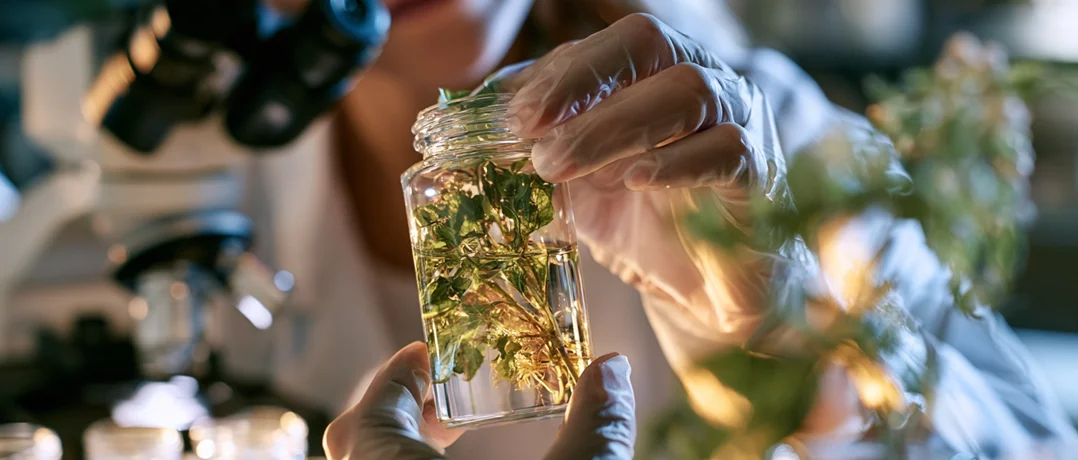
Herbal medicine is both the oldest treatment people have and one of the most contested. Plants gave medicine some of its most important drugs. Willow bark led to aspirin, foxglove to the heart drug digoxin, and sweet wormwood to artemisinin, the antimalarial that earned a Nobel Prize in 2015. Yet the shelf of tinctures and capsules in a modern pharmacy is a different matter. Today, herbal medicine brings together traditional practices and scientific research, creating an opportunity to better understand the properties of plants and their role in everyday well-being.
Dr. Layla Haddad: “Natural does not mean harmless, and it does not mean useless”
Dr. Layla Haddad is a clinical pharmacist in Beirut with a doctorate in pharmacognosy, the study of medicines derived from plants.
“People assume I am against herbs. I am against guessing. A plant is a chemical factory, and what it produces varies with soil, season, and how it was dried. That is why a standardized extract and a handful of leaves from a roadside are very different things.”
Her central example is St. John’s wort. “For mild to moderate depression, some trials show benefit, and others show it performs no better than placebo. That is a mixed record,” she told The Beiruter. “Then comes the part that worries me. It speeds up how the body breaks down many drugs, so it can weaken oral contraceptives, heart medicines, transplant drugs, and some antidepressants. A patient who adds it to a prescription can undo the prescription without knowing.”
“The difference between a herb and a medicine is largely a question of control,” she explained. Willow bark, for example, contains salicin, which inspired aspirin, while sweet wormwood provided the basis for artemisinin. In both cases, scientists isolated and standardized the active compounds to ensure consistent doses.
She asks every patient the same question. “What else are you taking? I mean teas, drops, powders. People do not count them as medicine, so they do not mention them. I tell them to bring the bottles. If I see something risky, we talk before anything happens.”
On what herbs do well, “Ginger for nausea, peppermint for some digestive discomfort, and honey for coughs are low-risk and sensible for mild problems.” Where she drew the line is serious disease, “a herbal remedy for cancer or diabetes is a delay, and delay is what kills.”
Mazen Khoury: “The plant is a teacher, but the doctor is also a teacher”
Mazen Khoury is a herbalist in his late fifties. His family has gathered wild plants on the same slopes for generations. He sells dried sage, thyme, chamomile, and zhourat, a traditional blend of flowers, from a small shop, and he teaches foraging classes on weekends.
His knowledge comes largely from generations of family practice. His grandmother taught him to pick sage in dry weather, before the midday heat. “She told me the leaf holds more when the dew is gone and the sun has not yet punished it. Is that science? I cannot prove it. But my hands know the difference.”
He follows similar care with other plants, cutting thyme high on the slope, where the poorer soil gives it a stronger scent, and picking chamomile only when its flowers are fully open. He then dries the flowers in the shade, away from direct sunlight, which he says can turn them brown and dull.
His most prized item is propolis, a dark resin bees collect from tree buds to seal their hives. “ It is dissolved in alcohol to make a tincture,” he told The Beiruter.
He recommended diluted drops for minor mouth ulcers and dental irritation, but warns against exaggerated claims. “It is not an antibiotic. Studies suggest benefits for the mouth and skin, but the bigger claims have little proof.”
He also followed research into reishi, turkey tail, shiitake and lion’s mane, whose beta-glucans are being studied for their effects on the immune system. He sells only products from certified growers, avoiding wild mushrooms because poisonous varieties can closely resemble edible ones. “One mistaken species can put a family in the hospital.” He also explained that patients undergoing chemotherapy to consult their oncologists before taking mushroom supplements, which may interact with treatment.
Khoury was critical of imported capsules carrying promises that sellers cannot substantiate. “Ask who grew the plant and where it was dried. Many sellers cannot answer.” Yet he welcomed scientific scrutiny. “If a laboratory shows it works, good. If it shows it does not, I stop recommending it.”
Ultimately, the value of herbal medicine lies in understanding what nature can offer, where its limits lie, and when science must lead the way.
-
-

-
The Beiruter
-
