

A bank collapses. A president is impeached. Paraguay’s ueno scandal exposes the troubling ties between political power and private finance.
The bank that brought down a President

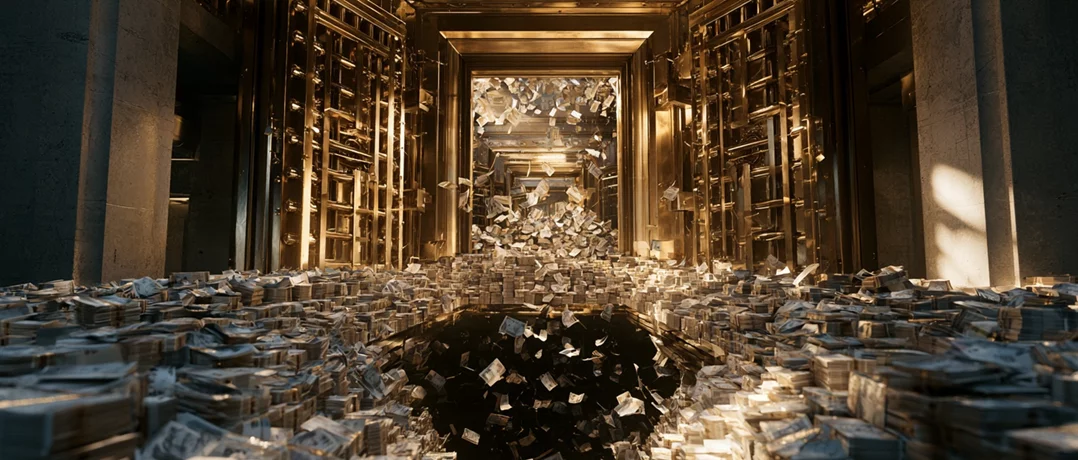
The fall of a political leader can happen in a matter of days, but the consequences of alleged corruption may take years to resolve. In Paraguay, the collapse of digital bank ueno has exposed the dangers of close relationships between political power and private financial interests, raising questions about the protection of public money and the institutions entrusted with overseeing it.
Within days of the bank's collapse, President Santiago Peña was impeached amid allegations that his administration had favored a financial institution with which he previously had business ties. Although Peña denies wrongdoing, the scandal has left millions of customers struggling with disrupted banking services and hundreds of millions of dollars in public deposits at risk.
For Lebanese, the crisis revives painful memories of 2019, when banks closed their doors and depositors began losing access to savings whose fate remains unresolved seven years later. Yet Paraguay's experience also raises a broader question about political accountability: how much can the removal of a president accomplish when the financial damage and institutional weaknesses that brought him down remain?
The rise and collapse of ueno
Before its collapse, ueno had been a remarkable financial success story. Launched in 2021 following Grupo Vázquez's acquisition of the established lender Financiera El Comercio, the institution embraced digital banking, expanding access to people previously excluded from traditional banking.
Its expansion accelerated in June 2024, when ueno merged with Visión Banco, gaining branches and customers. By June 2026, it reported 2.94 million customers, compared with 2.16 million at the end of 2024. Over the same period, its reported loan portfolio more than doubled, while deposits increased by nearly 70 percent.
Regulatory concerns nevertheless mounted. Throughout 2026, Paraguay's central bank scrutinized lending to companies connected with ueno's controlling shareholder, Grupo Vázquez. Although the bank maintained in October that it had complied with the regulator's requirements, subsequent investigations uncovered previously undisclosed related-party transactions, weaknesses in asset quality and deficiencies in loan documentation.
Adjustments to the bank's accounts revealed that its solvency ratio was below half the regulatory minimum. The central bank initiated resolution proceedings on November 2 and announced the decision the following day, suspending operations and freezing customers' accounts.
On November 3, ratings agency FIX SCR downgraded ueno, acknowledging that its earlier assessment had relied on financial and regulatory information that failed to reveal the bank's violations. The central bank's discovery of undisclosed related-party transactions and severe capital deficiencies exposed the gap between ueno's apparent financial strength and its actual condition, raising questions about how such serious problems had escaped detection during its rapid expansion.
A banking scandal reaches the presidency
The controversy deepened when attention turned to public money entrusted to ueno. By June 2026, government institutions held approximately $850 million in deposits at the bank, including funds belonging to Paraguay's social security system and public pension institutions. Its collapse therefore threatened resources intended to finance retirement benefits, healthcare and other public obligations.
Attention soon shifted to President Santiago Peña himself. Until March 2025, he had maintained a financial interest in the business group controlling ueno. Following his election in 2023, he had also appointed Carlos Carvallo, a former executive of the bank's predecessor, to lead the central bank responsible for supervising it. These relationships raised questions about potential conflicts of interest, as lawmakers accused the government of concentrating public pension funds at ueno.
Prosecutors subsequently began investigating whether Peña had used his position to influence public institutions into maintaining deposits at the lender. Meanwhile, Carvallo resigned at the president's request on November 3, as the banking crisis intensified.
But the scandal also exposed a political struggle within Paraguay's ruling Colorado Party. Peña had risen to power with the backing of former president Horacio Cartes, who remained the party's influential leader. Their relationship had deteriorated as Peña sought to establish greater political independence, while lawmakers aligned with Cartes had already begun questioning ueno's lending practices.
When the bank collapsed, Peña's political support rapidly disintegrated. Cartes publicly backed impeachment, depriving his former protégé of crucial support within the governing party. Public demonstrations intensified the pressure.
On November 5, Peña attempted to resign as lawmakers debated his removal. Congress nevertheless proceeded with impeachment. The distinction mattered: under Paraguay's Constitution, an elected president who leaves office without being convicted in impeachment proceedings can become a senator for life, with parliamentary legal protections. Removal through impeachment denied Peña that status and cleared a potential obstacle to criminal proceedings.
With 78 deputies supporting the charges, the case moved to the Senate. On November 6, all 44 senators present voted to remove Peña from office, allowing Vice President Pedro Alliana to assume the presidency. Peña was placed under house arrest and charged with breach of trust and using public office for personal gain, allegations he denies. Carvallo also faces criminal charges.
The money and the trust left behind
Peña's removal settled the question of who would govern Paraguay, but left millions of depositors concerned about their savings. Under emergency legislation, the central bank accelerated reimbursements through the Deposit Guarantee Fund, prioritizing smaller accounts. By November 11, approximately 1.81 million depositors had been credited with $644 million, although some continued reporting difficulties accessing their funds.
The payments offered relief, but uncertainties remained. Paraguay's deposit guarantee covers up to 228.3 million guaraníes per depositor, roughly $37,000. Larger balances and investments outside the guarantee depend on the recovery of ueno's assets. On November 12, the new central bank governor reported identifying approximately $600 million in potentially recoverable assets, a preliminary assessment that offered hope to public pension institutions.
The crisis also damaged Paraguay's international financial standing. Fitch Ratings placed the country's BB+ sovereign credit rating on negative watch, warning of possible repercussions for public finances, economic growth and investor confidence. Nevertheless, the agency considered a wider banking crisis unlikely, citing the comparatively strong financial positions of other major lenders.
Paraguay's crisis brings back difficult memories for Lebanese depositors, although the two collapses differ profoundly. Lebanon's disaster engulfed an entire banking system and the state itself, while Paraguay is confronting the failure of one institution and seeking to prevent wider contagion.
Peña's removal has brought swift political accountability, but it does not establish the full extent of financial wrongdoing or guarantee the recovery of public funds. Investigators must still determine how serious regulatory violations escaped detection, whether political influence compromised oversight and who will ultimately bear the losses.
The deeper challenge lies in the safeguards that failed long before ueno closed its doors. Public institutions had entrusted hundreds of millions of dollars to a bank whose financial weaknesses remained concealed, exposing pension funds and other public resources to substantial risks. Restoring confidence will require more than reimbursing depositors or prosecuting officials. It will depend on whether Paraguay can establish oversight strong enough to prevent another institution from turning private financial misconduct into a national crisis.
-
-

-
Nami El KhazenJournalistFocusing on geopolitics and international affairs.
-
