



Maronite churches in Sydney are creating inclusive communities for people with disabilities and their families through Faith & Light, support, and shared activities.
Special needs in Lebanese community

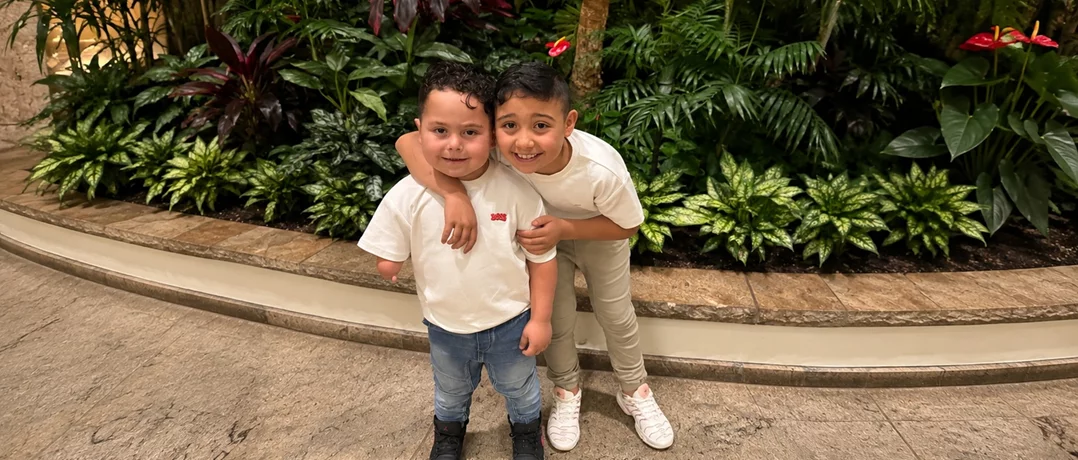
When Linda Nassim discovered at her 21-week pregnancy scan that her baby would be born with a difference in one of his arms, she was confronted with a future she had never imagined.
She remembers feeling overwhelmed by questions about what life would look like for her son – whether he would be able to manage everyday tasks, how he would navigate school and whether he might face bullying.
“I felt numb, shocked, scared and deeply sad. It was like living in a dream I couldn’t understand,” she said.
Five years later, Linda says her son Raphael has challenged many of the fears she had during pregnancy, teaching her and her family about resilience, independence and celebrating the small milestones along the way.
“It's been a journey of learning, growing and celebrating every milestone. He's taught us so much about resilience, independence and seeing the world differently,” she said.
“He's shown us that having a difference doesn't mean having limitations.”
But Linda's experience has also shown her how important it is for families to feel supported, understood and accepted – something she has found through her faith and church community.
Across Sydney, Maronite churches are creating dedicated groups to help people with different abilities, their families and carers feel welcomed and included in their parish communities.
One initiative is Faith & Light, a committee operating at Our Lady of Lebanon Co-Cathedral, with similar programs also running at St Charbel and St Joseph's church.
The committee relies on volunteers who meet monthly to organise spiritual, social and community activities for participants and their families.
Suzie El-Khoury joined the Our Lady of Lebanon Faith & Light Committee last year.
However, her connection to the group is also deeply personal. She is a mother to a child on the autism spectrum.
“Through my own experiences, I understand how challenging it can be for families to find a place where they feel welcomed, accepted and supported,” she said.
“I wanted to be part of something that creates that sense of belonging, not just for our children but for their entire families. I truly believe every family deserves to feel that they are not alone.”
The group organises weekly accessible Mass with Father Michael Boudaher, monthly social activities and special celebrations throughout the year.
“Our aim is to create a welcoming, inclusive and supportive faith community where everyone is accepted, regardless of their abilities or challenges,” Suzie said.
“We want our participants and their families to experience God's love, build friendships and feel that they genuinely belong.”
Suzie said having a dedicated group gave families a space where they could feel understood without having to explain their circumstances.
It also gives participants opportunities to socialise, build confidence and develop friendships in an environment that understands their individual needs.
“One of the most rewarding things for me has been watching our participants grow in confidence,” she said.
“Some initially found attending church and our events quite challenging and overwhelming. Today, seeing how comfortable they have become and how much they look forward to weekly church and our activities brings us so much joy.”
But while these groups are helping create more inclusive spaces, Suzie said there was still work to be done to address stigma around disability in the Lebanese community.
“There are still many families who struggle with accepting a diagnosis, some are in denial, others feel embarrassed or fear being judged,” she said.
She said more education, awareness and acceptance were needed, particularly in churches and schools.
“Our churches and schools should be leading by example, creating environments where children with additional needs are not just accommodated but genuinely included,” she said.
“We need to move beyond simply talking about inclusion and actually putting it into practice.”
Linda has also experienced moments where people stare or ask questions about Raphael's disability.
“I believe it's important to speak openly because disability shouldn't be something to hide or feel ashamed of. The more we talk about it, the more understanding we create,” she said.
She hopes the Lebanese community becomes more accepting and educated.
“I want people to see the child first, not their disability. Our children deserve to feel included, celebrated and treated no differently from anyone else.”
For Suzie, inclusion is not just about what the wider community can give to people with additional needs, but what it can learn from them.
“They teach us patience, unconditional love, acceptance and how to appreciate the simplest joys in life,” she said.
“I'd also love to acknowledge how beautiful it is to see our community embracing and celebrating diversity and special needs. It's encouraging to see these conversations becoming more visible, and I hope we continue moving in that direction within our communities.”
