



Russia's peace demands extend beyond Ukraine, raising questions about NATO's eastern defenses and the future of Europe's security order.
Putin's bid to rewrite Europe's security order
Putin's bid to rewrite Europe's security order
By Nami El Khazen | November 17, 2026

Reading time: 6 min
“We cannot conclude this deal without the Europeans being at the table.”
U.S. presidential adviser Jared Kushner's words, delivered in Dublin following American diplomatic efforts in Abu Dhabi and Moscow, suggested that negotiations to end the war in Ukraine were entering a new phase. After months of uncertainty surrounding Europe's role, Washington appeared ready to bring European governments directly into the process.
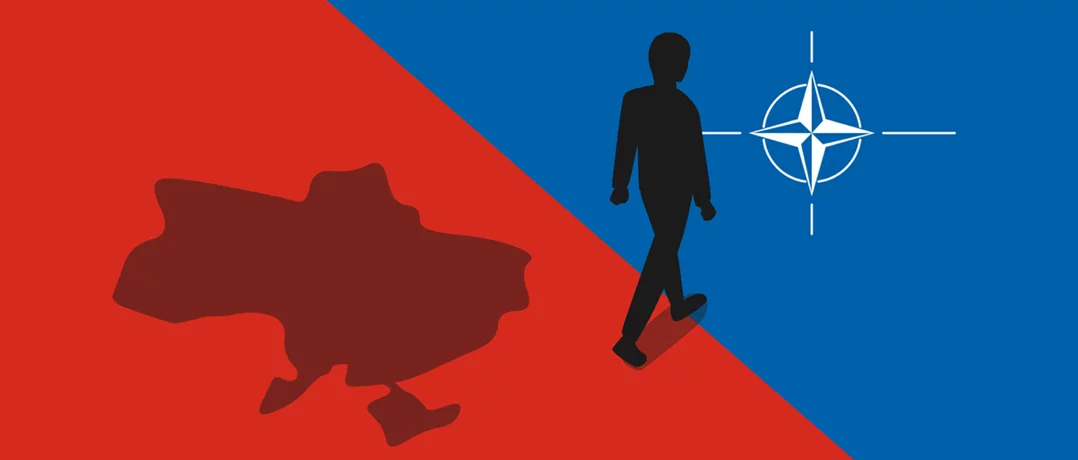
Yet Europe's participation carries significance well beyond the immediate conflict. For Moscow, the negotiations have become an opportunity to pursue a longstanding ambition: reshaping Europe's security architecture and revisiting the arrangements that have governed the continent since the end of the Cold War.
The return of Russia's 2021 ultimatum
Months before the full-scale invasion of Ukraine, Russia laid out a vision of European security that went well beyond its neighbor. In December 2021, Moscow submitted draft agreements to Washington and NATO demanding an end to further alliance enlargement and sweeping restrictions on military deployments across Eastern Europe.
The proposals took May 1997 as their reference point when NATO and Russia signed their Founding Act. Moscow wanted restrictions on allied forces and weapons stationed in European countries beyond their levels at that time. While this would not formally expel Poland or the Baltic states from NATO, it would severely restrict the alliance's ability to reinforce them. Western governments rejected the demands, insisting that European states retained the right to choose their own security arrangements.
Nearly five years later, the same objectives have resurfaced. An unsigned Russian negotiating document dated November 10, 2026, reportedly revives key provisions of the 2021 proposals. Although it represents an opening position rather than an agreed framework, its contents reveal how little Moscow's broader security ambitions have changed through years of war and diplomacy.
Ukraine's future under russian conditions
Russia's proposed settlement would require Ukraine to surrender territory it still controls. Moscow continues to demand the withdrawal of Ukrainian forces from the remaining Ukrainian-held areas of Donbas, including the fortified cities of Slovyansk and Kramatorsk. These cities anchor a defensive belt on strategically advantageous terrain, whose loss would make any future Ukrainian attempt to recapture Donbas considerably more difficult. President Putin also maintains claims to the entirety of Donetsk, Luhansk, Zaporizhzhia and Kherson, although Russian forces do not fully occupy these regions.
Beyond territory, the November negotiating document calls for restrictions on the size of Ukraine's armed forces and their weapons, an end to Western military supplies and a prohibition on foreign troops or military bases. Such conditions would substantially weaken Kyiv's ability to defend itself and prevent European governments from deploying forces as part of postwar security guarantees.
Moscow would reportedly accept Ukraine's membership in the European Union, but prohibit its participation in the bloc's common security and defense policy. Ukraine could therefore pursue economic and political integration with Europe while remaining excluded from important European defense arrangements. NATO membership, meanwhile, remains unacceptable to Russia.
Yet Washington has introduced a potentially significant complication. On November 14, Zelensky revealed that American negotiators had raised the possibility of Ukraine withdrawing from Donbas in exchange for NATO membership. The idea remains unconfirmed by Washington and contradicts Moscow's longstanding position. Zelensky maintained that any such agreement would require credible security guarantees, a strong Ukrainian military and ultimately the consent of the Ukrainian people through a referendum.
NATO's eastern flank and Europe's nuclear deterrent
Russia's proposed restrictions on NATO extend beyond Ukraine to countries already protected by the alliance. An unofficial proposal reported by the German daily newspaper Bild on November 13 claimed that Moscow wanted Finland to abandon the NATO membership it obtained in 2023 and return to military nonalignment. The Kremlin denied having made such a demand, while Finnish Defense Minister Antti Häkkänen rejected the idea as unacceptable.
The reported terms also seek to prohibit NATO military bases in Estonia, Latvia and Lithuania. These countries rely on multinational allied deployments, led respectively by Britain, Canada and Germany, to reinforce their defenses and deter potential aggression. Restricting that presence would weaken the alliance's ability to defend its northeastern members, even if their formal membership remained unchanged.
Moscow's demands would also affect Europe's nuclear deterrence. The November 10 negotiating document reportedly calls for Britain and France to rule out extending nuclear protection to other European countries. Although both maintain independently controlled nuclear forces, their arsenals contribute to NATO's broader deterrence strategy alongside American capabilities. Such restrictions would further limit the military options available to European governments.
The wider bargain
Beyond Ukraine and NATO, the proposed settlement would also affect Moldova's political future. Under the separately reported unofficial proposal, Moldova would become a federation incorporating the separatist region of Transnistria and the autonomous territory of Gagauzia, with both reportedly granted the right to hold independence referendums if Moldova joins the European Union.
For Moscow, such an arrangement could preserve its influence over Moldova even after withdrawing its troops, potentially giving pro-Russian authorities in Transnistria and Gagauzia greater influence over the country's European integration. If either territory subsequently seceded, Russia could also retain a political foothold in southeastern Europe, particularly through Transnistria, which borders Ukraine near the strategically important Odesa region.
In return, the unofficial proposal envisages Russia withdrawing its troops from Transnistria, removing its nuclear weapons from Belarus and refraining from deploying intermediate-range missiles there. These concessions would address longstanding European security concerns, although their credibility would depend on implementation.
Indeed, Moscow had already committed at the 1999 OSCE summit to withdrawing its forces from Moldova by the end of 2002, an undertaking it never fully fulfilled.
Moscow's strategic prize and Europe's response
Taken together, Moscow's demands promise gains extending far beyond a cessation of hostilities. An agreement on Russia's terms would consolidate its territorial gains in Ukraine while imposing military restrictions that would leave Kyiv vulnerable to future pressure. Moreover, limits on NATO deployments and nuclear deterrence would weaken the alliance's eastern defenses, expanding Moscow's freedom to exert pressure on neighboring countries. The broader prize would be political: securing recognition of Russian influence over their security choices and converting wartime gains into lasting leverage over Europe's security order.
Those prospective gains help explain the breadth of Russia's opening position. Some demands may serve as bargaining chips, but the effort to restrict NATO's military reach and influence neighboring states' security choices predates the current negotiations.
Washington is trying to advance peace talks while bringing European governments into discussions that directly affect them. Yet European governments remain reluctant to negotiate a new security order before the fighting stops, arguing that existing agreements already establish the principles Moscow must respect. At their November 16 meeting, EU foreign ministers called for a ceasefire and meaningful Russian concessions before broader negotiations. EU foreign policy chief Kaja Kallas made the distinction explicit: "We do not need a new security architecture. We need to restore the one we have."
Nearly five years after its 2021 ultimatum was rejected, Moscow is again pursuing concessions that would reshape the continent's security arrangements. Whether these demands remain negotiating positions or find their way into a settlement could determine the balance of military and political influence in Europe for years to come.
-
-

-
Nami El KhazenJournalistFocusing on geopolitics and international affairs.
-
