



As global commodity prices fluctuate, Lebanon's persistent food insecurity exposes a central paradox of the global food system: changes in agricultural markets offer little relief to households struggling with rising costs and diminished purchasing power.
Food prices rise and fall. Why does hunger persist?
Food prices rise and fall. Why does hunger persist?
By The Beiruter | November 19, 2026

Reading time: 5 min
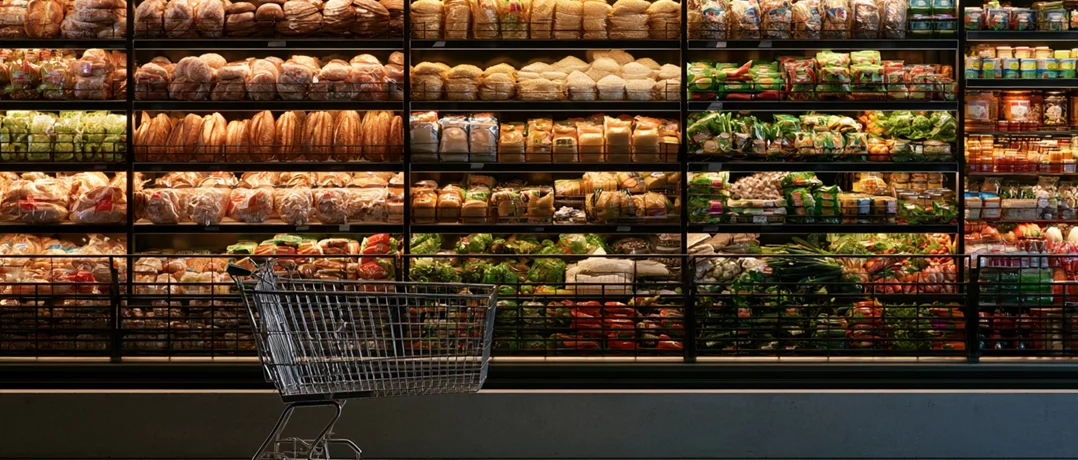
International food prices have swung sharply in recent years, responding to wars, supply disruptions and rising energy costs. Yet while commodity markets have alternated between price surges and declines, millions of households have faced a more persistent reality: food remains unaffordable, regardless of movements in global markets.
The United Nations Food and Agriculture Organization's (FAO) Food Price Index stood at 133.9 points in October 2026, 16.4% below its March 2022 peak but 5.9% above its level a year earlier. In Lebanon, food and non-alcoholic beverage prices were 10.04% higher in September than a year earlier, according to the Central Administration of Statistics. The World Food Programme estimates that approximately 1.05 million people, or 21% of Lebanon's analysed population, face acute food insecurity between September 2026 and February 2027.
The divergence exposes a growing disconnect between international food markets and household affordability. Commodity prices may rise, fall or stabilize, but hunger persists where incomes stagnate, employment deteriorates and domestic costs remain elevated. For vulnerable households, the trajectory of global food prices offers little assurance of relief when the economic barriers to purchasing food remain largely unchanged.
The limits of cheaper commodities
International food markets have experienced considerable volatility since Russia's invasion of Ukraine in 2022, with the Iran war introducing renewed pressures on energy prices and maritime transportation in 2026. Despite these disruptions, international commodity prices remain substantially below their 2022 peaks.
The FAO's November 2026 price release recorded a 1.2% monthly decline in October, driven principally by lower cereal, dairy, and meat prices. Nevertheless, its overall index remained 5.9% above October 2025. Cereal prices alone were 12.6% higher than a year earlier, despite falling 4.5% during October.
These fluctuations reveal the uneven nature of the recovery in global food markets: International prices can retreat from extraordinary peaks while remaining elevated compared with more recent periods.
More importantly, international commodity prices represent only one component of what consumers ultimately pay. Cheaper wheat does not necessarily mean cheaper bread when transportation, milling, electricity and distribution expenses remain elevated, absorbing savings from agricultural imports.
Lebanon's widening affordability problem
Lebanon offers a particularly stark example of the global food paradox, where declining international commodity prices have coincided with rising grocery bills and persistent food insecurity, leaving households largely excluded from improvements in agricultural markets.
The country's food and non-alcoholic beverage index declined 0.23% between August and September 2026, according to CAS. Yet prices remained 10.04% above September 2025, while overall consumer inflation reached 17.53%. Transportation costs increased 35.23% annually, and water, electricity, gas and other fuels rose 38.91%. Higher storage and distribution costs can prevent savings from cheaper imported commodities from reaching consumers.
The geographical disparities are considerable. Mercy Corps, an international humanitarian organization that monitors Lebanon's economic and humanitarian conditions, reported in its May 2026 Crisis Update that national food prices increased 7.9% between January and May. Nabatieh recorded a 9.9% increase, followed by northern Lebanon at 8.9% and Mount Lebanon at 8.5%.
The report attributed inflationary pressures partly to higher fuel and shipping costs amid renewed conflict, demonstrating how domestic conditions can undermine international price reductions.
Lebanon's experience is further complicated by the economic crisis that began in 2019, which eroded savings, undermined wages and left many households dependent on irregular earnings or financial assistance. Although the exchange rate has since stabilized considerably, that stability has not restored the purchasing power lost during years of currency depreciation and inflation.
When wages cannot keep pace
Food affordability ultimately depends on both prices and incomes, leaving households vulnerable even when inflation moderates if wages remain insufficient or employment unreliable.
Between May 2025 and May 2026, purchasing Lebanon's minimum food expenditure basket required approximately 9.6 to 9.8 working days based on individual earnings, or 7.0 to 7.3 days using pooled household income, according to Mercy Corp’s assessment.
Using median income estimates of $450 per earner and $600 per household, the analysis calculated that basic food purchases absorbed roughly one-third of an individual's income or one-quarter of pooled household earnings.
The figures remained relatively stable throughout the period, indicating persistent affordability pressures rather than meaningful improvement.
Conflict further complicates household finances by interrupting employment, agricultural production and commercial activity. Families displaced from their homes may lose both income and access to familiar markets, leaving them exposed to costs that international agricultural prices cannot adequately describe.
The economics of persistent hunger
The disconnect between international prices and household food security is not confined to Lebanon. Across countries affected by conflict, economic instability, and climate shocks, the availability of food can improve without corresponding gains in people's ability to purchase it.
The World Bank's October 2026 Food and Nutrition Security Update found that food inflation exceeded overall inflation in approximately 22% of the 150 countries examined, compared with 14% in the preceding period. It also projected that 58 million to 69 million people in Eastern and Southern Africa could require food assistance by April 2027, while more than 18 million people in Yemen faced acute food insecurity.
These estimates describe different dimensions of the food crisis, but they expose the limitations of treating agricultural supply as a proxy for economic access.
Lower international prices can ease import bills and eventually reduce consumer costs. They cannot, however, restore lost employment, compensate for declining earnings or guarantee functioning supply chains.
For governments confronting persistent food insecurity, improving agricultural availability is therefore only part of the response. Protecting household purchasing power, maintaining reliable distribution networks and addressing disruptions to livelihoods are equally consequential. Until these conditions improve, falling commodity prices may remain a welcome development in international markets without delivering comparable relief to the people struggling to afford their next meal.
-
-

-
The Beiruter
-
