



Passed down through generations, tawle (backgammon) has travelled from ancient Mesopotamia and Persia across the Middle East to Lebanon. Today, it brings together a growing community of players, clubs and a national federation, with Lebanese competitors taking the game to the international stage.
The game that brings generations to the table
The game that brings generations to the table
By Yara Saliba | November 20, 2026

Reading time: 5 min
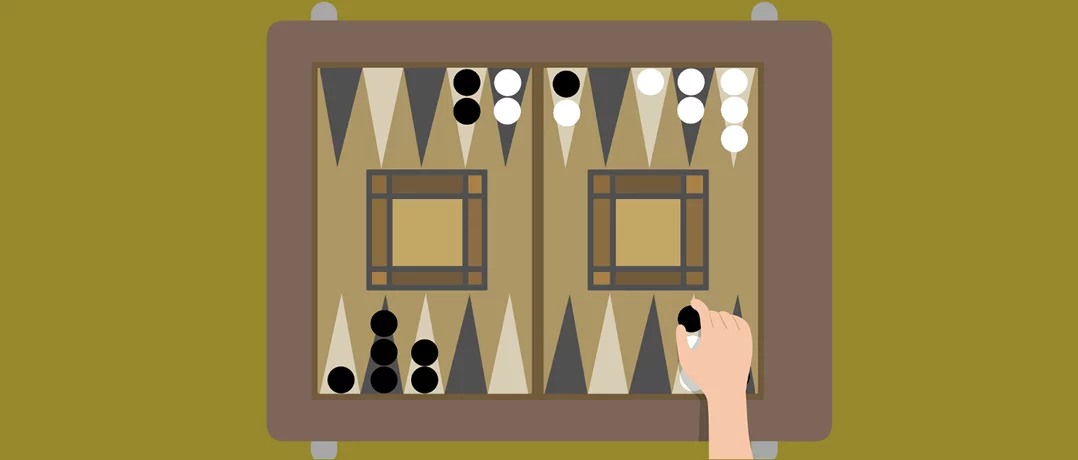
Almost every Lebanese household is familiar with the sound of dice rolling across a tawle (backgammon) board. Over the years, the game has become part of everyday life in Lebanon, shared among friends and families during their gatherings. Two of its most popular variations are Frangieh and Mahbouseh. While Frangieh is generally more casual and friendly, Mahbouseh requires greater concentration and strategic thinking. But where did this beloved Lebanese pastime come from?
The history of tawle goes back thousands of years. Some of the earliest games resembling modern backgammon date back nearly 5,000 years to Mesopotamia, including the Royal Game of Ur. Similar games later appeared in ancient Egypt and Rome, before the game evolved into different forms across the region. It also spread through Persia and the Byzantine Empire before becoming particularly popular under Ottoman rule, especially in the Levant. Its Ottoman influences can still be heard in Lebanon today, particularly in the words players use when calling out their dice rolls: yek (one), dü (two), se (three), cehar (four), penc (five) and ses (six).
One game, many generations
Tawle means different things to different generations, but both seem to agree that it brings people together. Abdo Yazbeck, who is retired, started playing during the COVID-19 pandemic after a friend encouraged him to give the game a try. "I felt lonely, and a friend invited me to play, so I agreed. That's when my passion for the game started," he said during his interview with The Beiruter.
Yazbeck enjoys the competition but also sees tawle as a way to disconnect from everyday worries. "For an hour or two, you forget everything happening around you," he shared. A drink and a shisha are also part of the experience, making the games even more enjoyable. He jokingly observes that players who are losing tend to drink and smoke faster, while those who are winning take their time and stay relaxed. He believes tawle requires concentration and strategic thinking, which makes every game more engaging.
Tawle is not just a game for older or retired people; it has also found its way into the lives of younger generations, including young women. Judy Antabli, in her twenties, started playing only six months ago and sees it as a fun way to spend time with friends. “It allows my friends and me to connect in a fun and sometimes aggressive way,” she told The Beiruter. She remembers learning the game from a friend who was not exactly patient with her. Eventually, she got the hang of it, and the two found their regular spot at a café near Sodeco, where even the waiters would gather to watch them play.
The Lebanese Backgammon Federation
While Frangieh and Mahbouseh may be the most popular versions of tawle, many Lebanese players also enjoy the Western-style version of the game. This version follows international rules. It may look similar to Frangieh, but it has a more competitive format, with a timer, a scoring system and a doubling cube. What makes the game interesting is the balance between luck and strategy.
During his interview with The Beiruter, Lebanese Backgammon Federation Vice President Pascal Massoud described this version as a game that keeps players on their toes. “Every dice roll brings a new situation and a new decision,” he noted. The changing possibilities create a sense of adrenaline and excitement, as players have to think quickly and carefully before making their next move.
The Lebanese Backgammon Federation (LBF) grew out of a group of players who initially gathered to play socially before organizing competitions and eventually registering the federation with the Ministry of Youth and Sports. Lebanon is also a member of the World Backgammon Federation (WBGF). Today, LBF brings together clubs and players through regular tournaments, including competitions held at Casino du Liban.
The federation is also connected to the international backgammon scene, with Lebanese players taking part in tournaments abroad, including events in Monte Carlo, Turkey and other destinations. Massoud also highlighted that players are assessed through a Performance Rating (PR) system, which evaluates the quality of their moves and helps determine their eligibility for international competitions.
A dedicated Lebanese community
Some play tawle for fun; others take it to a competitive level. Elie Nehme, owner of Golden Dice Club, one of the many tawle clubs in Lebanon, has been playing for around 40 years and spends nearly 10 hours a day at the club. With around 55 members of all ages, Golden Dice has become a meeting place for players who share the same passion.
“I organize every Wednesday a tournament at the club. The members compete against one another,” he explained to the Beiruter. He also holds a major tournament every year, with winners receiving a fully sponsored trip abroad to participate in international competitions funded by the club.
Nehme is a competitor himself and has taken part in tournaments around the world. One of his biggest achievements came two years ago at the World Backgammon Championship in Northern Cyprus, where he placed second among approximately 600 players. His experience reflects how far the game can take those who dedicate themselves to it, from.
From ancient civilizations to modern Lebanese society, tawle has made its way through so many generations. The rules and the way people play may differ, but the love for the game is still there. Older players teach the younger ones, who in turn introduce it to their friends, family and those around them. As long as each generation passes the game on to the next, tawle will continue to be part of Lebanese culture. After all, this is how traditions are born,
-
-

-
Yara SalibaJunior Writer/Translator
-
