



From nuclear torpedoes to false missile warnings, history reveals how close the world has come to nuclear war.
The days the world almost ended

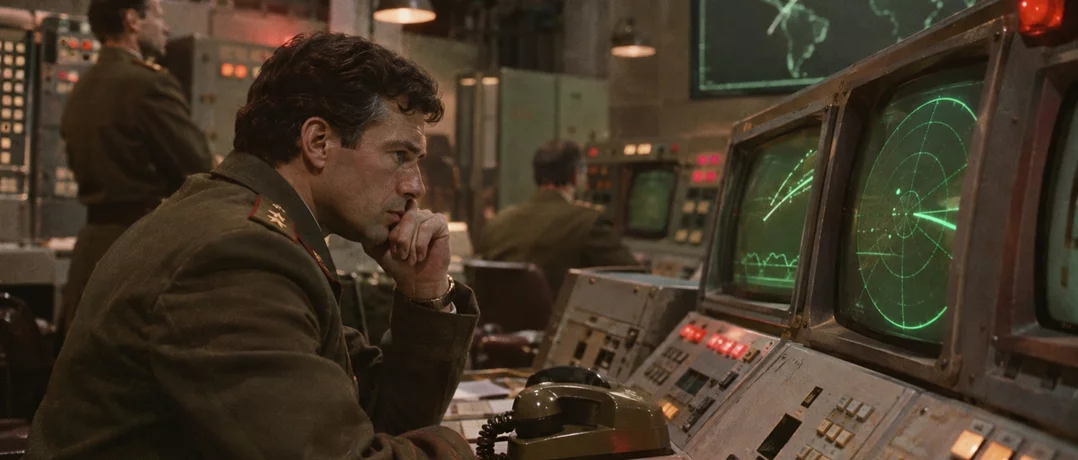
There is only one clock in the world whose hands humanity has always hoped to push back.
Created in 1947, in the shadow of Hiroshima and Nagasaki, the Doomsday Clock measures humanity's proximity to its own destruction. Its midnight represents the ultimate catastrophe: a nuclear war capable of devastating civilization. Yet the history of the nuclear age reveals something even more unsettling about how the world might reach that final hour.
One might imagine that nuclear catastrophe would come at the hands of powerful men making calculated decisions to unleash their arsenals. Yet history has shown how close the world has come to disaster through panic, miscalculation and machines falsely warning of an imminent nuclear attack.
The nuclear torpedo that almost sank the world
On October 27, 1962, while President John F. Kennedy and Soviet leader Nikita Khrushchev struggled to avert nuclear war over Cuba, another confrontation was unfolding beneath the Atlantic. American warships had located a Soviet submarine and were dropping practice depth charges to force it to surface. The explosions were intended as signals, but the Americans were unaware that the vessel they were pursuing carried a nuclear torpedo with an explosive yield comparable to the bomb dropped on Hiroshima.
Aboard submarine B-59, the situation was becoming increasingly desperate. Pursued for hours and cut off from reliable communications with Moscow, its crew endured suffocating temperatures, dwindling supplies and deteriorating air quality. Captain Valentin Savitsky could not establish whether the explosions signaled an attempt to force his submarine to surface or the beginning of a wider war.
According to Soviet eyewitness accounts, Savitsky became convinced that hostilities had begun and summoned the officer responsible for the nuclear torpedo, ordering it prepared for combat. "We will die, but we will sink them all," intelligence officer Vadim Orlov later recalled him declaring.
Yet Savitsky could not authorize the launch alone. Without orders from Moscow, firing the nuclear torpedo required the unanimous approval of three senior officers: Savitsky, political officer Ivan Maslennikov and Vasily Arkhipov, the submarine brigade's chief of staff. But Arkhipov challenged the captain's conviction that war had begun. With communications disrupted and no confirmation of an American attack, he argued that the explosions were intended as signals rather than an attempt to destroy the submarine. He urged Savitsky to reconsider, warning against launching a nuclear weapon without knowing whether the Soviet Union was at war. The commander eventually relented, and B-59 responded to the American signals instead of firing its torpedo.
Had Arkhipov agreed, the submarine could have launched a nuclear weapon against American warships at the height of the Cuban Missile Crisis.
The Soviet officer who distrusted the machine
Shortly after midnight on September 26, 1983, alarms sounded inside Serpukhov-15, a secret Soviet military facility outside Moscow. A computer screen flashed the word “LAUNCH,” indicating that an American intercontinental ballistic missile had been fired from a base in Montana. Within minutes, the system detected four additional launches. According to the Soviet Union's early-warning network, five American nuclear missiles were heading toward Soviet territory.
The warning came during one of the most dangerous periods of the Cold War. Relations between Washington and Moscow had deteriorated sharply under President Ronald Reagan, and just three weeks earlier, Soviet fighters had shot down Korean Air Lines Flight 007, killing all 269 people aboard.
Soviet leader Yuri Andropov, a former KGB chief deeply distrustful of American intentions, had already initiated an extensive intelligence operation to detect preparations for a possible American nuclear first strike. His suspicions were so profound that Oleg Kalugin, a former senior KGB officer, later warned of the possibility that Soviet leaders might choose to strike first rather than risk being caught by surprise. Now, the warning from Serpukhov-15 appeared to confirm precisely the kind of attack the Kremlin had long feared.
Responsibility for determining whether that threat was real fell to Lieutenant Colonel Stanislav Petrov, the 44-year-old duty officer overseeing the recently introduced Oko satellite detection system. His assessment would be relayed through military command channels, potentially reaching the Soviet leadership responsible for authorizing nuclear retaliation.
Yet Petrov doubted what the computers were reporting. Having worked on the early-warning system, he knew it remained vulnerable to technical failures. More importantly, the apparent attack made little strategic sense. An American first strike would likely involve hundreds of missiles intended to overwhelm Soviet defenses, rather than five launched from a single location. Ground-based radars had provided no confirmation, although their limited horizon meant they could not yet definitively exclude an attack.
With alarms sounding and officers awaiting his assessment, Petrov had only minutes to decide whether the warning was genuine. Despite the system's apparent confidence, he informed his superiors that it was a malfunction. He later recalled relying partly on intuition: “I had a funny feeling in my gut.”
As the estimated arrival time passed, no missiles appeared. Investigators subsequently discovered that sunlight reflecting from high-altitude clouds had deceived the satellites' infrared sensors into identifying launches that had never occurred.
The rocket that alarmed the Kremlin
On January 25, 1995, more than three years after the collapse of the Soviet Union, Russian military radar operators detected an unidentified rocket rising over the Barents Sea. Its speed, altitude and trajectory closely resembled those of an American Trident II submarine-launched ballistic missile.
The possibility was particularly alarming because the rocket's trajectory appeared consistent with a scenario long feared by Soviet military planners: an American nuclear warhead detonating high above Russia to generate an electromagnetic pulse, potentially disabling early-warning radars before a larger nuclear assault. Although Washington and Moscow had officially ended their Cold War confrontation, both countries maintained nuclear forces capable of responding rapidly to a perceived attack.
The warning reportedly reached President Boris Yeltsin, who later acknowledged using the Cheget, Russia's nuclear command briefcase, to communicate with senior military officials. The device provided a secure link to the military command structure responsible for executing nuclear orders. The alert also reportedly prompted orders raising the combat readiness of Russian strategic forces, whose commanders prepared for the possibility of receiving a nuclear launch order.
Yet as military officers continued tracking the object, the evidence of an American attack failed to materialize. No additional missile launches were detected, and the rocket's trajectory eventually confirmed that it posed no threat to Russian territory. Within approximately ten minutes, the alarm had been resolved.
The suspected American missile was, in fact, a Black Brant XII scientific rocket launched from Norway's Andøya range by Norwegian and American researchers studying the northern lights. Its unusual flight characteristics had closely matched those of a ballistic missile, deceiving the Russian early-warning system.
More remarkably, Norway had notified Moscow of the planned launch over a month earlier, providing its location and expected impact area. Whether the notification reached the appropriate Russian authorities, and why it never reached the radar operators, remains uncertain to this day.
-
-

-
Nami El KhazenJournalistFocusing on geopolitics and international affairs.
-
