



Despite Lebanon’s economic crisis, beauty, food, fashion and jewelry offer commercial opportunities, with sustainable profits depending on cost control, customer loyalty and access to international markets.
Where Is the money still being made in Lebanon?
Where Is the money still being made in Lebanon?
By Christiane Tager | November 23, 2026

Reading time: 7 min
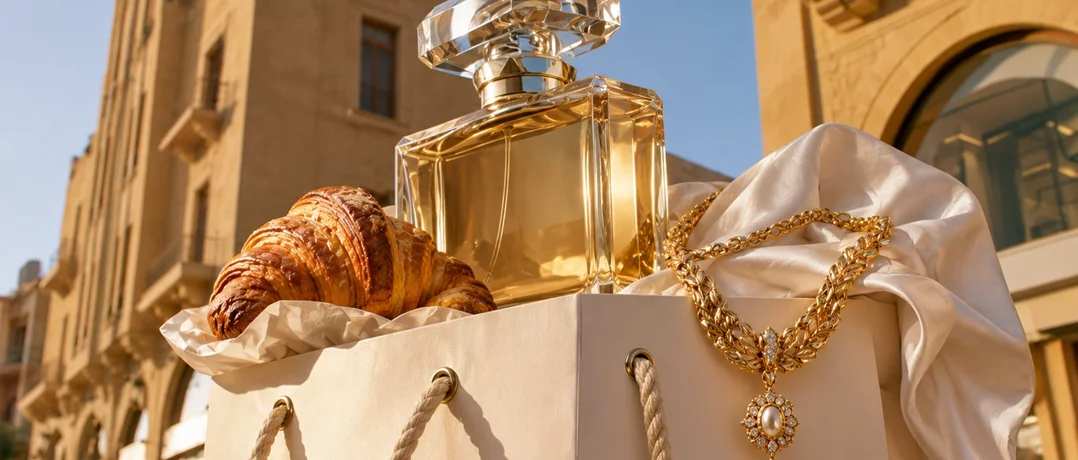
Beauty sales up 20%, food-related exports approaching $446mn and precious metals and gemstones accounting for $1.25bn in exports. Despite Lebanon's prolonged economic crisis, pockets of commercial opportunity remain. From cosmetics and hospitality to fashion and jewelry, which industries offer the strongest prospects and where are businesses actually making money?
In Lebanon, almost everything has become more expensive. Yet beauty salons continue to attract customers, restaurants compete for diners and homegrown luxury brands are finding buyers far beyond the country's borders.
Behind the economic turmoil, a striking contrast has emerged: while purchasing power remains under pressure, certain industries continue to expand, supported by dollar-earning consumers, the Lebanese diaspora and international demand.
The distinction is between sectors where money is being spent and businesses that can turn those sales into sustainable profits.
Beauty, food, fashion and jewelry offer four different routes to commercial success. Their prospects depend on recurring demand, pricing power, access to foreign markets and, crucially, cost discipline.
Beauty: a 20% surge in a resilient consumer market
Lebanon's beauty industry has emerged as one of the more dynamic segments of consumer spending.
According to Euromonitor International research published in June 2026, retail sales of beauty and personal care products rose 20% in value in 2025, while color cosmetics recorded an even stronger increase of 25%.
This figures are notable in an economy where household budgets remain stretched. They also point to an important commercial advantage: repeat business.
Unlike occasional luxury purchases, skincare, haircare and personal grooming generate recurring demand. Specialist salons, aesthetic clinics and cosmetics retailers can build relatively predictable revenue streams through customer loyalty.
The opportunity lies in specialist services, repeat-purchase products, differentiated brands and ecommerce. Businesses that retain customers while controlling rents, inventories and staffing costs may be better positioned to protect their margins.
But the industry's growth comes with a caveat. A 20% increase in sales value does not translate into an equivalent rise in profits, particularly in a competitive market reliant on imported products.
Food and hospitality: the bigger opportunity lies beyond restaurants
Lebanon's culinary reputation has long extended beyond its borders. Increasingly, that reputation can serve as a platform for exports and international expansion.
In 2025, exports of processed food products, beverages and tobacco reached approximately $445.8mn, up 8.1% from the previous year, according to Lebanese customs data.
The figure covers several product categories and should not be confused with restaurant revenues. Nevertheless, it illustrates the significance of food-related industries in Lebanon's external trade.
At home, restaurants, cafés, bakeries and catering companies remain important sources of commercial activity. Yet a busy dining room is not necessarily a profitable one.
Electricity, wages, rents, equipment and food costs can consume a substantial share of revenue.
The stronger business opportunities may therefore lie in models that extend beyond conventional dining: catering, private events, delivery, packaged food products and franchising.
Al Hallab illustrates how a recognized culinary name can develop beyond its original market. Al Wadi Al Akhdar represents another approach, building a business around food products suitable for international distribution.
The commercial advantage is scalability: generating additional sales without allowing operating costs to rise at the same pace.
For Lebanese food businesses, turning a successful concept into a recognizable brand, and potentially an exportable one, may offer greater long-term potential than simply opening another restaurant.
Fashion and luxury: global prestige, challenging economics
Lebanon has achieved an unusual distinction for an economy of its size: an international reputation in haute couture.
Designers including Elie Saab, Zuhair Murad and Georges Hobeika have built brands recognized well beyond the Middle East, demonstrating the international appeal of Lebanese craftsmanship.
But the broader economics of the domestic fashion industry tell a more complicated story.
According to a US Department of Commerce commercial guide published in February 2026, Lebanon's apparel and footwear market was estimated at approximately $531mn in 2024.
Imports totaled $634mn, compared with estimated domestic production of just $51mn and exports of $45mn. These figures use different statistical categories and measurement approaches, but underline the sector's dependence on overseas suppliers.
That imbalance also points to an opportunity for local designers and manufacturers.
Eveningwear, bespoke tailoring, premium accessories and niche collections can command higher prices when supported by distinctive design, craftsmanship and brand recognition.
Online sales and international orders offer another advantage: access to consumers whose spending power is not constrained by Lebanon's domestic economy.
Yet luxury remains capital-intensive. Skilled labor, materials, marketing and unsold inventory can weigh heavily on profitability.
The stronger commercial proposition may lie in made-to-order production, personalization and international sales rather than expensive retail expansion.
Lebanon's competitive advantage is not mass production. It is the ability to sell creativity, craftsmanship and exclusivity at a premium.
Jewelry: $1.25bn in exports, but value does not equal profit
Precious stones and metals account for one of the largest categories in Lebanon's merchandise exports.
In 2025, exports of pearls, precious stones and precious metals reached approximately $1.25bn, compared with $573mn in 2024, according to customs figures.
The category represented 34.3% of total exports.
These numbers require careful interpretation. They include various transactions involving precious metals and gemstones and do not represent the revenues much less the profits of Lebanese jewelry manufacturers.
Nevertheless, they illustrate the scale of high-value trade passing through the country.
Lebanon has a longstanding tradition in goldsmithing, gemstone craftsmanship and bespoke jewelry. Internationally recognized houses such as Mouawad demonstrate how this expertise can develop into a global luxury business.
The commercial potential lies in original design, customized production, brand development and access to wealthy international clients.
Such activities can generate substantial revenue per transaction, although they require significant working capital and are exposed to movements in precious metal prices, security costs and fluctuations in demand.
For Lebanese jewelers, capturing more value through design, manufacturing and branding may offer stronger prospects than relying solely on trading precious metals.
The most valuable customers may be outside Lebanon
A common theme links these four industries: their strongest growth opportunities need not be confined to the domestic market.
Lebanon's relatively small consumer base and uneven purchasing power place natural limits on local demand. The diaspora, visitors and international buyers offer access to larger, wealthier markets.
Cosmetics brands can target Gulf consumers. Food companies can distribute Lebanese products overseas. Fashion designers can serve international clients through bespoke orders, while jewelers can build relationships with high-net-worth buyers abroad.
This international reach provides opportunities to earn foreign currency and diversify revenue, although it does not eliminate production costs or exposure to overseas economic conditions.
Lebanon's advantages include established commercial networks, entrepreneurial expertise and internationally recognized creative talent.
For businesses able to compete on quality, the proposition is compelling: create value in Lebanon and sell it in markets with greater purchasing power.
Which sectors offer the strongest earning potential?
The available figures point to several promising business models, but do not support a definitive ranking of profitability.
Beauty and specialist personal care benefit from repeat purchases and customer loyalty, making them potentially attractive for businesses seeking recurring revenue.
Food production, catering and exportable hospitality concepts offer opportunities to scale beyond a single physical location, particularly when companies develop recognizable brands.
Fashion and luxury goods can command premium prices through exclusivity and personalization, although their success depends on controlling production costs and inventory.
Jewelry offers high-value transactions and access to international wealth, but demands substantial capital and careful management of price and security risks.
Investment requirements also matter. A specialized service business may require considerably less initial capital than a restaurant, luxury boutique or jewelry operation.
Comparing the sectors solely through sales growth or export values would therefore be misleading. A reliable profitability ranking would require company-level data on net margins, operating costs and capital invested.
The real money is in the business model
Lebanon's most promising commercial opportunities are not necessarily those generating the largest headline revenues.
A small specialist beauty business, an efficiently managed catering operation or a niche brand selling directly to international customers may deliver better returns than a prestigious restaurant or luxury retailer burdened by high fixed costs.
What ultimately determines profitability is the combination of customer loyalty, pricing power, disciplined spending and access to consumers able to pay.
In an economy marked by volatility, businesses that can generate recurring sales, maintain flexible cost structures and reach customers beyond Lebanon are likely to be better positioned to withstand shocks.
The question is no longer simply where Lebanese businesses can generate sales. It is where they can earn sustainable profits and retain enough of those earnings to grow.
That, rather than turnover or prestige alone, is the measure of lasting commercial success.
