



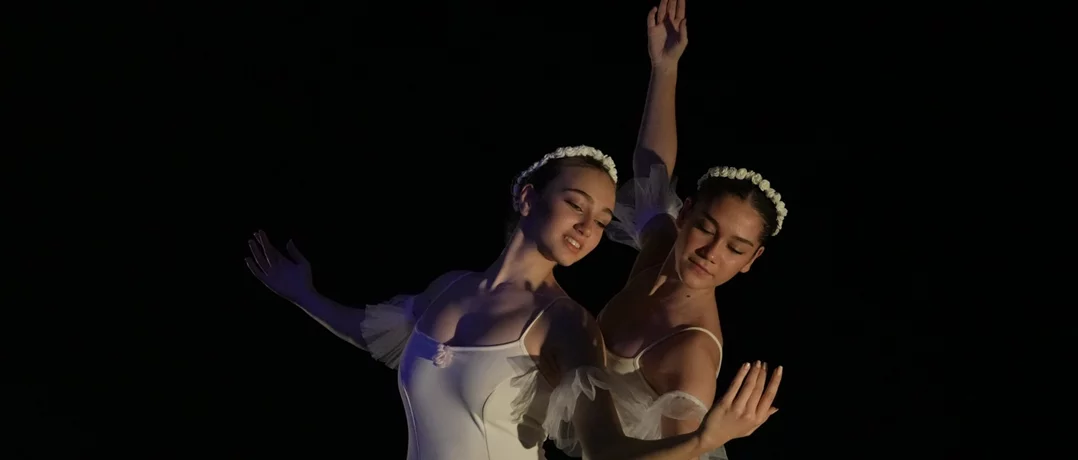
Fourteen Lebanese ballerinas take the stage in Les Sylphides, showcasing the beauty, discipline and dedication behind classical ballet. But behind the graceful movements lies a bigger story about the challenges facing ballet in Lebanon and the need to give local talent the recognition and support it deserves.
The beauty and reality of classical ballet in Lebanon
The beauty and reality of classical ballet in Lebanon
By Yara Saliba | November 20, 2026

Reading time: 5 min
Ballet, which originated in the Italian Renaissance courts during the 15th century before developing into a formal art form in France, has evolved over the centuries into one of the most recognized forms of classical dance. During the 19th century, it entered its Romantic era, characterized by dreamlike atmospheres, delicate movements and themes of fantasy and the supernatural.
One of the works associated with this tradition is Les Sylphides, a one-act ballet choreographed by Michel Fokine and set to music by Frédéric Chopin. More than a century after its creation, the production found its way to the Lebanese stage through the Art and Movement dance school, which presented the ballet in Hamra, Beirut with 14 Lebanese ballerinas aged between 16 and 24.
Bringing Les Sylphides to life
For Alice Masabki, the choreographer and instructor behind this performance, the choice was a personal one, as she had admired the production since childhood. The ballerinas who took part in the production, did not simply learn the steps, they had to understand the meaning behind the piece in order to perform it. Alice also made some changes to the choreography to make the show more enjoyable for Lebanese audiences. Knowing that some people find classical ballet boring, she wanted to create a more lively and entertaining performance while keeping its classical style.
During her interview with The Beiruter, Masabki revealed that the production involved approximately four months of intensive preparation while gradually focusing on perfecting the smallest details, from the dancers' movements to the way they positioned and turned their heads, ensuring that all 14 performers moved in harmony. "The audience's eye rests when it sees a harmonious ensemble," Masabki remarked, for her, all the ballerinas should move together as one.
Classical ballet demands both physical strength and mental discipline. Masabki emphasized that dancers must train daily, maintain their technique, memorize choreography and apply every correction. “A dancer must be as disciplined as a soldier in an army,” she remarked. This commitment also carries into their daily lives, as dancers must pay attention to their nutrition, stay hydrated and get enough sleep to keep their bodies fit for the demands of the art form.
The decline of classical ballet in Lebanon
Classical ballet has had a changing presence in Lebanon over the years. Looking back at her own experience as a student, Masabki believes that the art form has lost some of the ground it once had, particularly during the years of the war. Today, although many children are introduced to ballet at a young age, not all continue their training as they grow older. Many stop around the age of 10, a stage at which maintaining their interest and commitment becomes a challenge.
The financial commitment is another obstacle. To make real progress, students need to attend several classes a week, ideally four or five, which can become expensive for families. Attending only one or two classes weekly may not be enough to develop the technique and skills required.
However, one of the biggest challenges, according to Masabki, is the lack of public awareness. “Our number one enemy is ignorance. The ignorance of people about it,” she said, referring to how little many people know about classical ballet. Some audiences may find it boring or difficult to follow, making it harder to attract people to performances and encourage younger generations to take an interest in the art form.
Male participation is another aspect of the picture. For Masabki the number of boys in Lebanon who practice ballet is too little as she has no male students at her school. She has also noticed that men may be more drawn to contemporary dance, which they sometimes find more appealing. Still, in her eyes classical ballet provides an important technical foundation, even for dancers who later choose other styles.
Giving local ballet a stage
The lack of suitable performance spaces is also another challenge which makes it difficult for local artists to bring their work to audiences. Masabki’s school is based in Jal El Dib, she had to stage Les Sylphides in Hamra, Beirut, because the municipal theater in the Metn area was closed and had not been properly maintained or equipped for performances.
“Why should I have to go to Beirut when I have a theater here?” she asked, pointing to the difficulty of accessing a local venue.
She also called for greater involvement from public institutions, particularly the Ministry of Culture and local municipalities. While acknowledging that the Ministry has organized some cultural activities, she believes these efforts are still very limited. “There should be more, much more,” she stressed. She argued that theaters should be available and properly maintained across all Lebanon, not just in Beirut, so that people in different regions can attend performances without having to travel to the capital.
Masabki also suggested that television stations could purchase and broadcast local ballet productions, which would give them greater exposure. She wants audiences to become more familiar with classical ballet gradually, through performances that are accessible without compromising their artistic quality. “We don't want to reach only 3,000 people,” she said. “We want people from all areas to enjoy ballet and see a production of a high standard.”
It is encouraging to see Lebanese ballerinas performing at such a high level and working hard to share their art with the public. The Lebanese audience often show interest in international productions that come to the country. Meanwhile, local performances may deserve the same attention and appreciation. This is why Les Sylphides reminds us of the talent Lebanon has to offer and why local artists deserve more recognition and support.
-
-

-
Yara SalibaJunior Writer/Translator
-
