



In southern Lebanon, the remnants of previous wars are being cleared even as new ones accumulate. Accompanying a team of deminers operating under the supervision of the Lebanon Mine Action Center (LMAC), The Beiruter documents the painstaking work of removing decades-old explosives in Jezzine.
Demining Lebanon, one meter at a time
Demining Lebanon, one meter at a time
By Katharine Sorensen | November 27, 2026

Reading time: 10 min
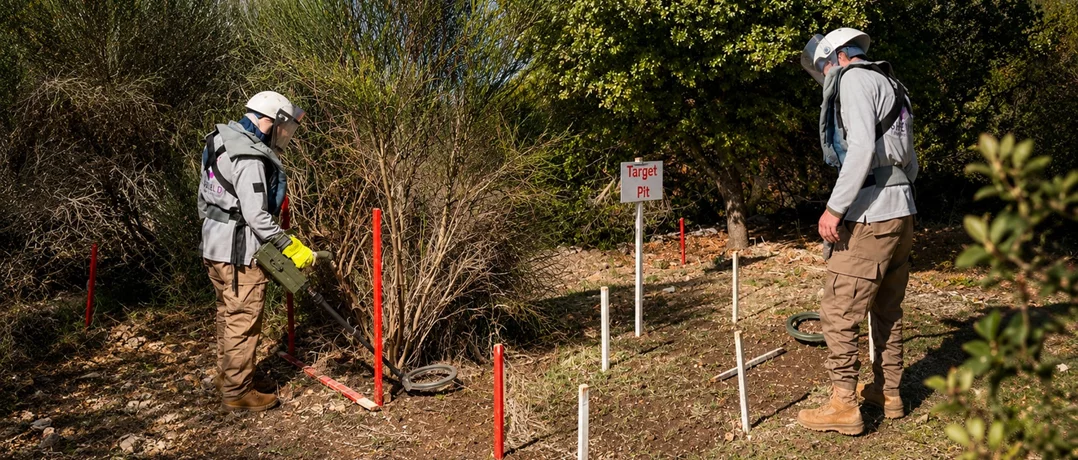
Jezzine is a very beautiful place. And this clearing is no exception. The light-coloured rocks and golden fall foliage lend the hillside a serene and almost pastoral quality. A woman moves through the clearing methodically. On her head is a white protective helmet. In her hand is a long green and black instrument. Despite the helmet’s rather cumbersome, transparent face visor, she moves her arm from left to right in confident, smooth strokes. Hardly any of the ground escapes her attention, because her task is one that leaves little margin for error. She is searching for explosives left behind by an invasion launched 44 years ago. Fatima Wehbi is one of seven deminers deployed in and around the clearing that day. The team has been working here since July. The operation is part of a national clearance effort overseen by the Lebanon Mine Action Center (LMAC), a body within the Lebanese Armed Forces that coordinates mine action across the country. Here in Ain Majdalain, Jezzine, the clearance is being undertaken by Lebanese humanitarian organization SHEILD and the Mines Advisory Group (MAG). When Israel invaded Lebanon in 1982, seven years into its civil war, Jezzine became a battleground between Israeli and Syrian forces, which had intervened six years prior. The invasion did more than devastate communities and disrupt livelihoods. It also left behind unexploded munitions that continue to endanger civilians today. “It’s been a stressful situation for a long time,” said Zainab Khalil, one of SHEILD’s community liaison officers. The contamination at this site in Jezzine dates exclusively from the 1982 invasion. The rest of the south has not been as fortunate. Wars in 2006, 2024 and 2026 have left successive layers of explosive contamination across the region. In areas closer to the Israeli border, and particularly the 61 villages under Israeli occupation, ongoing hostilities have also made certain clearance operations impossible. “The LAF has plans to enter, but it will take some time,” Hussein Badreddine, the site supervisor, said. Established in 1998 as the National Bureau for Mine Clearance, LMAC assumed its current name in 2007, a year after the war with Israel left large swaths of southern Lebanon contaminated with cluster munitions. From its headquarters in Fayadieh and regional centers in Nabatieh and Ras Baalbek, LMAC now coordinates the work of Lebanese and international organizations engaged in clearance, risk education, and assistance to victims. Lebanon was once close to eliminating its known cluster munition contamination. By May 2024, 92% had been cleared. Across Lebanon, nearly 447,000 explosive items were destroyed and 2.19 million square meters of land were made safe for civilian use in 2025 alone, according to LMAC’s annual report. Yet nationwide, 130 newly identified contamination sites added another 2.33 million square meters to the national inventory of hazardous land, more than the total area made safe that year. Amid this growing explosive contamination, Lebanon was granted a second extension under the Convention on Cluster Munitions, pushing its clearance deadline back to 2030. The country had originally been expected to complete clearance by 2021, a deadline first extended to 2026. And that was before the war of 2026. “The biggest obstacle to accelerating clearance in southern Lebanon is getting safe, sustained access to the sites, especially near the border,” said General Hassan Fakih, operations manager of SHEILD’s Mine Action Unit. The team’s operations base consists of a small concrete building and a weathered green shipping container that has been converted into a field office. Among those present at the base were two SHEILD community liaison officers, two SHEILD medics, a representative from RMAC (the Regional Mine Action Center, a regional arm of LMAC), two members of the mukhabarat (the LAF’s Intelligence Directorate), and Badreddine, the site supervisor from MAG. The morning brief, Badreddine explains, is of utmost importance. It is then that the plan for the day ahead and any potential risks are discussed. Inside the repurposed shipping container is a map that meticulously charts the progress the team has made thus far. The total task area to be cleared is 31,654 m². As of November 20, 25,014 m² had been cleared, equivalent to around three and a half football pitches, or 79% of the designated clearance area. The land is primarily agricultural. Only six farmers currently use it. Beside the map is a legend that catalogs the various types of munitions: M43, M42-46, A09, MZD2, M77, MK 85, MK118, BLU 18, BLU 26, BLU 61, BLU 63 — the list goes on. All, save for two, are American-made. The munitions vary considerably in design and intended purpose. Landmines are generally classified into two categories: anti-personnel and anti-tank mines, designed to target people and vehicles respectively. Cluster submunitions, by contrast, are smaller explosive devices dispersed from a larger munition. Those that fail to detonate can remain hazardous for decades. It is primarily these unexploded submunitions that Badreddine’s team is searching for in Jezzine. Leaning against one of the container’s walls is an assortment of brightly colored wooden stakes, known as pickets. Each color has a designated meaning. Red delineates safe and hazardous areas, blue documents daily clearance progress, and green indicates quality control inspections. Other colors denote the types of explosive ordnance found and removed. The challenges are many, and not all stem from the explosives themselves. Metal debris can trigger misleading detector signals, while dense vegetation can restrict the deminers’ movements. The steepness of the terrain can also complicate clearance operations, particularly when the gradient exceeds 40%. In the area assigned to Badreddine’s team, some sections reach 68%. “We can add sandbags for stabilization, but accessing certain parts of the hillside remains difficult,” Badreddine said. Even the possibility of an accident is accounted for before the team leaves the base. Before departing for the field site, team members’ blood types were recorded on a personnel registration sheet. The same information appears on the official team roster, alongside their names and identification numbers. And then again in the form of a patch affixed to their protective gear. The nearest hospital is 5 kilometers away. It is a journey the team hopes never to make. “If anything happens, don’t move,” Badreddine said. Leaving the operations base, the trucks continued on the main road before turning onto a narrow dirt track that had been cleared by the team to provide safe access to the clearance site. The terrain was traversable, but uneven, and the journey became considerably bumpier. After parking the trucks, the team had to climb uphill. With the rocky, steep slope and heavy protective gear, the climb alone was enough to leave one out of breath. At the entrance to the clearance site are two small plots designated for testing the deminers’ equipment, a “metal-free area” and a “target pit” situated side by side. An MK118, free from explosives, is buried 15 cm deep. An MK118 is a particularly nasty type of cluster submunition. If one explodes, it can take out an armored vehicle, not to mention a person standing nearby. The team has found six such munitions so far, along with a 52 mm mortar round. MK118s, Badreddine explains, are primarily found in Jezzine and the Bekaa. The explosive contamination further south are of a more varied nature. Mohammad, one of the team’s deminers, sweeps his metal detector over the “metal-free area.” Nothing. He then moves to the “target pit.” A buzzing sound breaks the silence. This activity is repeated every hour to ensure the equipments’ batteries still function. A faulty detector is a potentially fatal liability. The SHEILD and MAG team uses two types of metal detectors: a green Vallon VMH4 and a yellow Schonstedt. Most of the clearing activity is conducted with the Vallon, while the Schonstedt is used for inspecting areas between the rocks and smaller crevices that the Vallon’s circular search head can’t reach. At the Jezzine site, the deminers work 25 meters apart, a typical distance when clearing anti-tank mines, Badreddine explains. A distance of 15 meters is generally maintained when working in anti-personnel minefields. Not all seven deminers are deployed at any given time. Typically, three are engaged in active clearance while the other four undertake supporting tasks such as preparing sandbags or establishing a casualty evacuation (CASEVAC) lane. Every lane must have its own CASEVAC lane, all of which lead to the medic point, the designated location for emergency medical assistance. A shepherd was killed by an explosive device on this land in 1988. But no such accidents have occurred since then. For the seven deminers, the dangers posed by explosive contamination are hardly unfamiliar. All seven come from villages in southern Lebanon — villages that have borne the brunt of successive wars. Many of these villages are themselves riddled with landmines. Four of the seven deminers are women. Theirs is an unconventional job, they acknowledge, but they need to work and find pride in knowing their efforts are helping reclaim the land. “During the 2006 war, there were too many mines and too many victims,” said Sahar Zeineddine, a deminer from the village of Zawtar in the Nabatieh district. Unmarried, Sahar initially took up demining out of financial necessity and said she fell in love with the work. “The team is like my family. I see them more than my family,” Sahar said. Sahar has spent much of her life contending with the consequences of war. Her own home in Nabatieh was destroyed last week. She watched its destruction in a video posted online. Few members of the team grew up thinking they would become deminers. Mohammad el Haj, who will take over as site supervisor when Badreddine goes on annual leave, studied English literature at university. And Wafaa Diab is a proud grandmother of three. Originally from Sour, she has been working as a deminer for twelve years now. Following her divorce, earning enough to support her four children became critical. She happened upon an opportunity to train as a deminer through a recruiter in Nabatieh. More than a decade later, she can’t imagine doing anything else. “I needed to work, but above all, I want to help my community,” she said. The cessation of hostilities does not necessarily mark the end of a war’s economic or humanitarian consequences. As Lebanon contemplates its eventual reconstruction, the work of teams like Badreddine’s will be essential to enabling families to return safely to their homes and communities to reclaim sources of income lost for years, sometimes decades. “Clearance gives families the chance to farm safely again,” General Fakih said. For this team in Jezzine, the goal is to make this hillside safe again, 44 years after the war that contaminated it.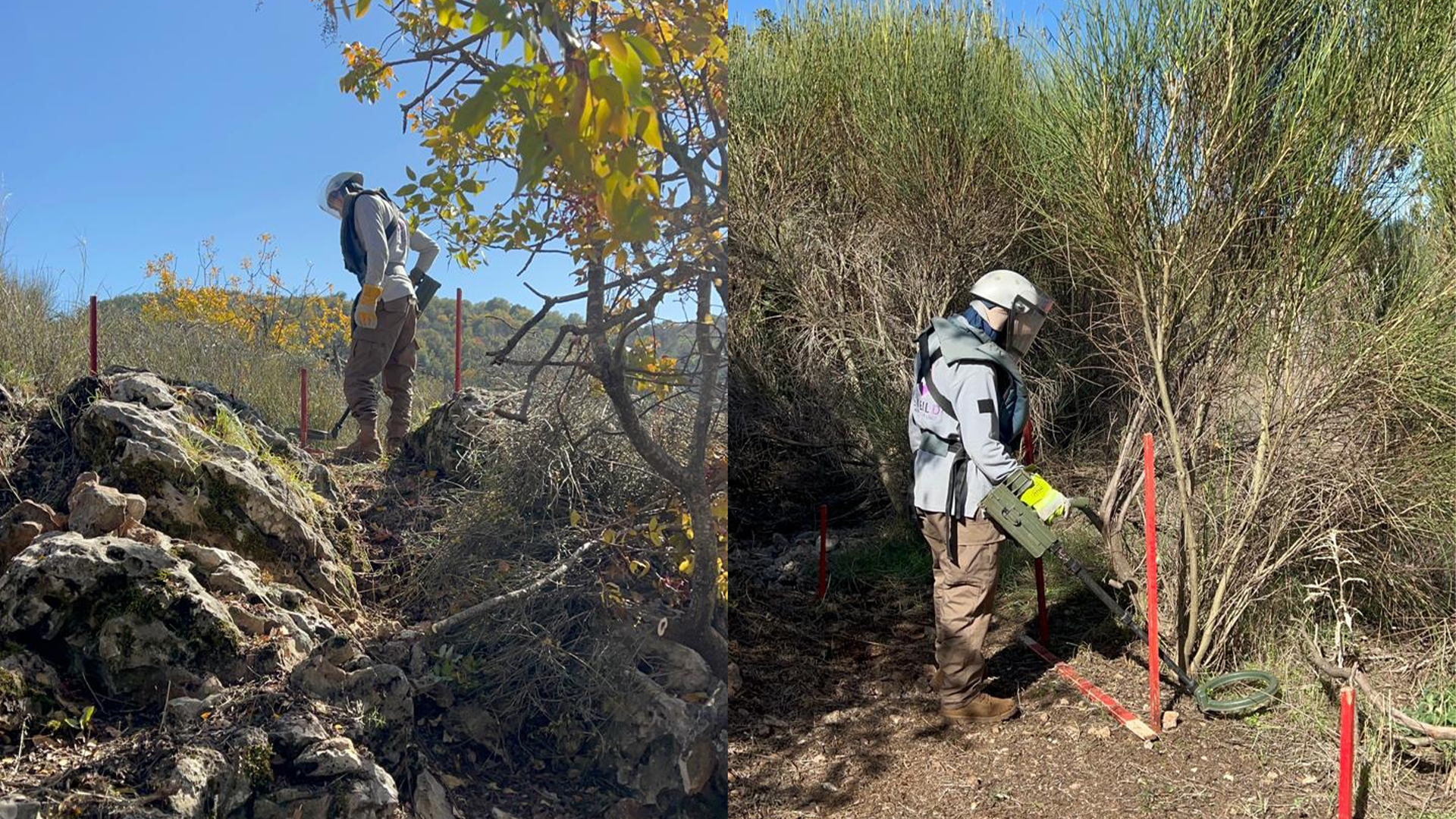 Deminers search for unexploded ordnance in Ain Majdalain, Jezzine. Photo: The Beiruter
The area is far too dangerous. We are waiting for the war to finish.
A moving target
Even when trained teams and equipment are ready, renewed strikes or access restrictions can force us to suspend work or redeploy.
At the operations base
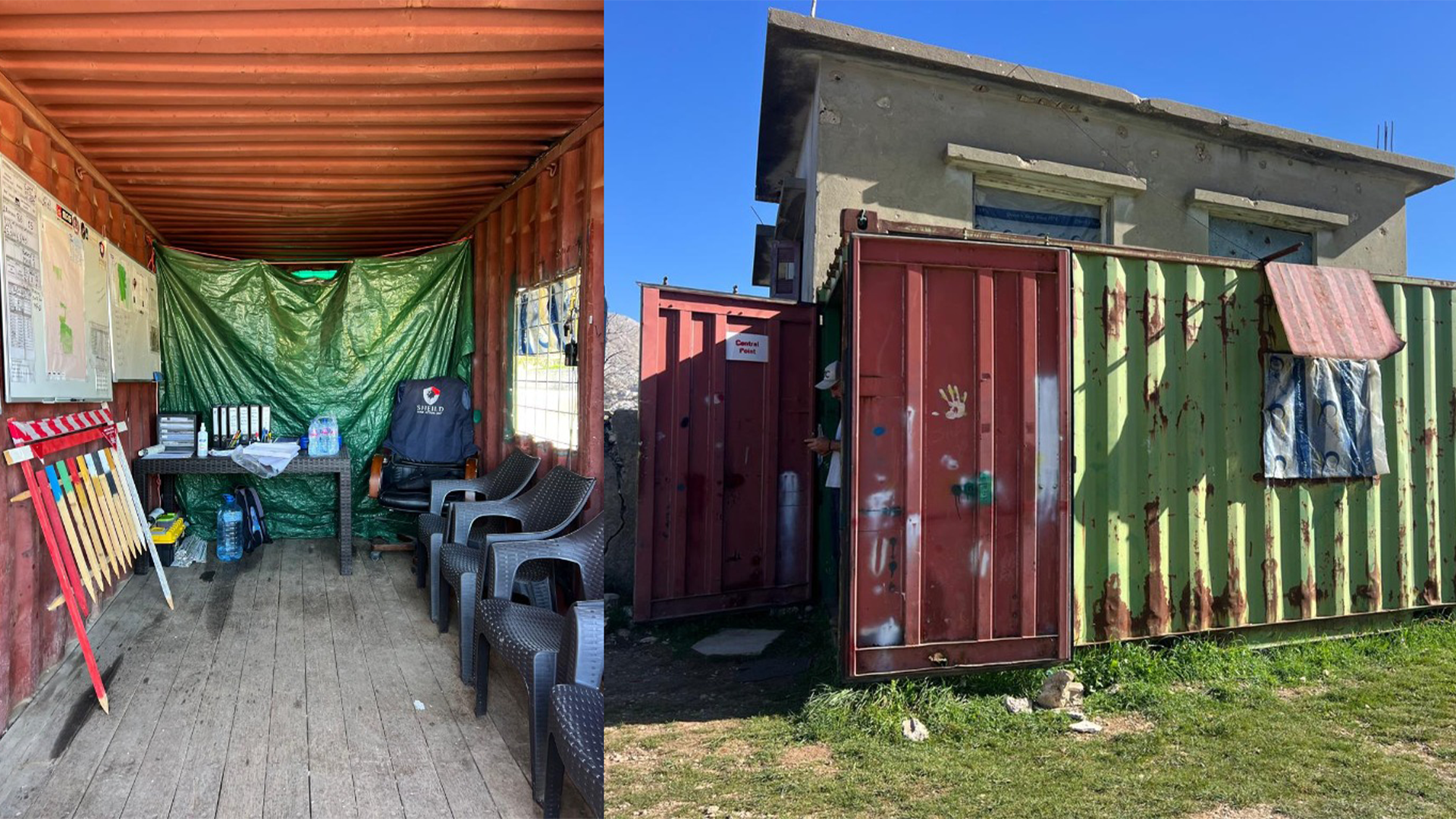 The interior (left) and exterior (right) of a repurposed shipping container serving as the demining team’s field office in Ain Majdalain, Jezzine. Photo: The Beiruter.
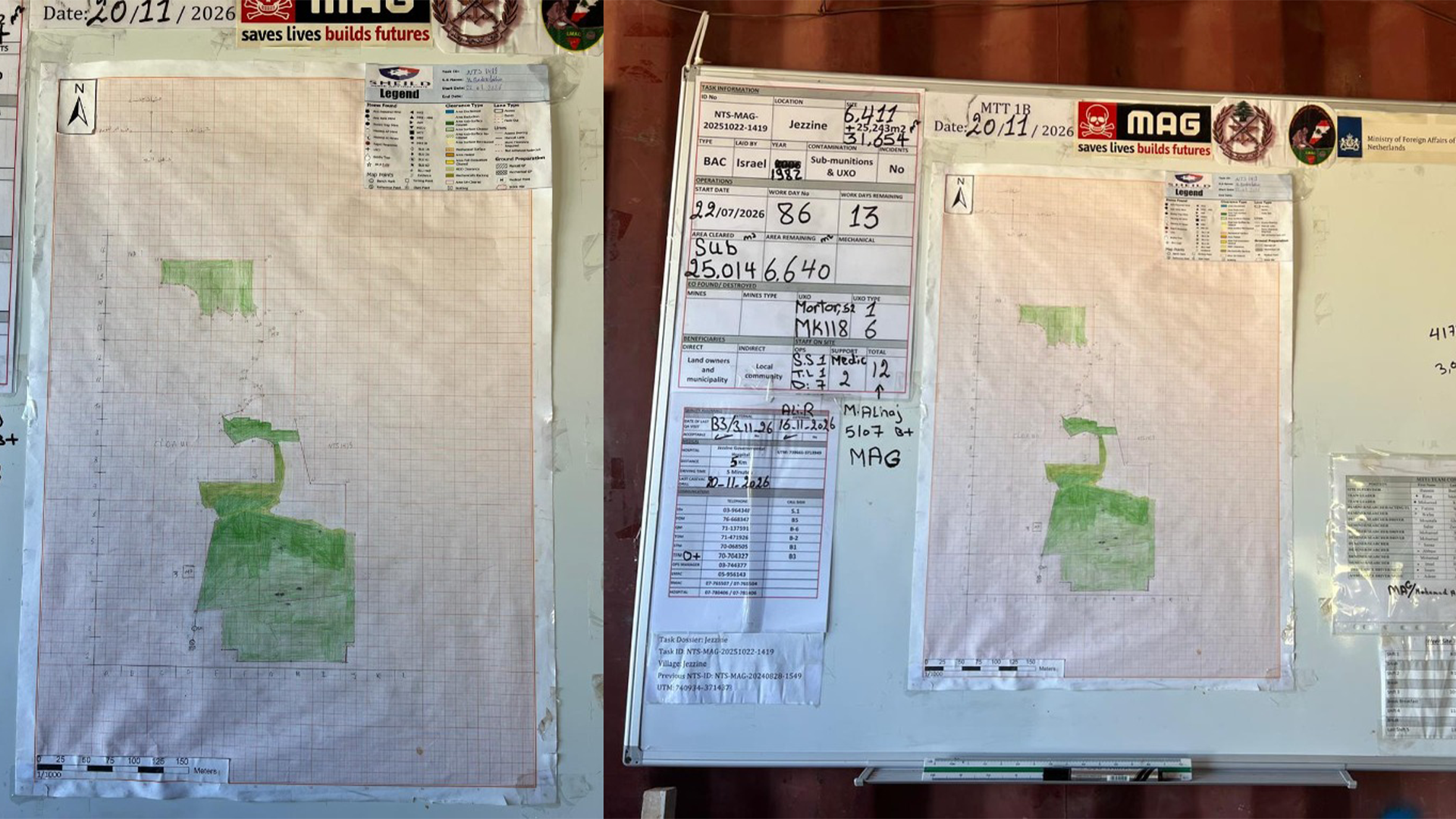 A detailed map of the clearance area (left) and the operations board (right) documenting the demining team’s progress in Ain Majdalain, Jezzine, as of November 20, 2026. Photo: The Beiruter.
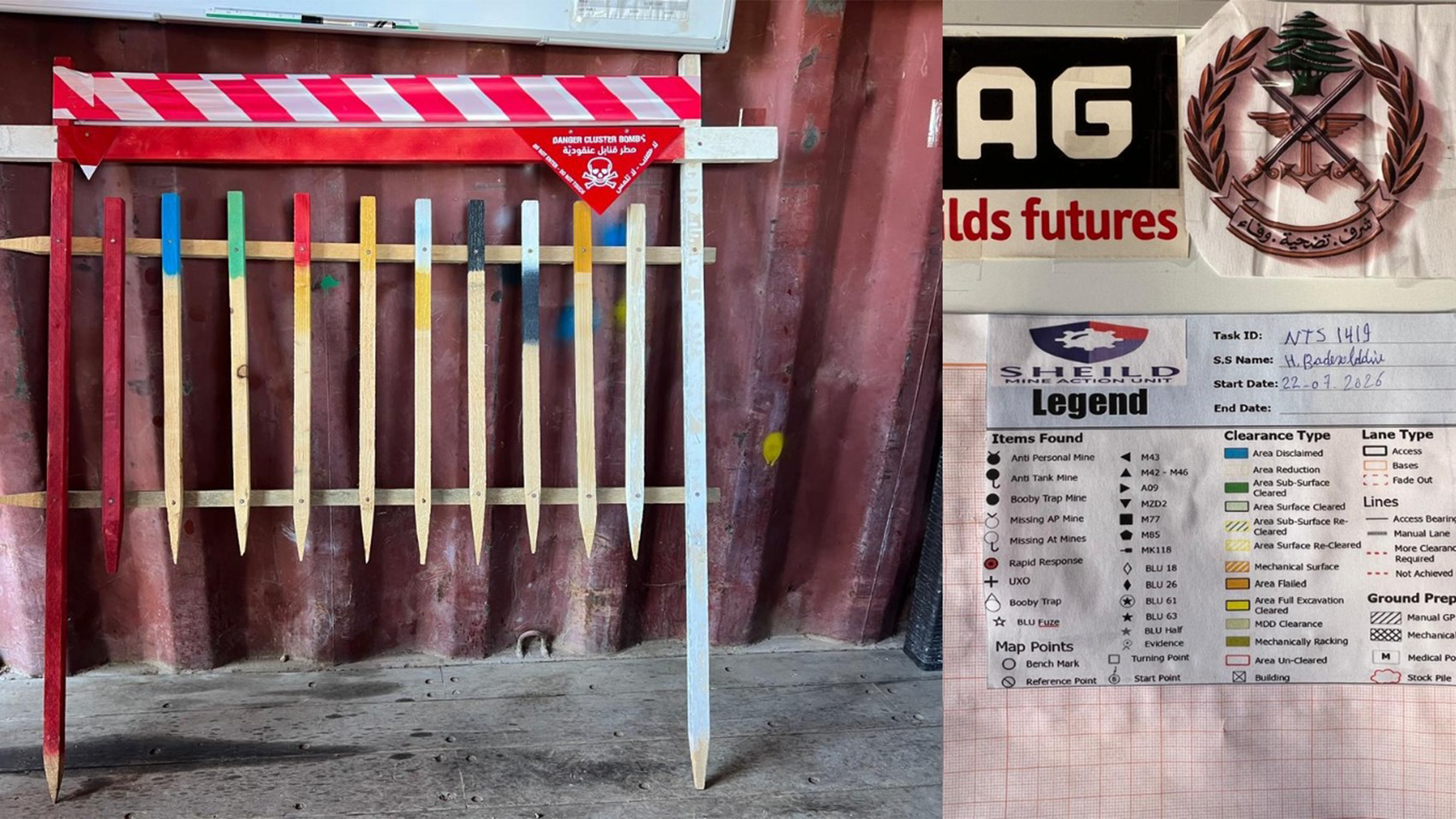 Color-coded wooden pickets (left) and the clearance map legend (right), illustrating the system used to mark hazardous areas, document clearance progress and record explosive ordnance discoveries. Photo: The Beiruter.
Reclaiming the land
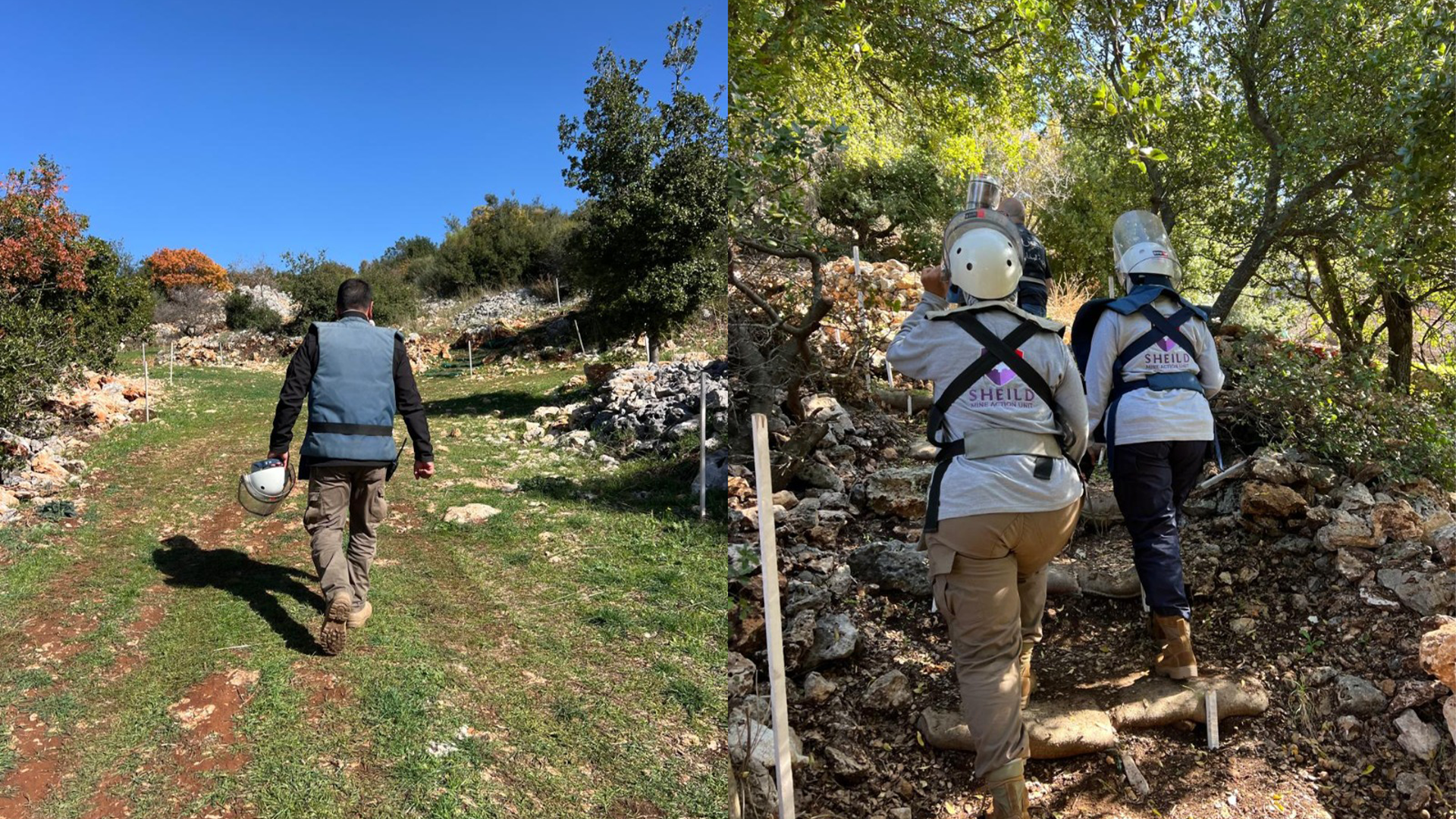 Members of the mine clearance team make their way along cleared paths toward the operations site in Ain Majdalain, Jezzine. Photo: The Beiruter.
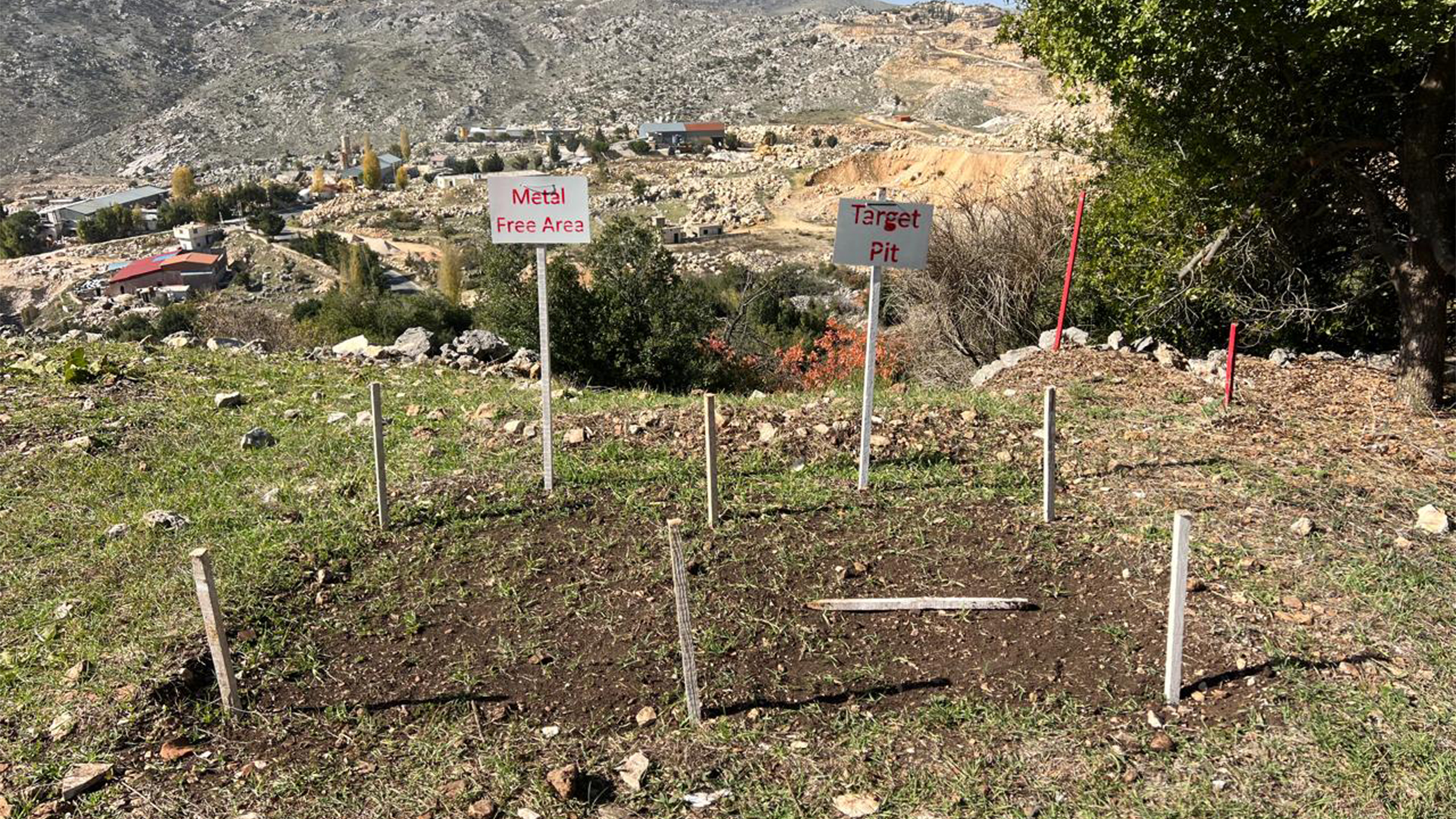 The designated testing areas at the clearance site in Ain Majdalain, Jezzine, where deminers verify the functionality of their metal detectors. Photo: The Beiruter.
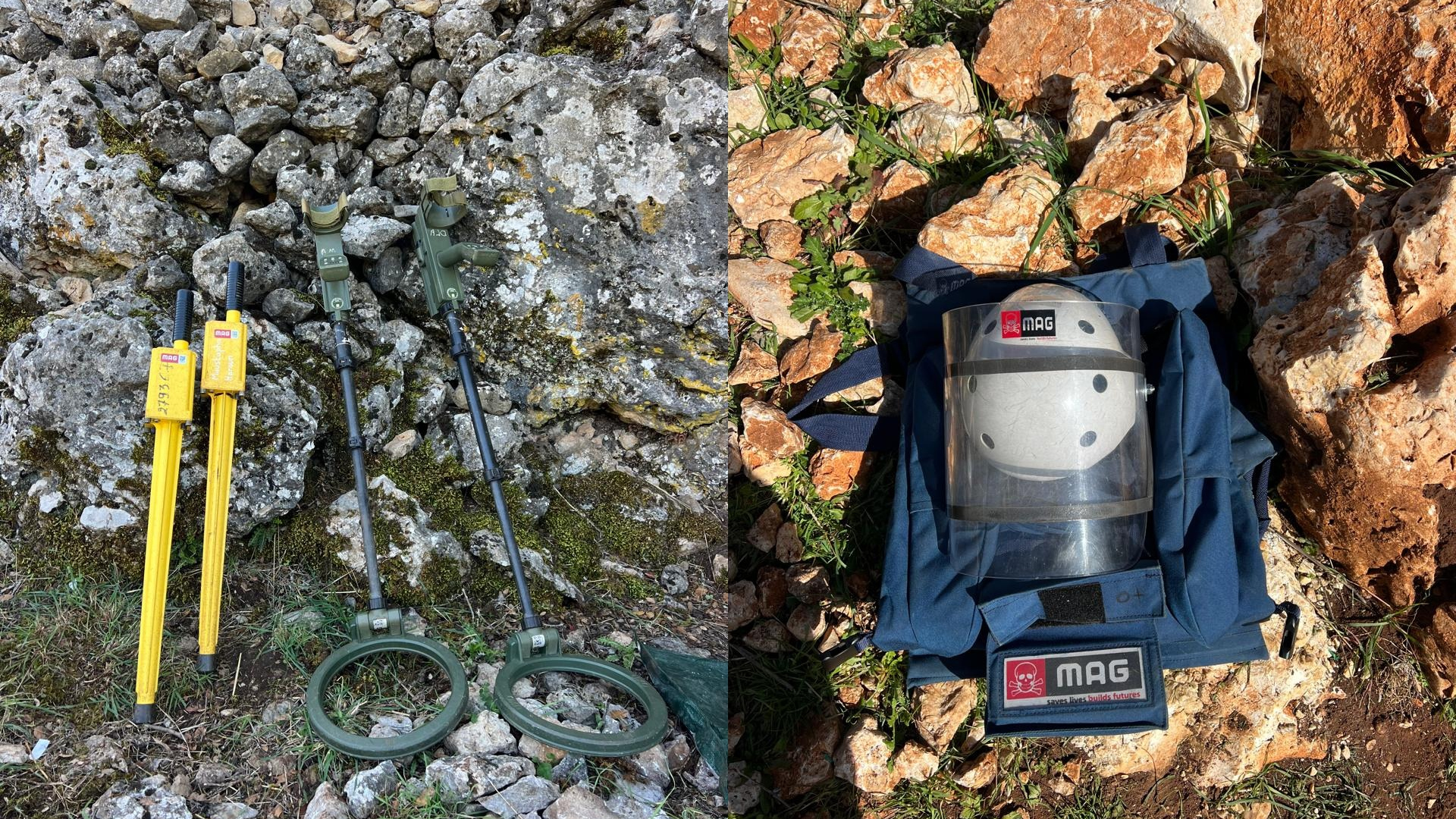 Schonstedt and Vallon metal detectors (left) and a deminer’s protective vest and helmet with a transparent face visor (right) at the clearance site in Ain Majdalain, Jezzine. Photo: The Beiruter.
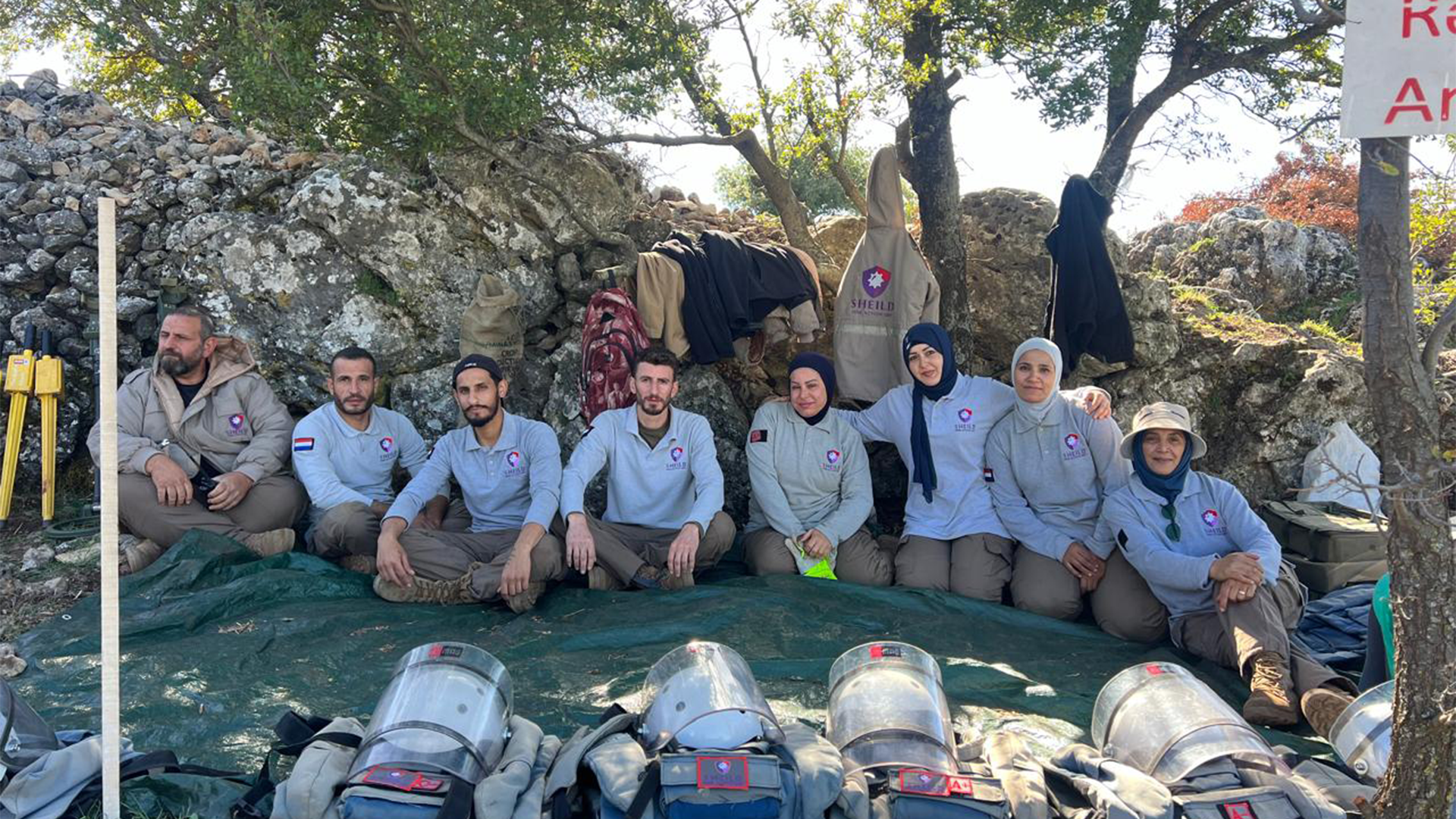 Members of the SHEILD demining team during a break at the clearance site in Ain Majdalain, Jezzine. Photo: The Beiruter.
At least now we are cleaning our lands and cleaning our homes.
The real measure of success is what people can safely do with the land after we hand it back.
-
-

-
Katharine SorensenReporterSpecializing in global affairs, technology and economics, with a focus on on-the-ground investigative reporting.
-
