



Allegations that Venezuela issued thousands of passports to Hezbollah-linked figures raise concerns over identity misuse, security oversight, and international accountability.
10,000 passports from Maduro to Hezbollah

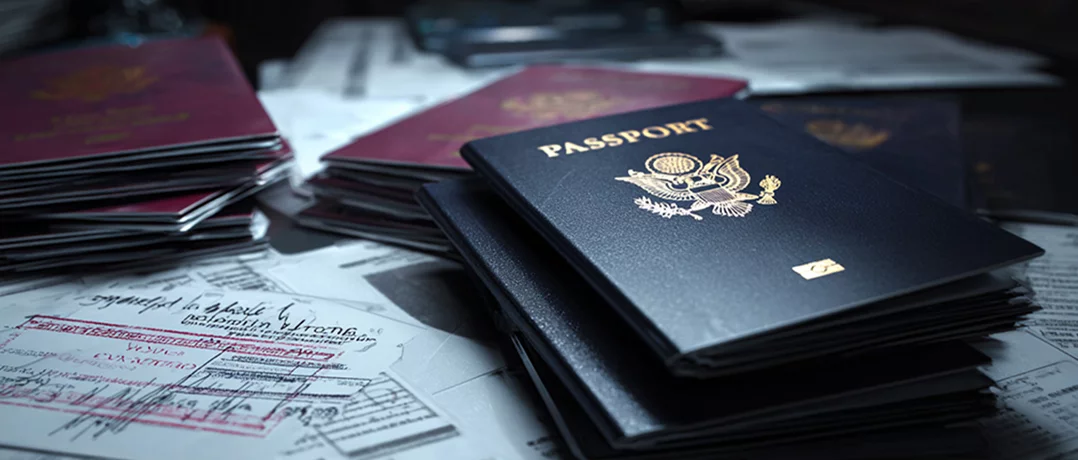
Informed sources to The Beiruter alleging that the Venezuelan government had previously granted thousands of passports to members of Hezbollah, and possibly to former Syrian army officers, have stirred controversy and suspicions over the group’s close ties to Caracas and the repercussions that this might have in Lebanon.
Reports of 10,000 Venezuelan passports given to Hezbollah and former Syrian officers
In this context, former Lebanese Member of Parliament (MP) Wehbe Katisha disclosed key information exclusively to The Beiruter regarding the matter at hand.
The MP confirmed that Venezuelan President Nicolás Maduro had previously granted approximately 10,000 Venezuelan passports to Hezbollah operatives.
He explained that once such passports are handed over, Hezbollah controls how they are distributed and used. These passports, he said, could be allocated to individuals of various nationalities, including Syrians and non-Syrians alike. Informed sources also noted to The Beiruter that it is possible that former Syrian military officers received these passports to facilitate movement or escape between countries (especially as recent rumors have circulated that former Assad regime officers have taken refuge in Lebanon).
Katisha stressed that the use of these passports falls entirely outside state oversight once they are transferred. He warned that possession of a large number of legitimate passports allows them to be issued to virtually anyone, including individuals fleeing judicial prosecution.
He underlined that the gravity of the issue increases significantly given Hezbollah’s international status, describing the group as an “illegal militia that is subject to international pursuit.” In this context, he said, the alleged passport distribution constitutes an additional offense attributed to the organization.
When asked about possible repercussions within Lebanon, particularly in light of ongoing controversy surrounding Syrian officers in the country, MP Katisha acknowledged that the issue intersects with sensitive domestic files. However, he explained that Lebanese security agencies deal with such matters on a daily basis and that this case is not isolated.
Nonetheless, he said that this serves as a warning signal, prompting security agencies to heighten vigilance. According to him, authorities are expected to monitor potential passport leakage closely and verify whether such documents are in the possession of Lebanese citizens or foreign nationals operating within the country.
He further stated that any future political change in Venezuela would inevitably prompt investigations into the issuance of these passports, including who received them, how they were used and for what purpose.
Historical relations between Venezuela and Hezbollah
Venezuela has historically maintained close ties with Iran and other members of the so-called “Axis of Resistance,” including Hezbollah and pro-Iranian networks in Latin America. The strategic alliance is rooted in shared illicit interests and Iran’s broader geopolitical agenda. Hezbollah has moved beyond a limited terrorist presence to become an integral part of the networks sustaining Nicolás Maduro’s regime. Through long-established Lebanese and Syrian diaspora communities, Hezbollah built compartmentalized, family-based structures involved in money laundering, logistics, document fraud and fundraising. These networks are embedded within Venezuela’s regime-controlled illicit economy and political apparatus.
In return, the Maduro government has provided protection, access to state institutions, and logistical corridors, including clandestine air links connecting Caracas with Tehran and Damascus. This cooperation mirrors Hezbollah and Iran’s support for Bashar al-Assad in Syria, aimed at preserving the “Axis of Resistance.” Venezuela’s strategic location also allows Iran and Hezbollah to project influence closer to the United States. Together, they have helped turn Venezuela into a hub where transnational organized crime and international terrorism intersect, benefiting both sides politically, financially, and strategically.
In conclusion, there are serious concerns surrounding the alleged distribution of Venezuelan passports to non-state actors and individuals outside formal legal frameworks. While the information remain based on media disclosures, their implications (particularly when involving an internationally pursued organization) are profound and far-reaching. As Lebanon and the international community grapple with cross-border security challenges, the issue underscores the growing risks posed by the misuse of state-issued documents in an increasingly interconnected world.
-
-

-
The Beiruter
-
