



An in-depth look at Lebanon’s breast cancer burden, from rising diagnoses and early detection to treatment barriers, medication access and the long-term support patients need beyond survival.
A diagnosis, a struggle, a lifetime after breast cancer
A diagnosis, a struggle, a lifetime after breast cancer
By Jenna Geagea | October 16, 2026

Reading time: 4 min
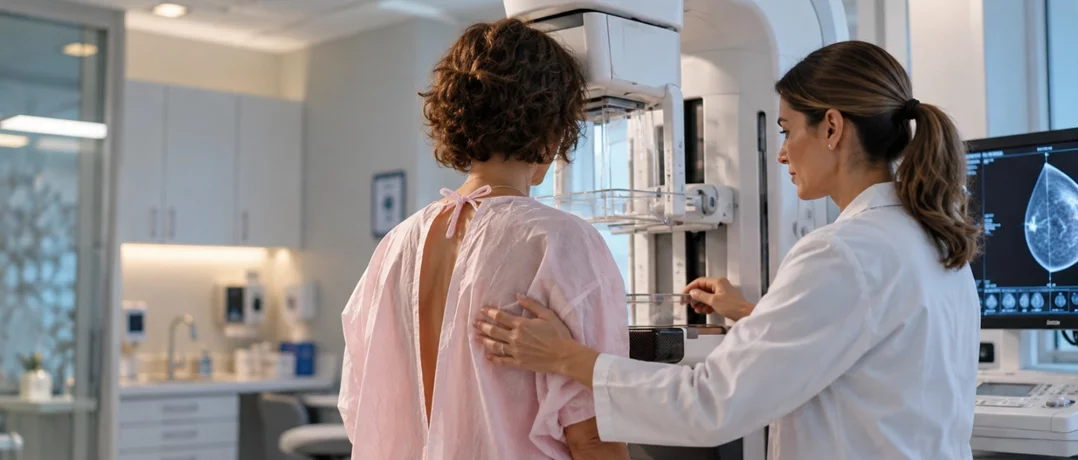
Breast cancer is the most commonly diagnosed cancer among women in Lebanon, affecting thousands of families each year. While greater awareness, improved screening and advances in treatment have helped increase early detection and survival, significant challenges persist. Many women are diagnosed at a younger age than their counterparts in Western countries, while financial hardship, medication shortages and barriers to screening continue to complicate access to care. Understanding the scale of the disease in Lebanon means looking beyond incidence and mortality to examine the healthcare system, the availability of medication and the support patients need throughout and beyond their treatment.
A disease by the numbers
Breast cancer is Lebanon’s most common malignancy. GLOBOCAN’s 2024 estimates counted 3,404 new breast cancer cases among 17,728 cancers nationwide, or 38.7 percent of all cancers in women. The disease caused 978 deaths, making it the leading cancer killer of Lebanese women. Health Minister Rakan Nassereddine put the toll at more than 3,800 cases a year when he launched this year’s national campaign. The figures differ by source, and under-registration remains a known caveat.
In the United States, half of new cases occur after 65. In Lebanon, 49 percent are diagnosed before 50. The average age at diagnosis is around 52, against 62 in the United States, Europe and Australia. AUBMC studies place 18 to 20 percent of Lebanese patients under 40, compared with 5 to 7 percent in Europe and the US.
Youth carries a price. In an AUBMC matched cohort, five-year disease-free survival was 75.6 percent for women under 40 and 92.7 percent for older patients. Age itself was not an independent predictor once treatment was accounted for. This is why Lebanese guidelines recommend annual mammography from 40, a decade earlier than many Western protocols.
The ministry’s national breast cancer committee reported that roughly 65 percent of cases are now caught early. The foundation adds that 90 percent of early-stage patients remain well after five and ten years.
Yet approximately one-third of cases are still diagnosed at an advanced stage. The ministry attributed the rise since the pandemic to women postponing examinations during the financial collapse. A 2023 survey of 400 women aged 35 to 75 found that 79.3 percent had never screened through a national campaign. The ministry’s answer, announced on 8 October, converts the seasonal campaign into a year-round program. Every government hospital now offers free digital mammograms to Lebanese women over 40, and participating private hospitals charge $30.
Minister Nassereddine reported that cancer-drug distribution rose from about 65,000 units in 2024 to nearly 200,000 in 2025, a partial recovery after the worst shortage years. Conflict has left scars. According to the ministry, 15 percent of hospitals providing cancer treatment have been rendered inoperable.
“Patients need more than medication”: Hani Nassar
Hani Nassar founded the Barbara Nassar Cancer Foundation after his wife died of cancer. “We are seeing cases in women in their twenties,” he told The Beiruter. “I know women aged 23, 24 and 25 who have been diagnosed with breast cancer.” He cautioned that official tallies understate reality, noting that cancer registration “is not accurate” and that “not all cases are being registered.”
On medication, he acknowledged that the ministry distributes many drugs smoothly. He explained that others cost only $20 to $40 yet burden patients who need them for years. Newer therapies, registered in Lebanon and covered by insurers, remain outside ministry coverage. He questioned cheaper imports from China, India or Iran. “The tenders issued by the Ministry should not be based solely on price,” he argued, insisting that “the entire package matters”: follow-up, scientific support and monitoring.
His foundation’s mission, however, begins where chemotherapy ends. “Patients need more than medication,” he stressed. He recalled a survivor who told him, two decades on, “To this day, I still do not have a mirror in my bathroom at home.” He challenged the notion that a cleared patient is finished, “who says she does not need psychological support?”
An agreement with the Ministry of Public Health has made the foundation the first specialized cancer center in Lebanon included in the primary healthcare network, and a referral for larger dispensaries. “Our center is the only one in Lebanon working on this particular approach,” he asserted, lamenting that recognition came without “any financial support.” He now sits on the committee working to embed survivorship care in the national cancer plan. He also projected more than 3,000 participants at Saturday’s Pinky Promise Pink Walk, up from roughly 2,000 last year.
Lebanon’s numbers describe a country that detects breast cancer earlier than most of its neighbors. It still loses women to late diagnosis, costly drugs and fragile systems. The next frontier lies after detection, in the years after treatment ends.
-
-

-
Jenna GeageaReporter/Writer
-
