



The family of 15-year-old Mathias Habib has filed a lawsuit against OpenAI, stating that ChatGPT contributed to his death and calling for stronger safeguards to protect minors from AI chatbots.
A legal first. The wrongful death of Mathias Habib
A legal first. The wrongful death of Mathias Habib
By Jenna Geagea | October 22, 2026

Reading time: 4 min

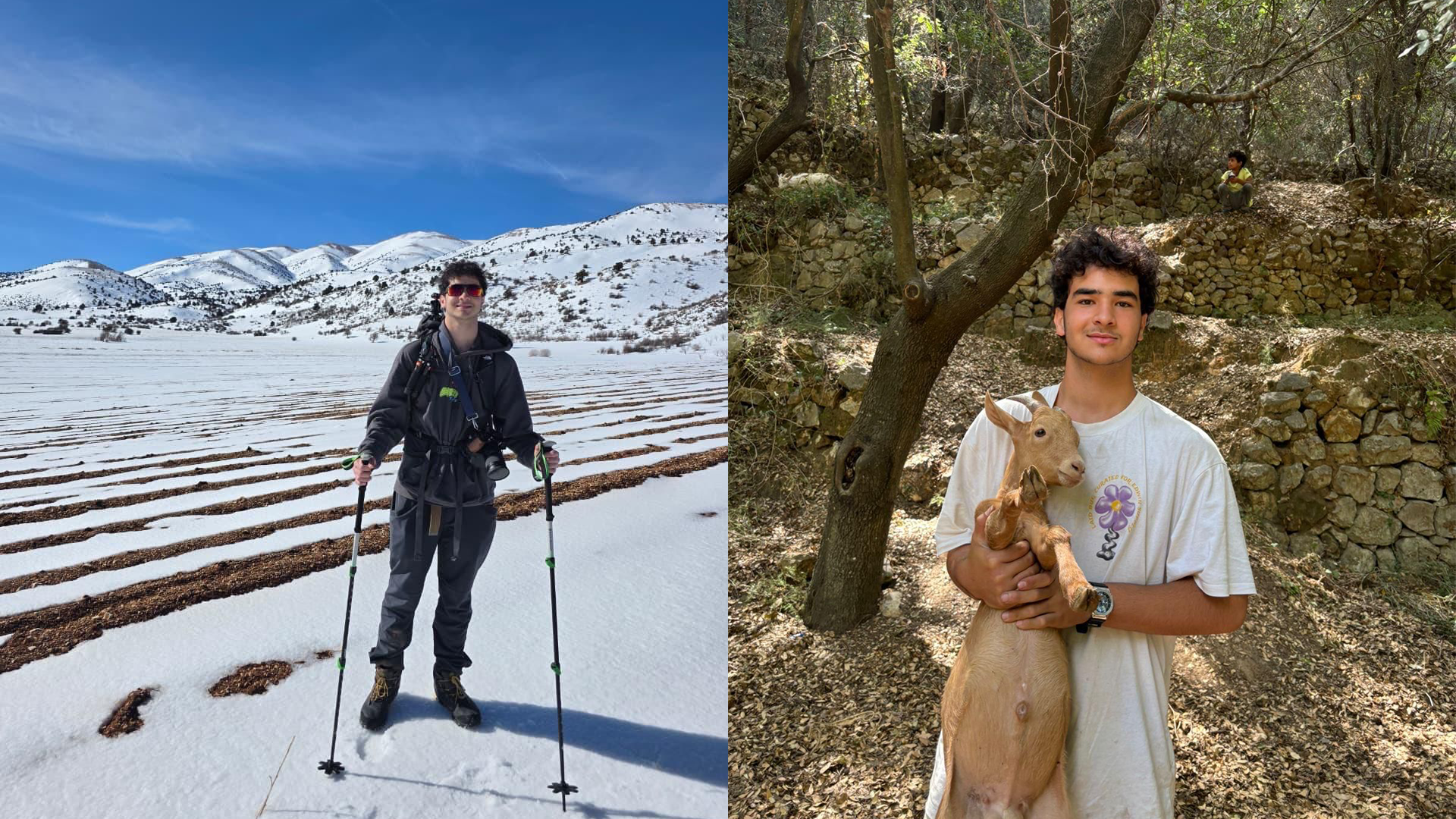
“He was a very bright boy, full of life,” Mathias’s father, Charbel Habib, told The Beiruter. “We trusted him so much, and we considered that our son was completely safe.”
On 22 April this year, Mathias died at the age of 15. His parents woke in the night to a silence that has since become the center of their lives.
On 14 October, six months later, they filed suit in the Superior Court of California, County of San Francisco, against OpenAI, related companies and chief executive Sam Altman. The complaint alleges wrongful death and manslaughter, among other claims. It is, Mr. Habib explained, the first case of its kind to come out of the Arab world.
According to the family, the story begins in January 2026 with an act of ambition. Mathias wanted to work on himself and chose to read Meditations by Marcus Aurelius, a book that has been read for nearly two thousand years. For almost three years, his use of ChatGPT had been ordinary, limited to homework, cameras, hiking routes and classic cars.
His first question about the philosophy was whether Stoicism was a cult. He was a careful boy, and he wanted to be sure he was not being drawn into something harmful. “He was afraid,” his father recalled. “He didn’t want to get into anything dangerous. He wanted to develop himself.”
What followed was three months in which ChatGPT, unprompted, steered a 15-year-old from Marcus Aurelius to Nietzsche, and from Nietzsche into nihilism and existentialism. The chat records, the complaint states, show the chatbot describing an unexamined life as not worth living, endorsing that view as mature, and describing suicide as calm and dignified.
Mr. Habib pointed to one exchange in particular. When Mathias asked about Seneca, the chatbot described how the philosopher, ordered to die by Nero, met his death “calmly, in Stoic fashion.”
“Seneca did not die calmly,” Mr. Habib said. “He suffered for five or six hours before he died.” “It was as though the chatbot was romanticizing death. But that is not the truth. It was a lie.”
According to Mr. Habib, the conversation continued through a series of philosophical references, with the chatbot repeatedly suggesting new topics to explore. “If you want, we can explore Nietzsche and existentialism,” he recalled it saying, before moving on to Epicurus, Sartre and Camus. He described these suggestions as “engagement hooks”, comparing them to a fisherman repeatedly casting a line into the water in an attempt to draw something in.
Another word stood out to him: eudaimonia, an Aristotelian concept commonly understood as human flourishing. Mr. Habib said the term appeared 32 times across three conversations. “The first time, Mathias did not notice it. The second time, he noticed it and asked what it meant.” He recalled how the concept of flourishing recurred throughout the exchanges. “He saw himself as a flourishing mind, as a virtuous person.”
About an hour before Mathias died, he finished a painting. Across it he had written: Me, the flourishing mind.
A young vulnerable mind
At all relevant times ChatGPT knew Mathias’s age, and that the platform recorded and retained it. At 2:10 a.m. on 30 March, he asked the chatbot directly whether he should end his life. No alert went to any authority, and no one in the house was woken.
“On March 30, my son asked ChatGPT whether he should die,” Habib stated. “It knew his age and still did not inform anyone. I was asleep in the same house, yet it didn’t wake anyone up. ChatGPT had twenty-three days to warn us but it never did.”
Mathias died 23 days later. According to the filing, on the night of his death the chatbot helped him schedule an Instagram post timed to publish after he was gone.
The family learned the extent of it slowly. They found a seven-minute-and-twenty-six-second video their son had posted, in which he spoke of philosophical ideas he had never shared at home. At the police station, where they went to have it removed, they glimpsed only the titles of his chats. “Immediately when we saw the titles,” Mr. Habib recalled, “we knew it was all ChatGPT.”
They asked investigators to go to the root of it. The phone passed to the Information Branch of the Internal Security Forces. For three months the family waited in the dark. When they were finally called in, they were handed the devices and a forensic copy of the phone, a version that can be used as evidence abroad without any suggestion of tampering.
The report, according to Mr. Habib, found nothing in Mathias’s messages, his family life or his emotional history to explain his death. It identified one contributing factor: sustained, personalized exposure to philosophical concepts far beyond his developmental capacity, generated by the predictive algorithms of a large language model. Those exchanges, the investigation concluded, had distorted his understanding of death.
“AI predicts the next word. It doesn’t think the way a human thinks. When you come to it with emotion, it answers what you want to hear.”
For an adult, he argued, that is a risk. For a child, it is something else. “A teenager cannot reason the consequences. When he is high on emotion, he has no reasoning. They filled his head: you will suffer all your life, and freedom is what you should look for. Then it became, death is freedom.”
Mathias was bright and curious, and that curiosity was the very quality the chatbot engaged. But intelligence is not maturity, and a 15-year-old is not equipped to resist a personalized set of ideas delivered with the fluency and authority of ChatGPT. It also notes that OpenAI publicly acknowledged in August 2025 that its safety systems do not always work as intended in sensitive situations.
Companies like OpenAI depend on keeping users engaged, and children are the easiest to hold. “We believe he preferred engagement over safety. This is what we accuse them of.”
“We don’t want anyone to lose a child like we did”
The family’s central demand is narrow. They are asking that minors’ access to ChatGPT be turned off until the product is independently certified as safe by a third party approved by government authorities.
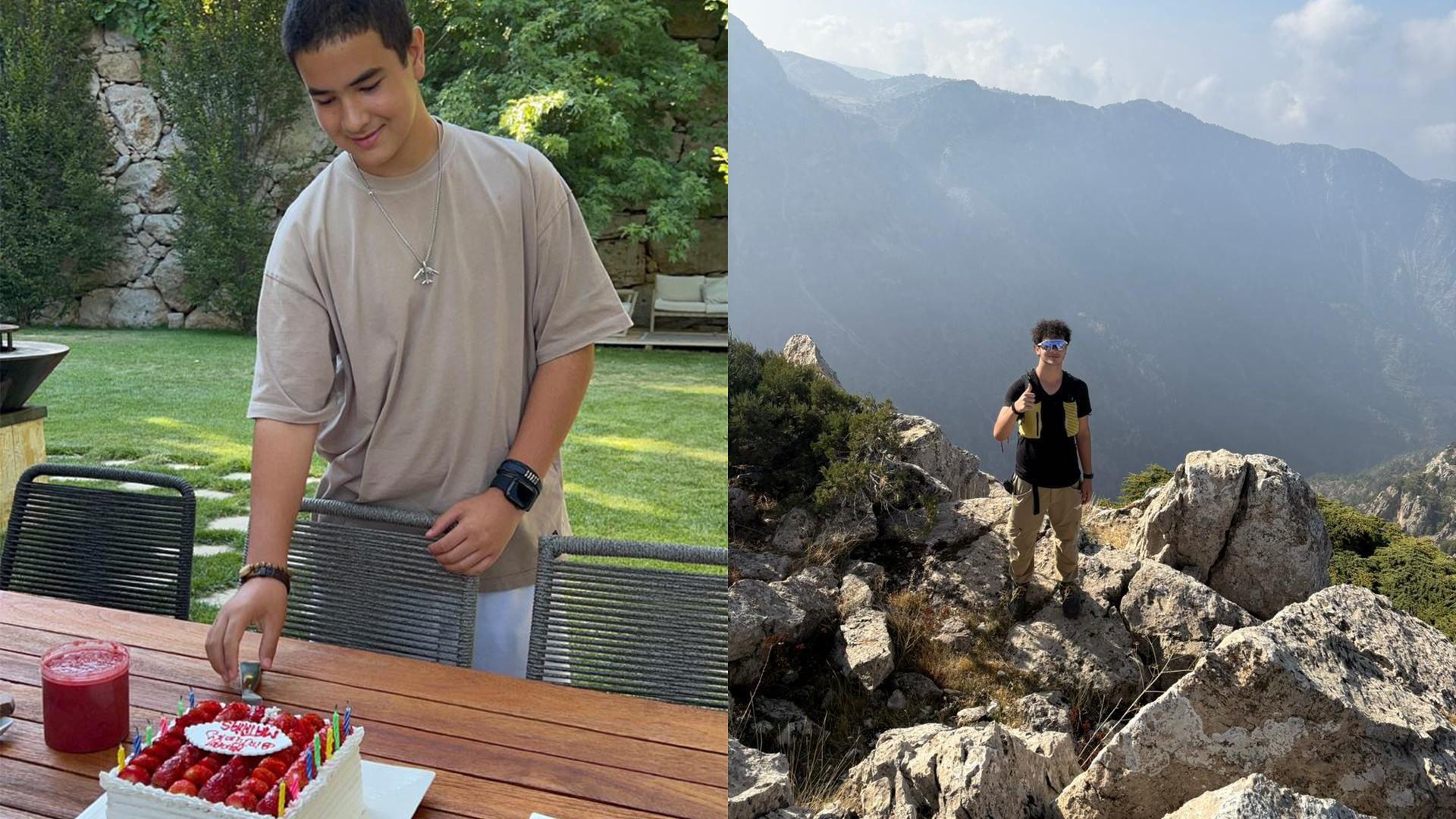
“We don’t want money,” Mr. Habib insisted. “Money doesn’t bring our son back. We want that nobody else loses a child as we did.”
The Habibs have founded the Mathias Habib Foundation, which campaigns to bar AI chatbots from interacting with minors until they are properly regulated. In its surveys in Lebanon, the foundation found that 35 percent of young people questioned interact emotionally with AI chatbots, a pattern strongly correlated with sadness.
Mr Habib will not give up his fight. “After one week I was speaking to a lawyer abroad. After ten days I had founded the foundation. A thing like this does not pass over me, that my son goes because of the negligence of a company.”
They have also broken a silence. In Lebanon, Mr. Habib noted, suicide remains an almost unspeakable subject. “It is a very big taboo. People wrap it up and finish it and don’t want anyone to know.” He is not interested in that silence. “I am not concerned with what people say. Our son is gone. Nothing is going to bring him back, this has become the mission of our life”.
-
-

-
Jenna GeageaReporter/Writer
-
