



China’s Shenzhou-21 mission advances its space ambitions with human and biological research in orbit.
A new Chinese milestone in space science

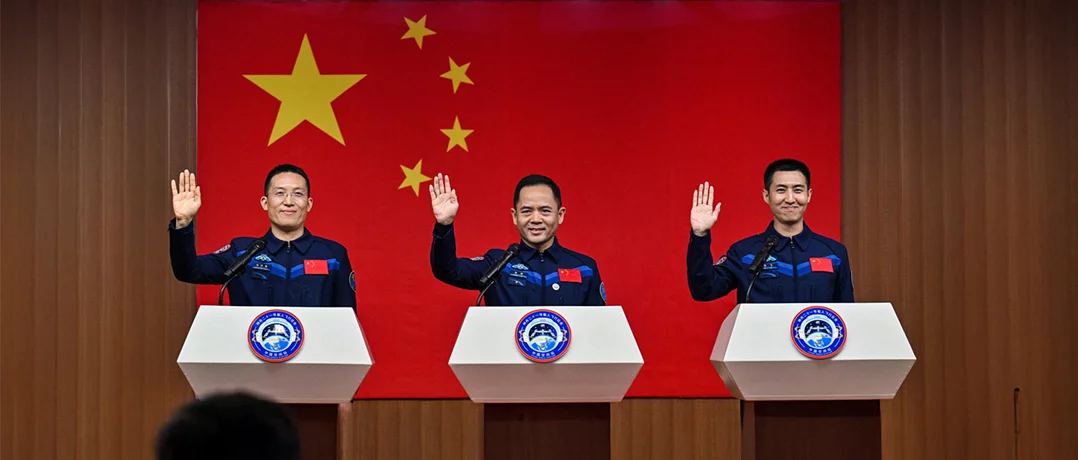
The spacecraft lifted off at 22:44 local time from the Jiuquan Satellite Launch Center in northwestern China, advancing Beijing’s ambition to solidify its position among the world’s leading space powers. The mission represents a dual achievement: human as well as biological research in microgravity.
Space innovation is not a mere technological milestone, but rather one that carries with it significant political influence. It is worth noting that during the Cold War, space competition between the United States and the Soviet Union (USSR) was a key contentious area, with major episodes in the Space Race including Moscow’s launch of the first artificial Earth satellite, Sputnik 1, in 1957 and Washington’s Strategic Defense Initiative (SDI), better known as “Star Wars” program, in 1983.
The youngest astronaut in Chinese history
At just 32 years old, flight engineer Wu Fei became the youngest astronaut ever to take part in a Chinese space mission. He joined Commander Zhang Lu, a veteran of the Shenzhou-15 mission, and cargo specialist Zhang Hongzhang. Together, the trio represented a new generation of Chinese explorers propelling the national space program into its next phase.
According to Zhang Jingbo, spokesperson for the China Manned Space Agency (CMSA), “Shenzhou-21 reinforces China’s long-term commitment to scientific innovation and expanding the frontiers of human knowledge.”
Rodents in orbit: a scientific first
For the first time, China is conducting orbital experiments on mammals, sending two male and two female rodents to the Tiangong Space Station. The project aims to study how microgravity affects mammalian physiology, including metabolism, reproduction, and the nervous system.
Scientists believe the data could be critical for future long-duration missions, especially those aimed at the Moon and Mars. The mission’s biological component marks a strategic advancement in astrobiology and medical science, underscoring China’s growing research capabilities.
Tiangong: symbol of technological pride
The Tiangong Space Station, permanently inhabited since 2021, remains the centerpiece of China’s rapidly expanding space program. Crews rotate every six months, conducting experiments across multiple disciplines.
Tiangong symbolizes national pride and scientific sovereignty, serving as China’s answer to the now-retired International Space Station partnership dominated by the United States and Russia.
The road to the moon
Beijing’s ambitions stretch far beyond Earth’s orbit. The country plans to send astronauts to the Moon by 2030 and later establish a permanent lunar base. Preparations are already underway, including the development of advanced spacesuits, lunar landing systems, and sustainable life-support technology to support long-term missions.
A strategic leap in the global space race
By combining human exploration with biological experimentation, Shenzhou-21 reflects China’s scientific maturity and strategic independence in space research.
While the United States increasingly relies on private partnerships such as SpaceX, China continues to pursue a state-led, self-sufficient model advancing steadily toward one of its boldest objectives: a lasting and sustainable presence beyond Earth.
-
-

-
The Beiruter
-
