

A deadly incident at the al-Kabir River exposes the severe dangers of irregular crossings along the Syrian-Lebanese border and the rising human toll of crisis-driven migration.
Al-Kabir River drowning incident

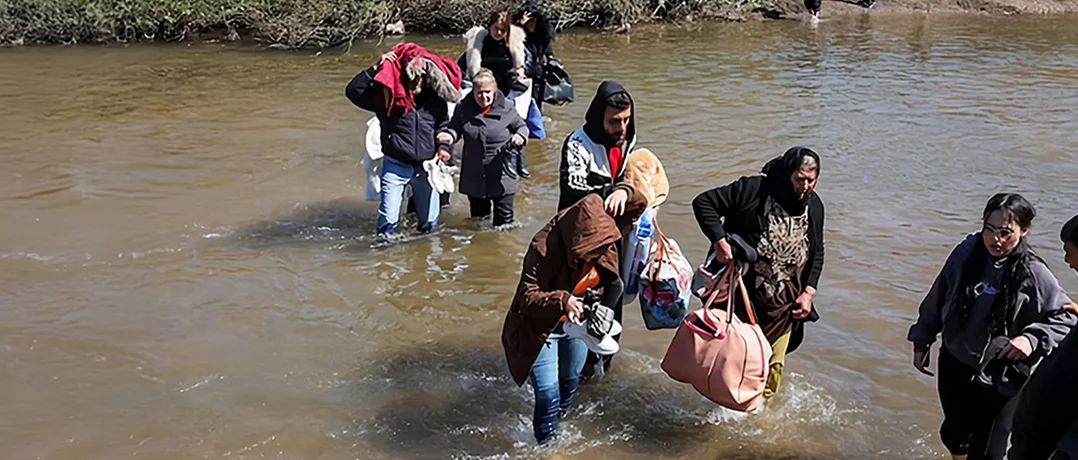
An incident along the Syrian Lebanese border has once again highlighted the human cost of irregular migration and the dangers faced by people attempting to cross between the two countries.
Several individuals were reported missing and others rescued after being swept away while trying to cross the al-Kabir River, a border waterway known locally for its perilous conditions. The incident has prompted emergency rescue efforts, official statements from both sides of the border, and renewed scrutiny of the risks associated with unauthorized crossings.
A nighttime rescue operation
According to Syria’s official news agency, SANA, rescue teams from the Syrian Civil Defense, supported by units of the Syrian army, were mobilized overnight after receiving reports of people drowning near the villages of Shabrouniyeh and Dabousiyeh, close to the town of Talkalakh in western rural Homs. These areas are known for frequent attempts at irregular crossings, particularly during periods of heightened economic and social strain.
Rescue operations were complicated by strong water currents and a significant rise in the river’s level, fed by seasonal runoff. Emergency vehicles were unable to reach the site, forcing teams to continue the mission on foot over long distances. Despite the difficult conditions, rescuers located 2 women and a young man, administered first aid on site, and transferred them to Talkalakh National Hospital for further treatment.
Missing people and dangerous terrain
Survivors told rescuers that their group originally consisted of 11 people. While 4 individuals reportedly managed to return to Lebanese territory, others were carried away by the river’s strong current. Search efforts to locate the missing have continued, although progress has been severely hindered by environmental and security risks.
Officials noted that remnants of landmines along the riverbanks, left over from earlier phases of the Syrian conflict, posed a serious threat to rescue teams. Combined with the force of the water and high river levels, these hazards forced authorities to temporarily suspend search operations in certain areas. Additional rescue units, including divers and specialized equipment, were dispatched, but the danger of the terrain led to a decision to delay further action pending coordination with Lebanese authorities.
Lebanese Army response
The Lebanese Armed Forces (LAF) issued a statement addressing reports that circulated on some media outlets, which claimed that Syrian nationals had been forced to cross the river by Lebanese army. The army categorically denied these allegations, stating that its units had not intervened in the area in question and had received no information about an attempted illegal crossing at the time of the incident.
The statement emphasized that Lebanese military units did not compel anyone to cross the river and confirmed that they are currently cooperating with Syrian authorities in search operations. The army also reiterated that it facilitates the voluntary return of Syrians through official border crossings, ensuring their safety and coordinating their handover to Syrian authorities.
Persistent illegal Syrian emigration towards Lebanon
Syrian illegal crossings and irregular immigration into Lebanon have evolved into a central political and security concern, underscoring the structural weakness of the Lebanese Syrian border. Characterized by rugged geography and decades of limited state control, the border remains highly porous, enabling large-scale movement outside official entry points. Since the outbreak of the Syrian conflict, irregular crossings have increased significantly, driven by economic collapse, insecurity, and the absence of regulated migration frameworks. Despite some promising prospects after the fall of the Assad regime and various voluntary returns, the latter remained limited while additional flows into Lebanon have been recorder due to ongoing clashes and animosity between Syria’s new interim authorities and its minorities.
For Lebanon, the challenge extends beyond border management. The country’s protracted economic crisis, institutional fragility, and political divisions have constrained its ability to enforce effective border control or develop a coherent migration policy. Consequently, uncontrolled crossings have exacerbated pressure on infrastructure, public services, and the labor market, while intensifying domestic political debate and social tensions.
At the political level, the issue highlights unresolved questions of sovereignty, state authority, and bilateral coordination with Damascus. Addressing irregular immigration requires a comprehensive strategy combining stricter border governance, diplomatic engagement, and sustained international support.
In conclusion, the incident at the al-Kabir River underscores the lethal risks associated with irregular border crossings and the complex humanitarian challenges along the Syrian–Lebanese frontier. Difficult geography, lingering conflict-related hazards, and rising river levels can quickly turn a crossing attempt into a fatal ordeal. As search efforts continue through bilateral coordination, the tragedy serves as a stark reminder of the need for safer, regulated pathways and stronger cross-border cooperation to prevent further loss of life.
-
-

-
The Beiruter
-
