



President Joseph Aoun’s diplomatic push across Washington, Ankara, Rome and the Vatican highlights Lebanon’s efforts to secure international support for Israeli withdrawal, the Lebanese Army, reconstruction and the country’s post-UNIFIL security framework.
Aoun’s diplomatic push: What was discussed?

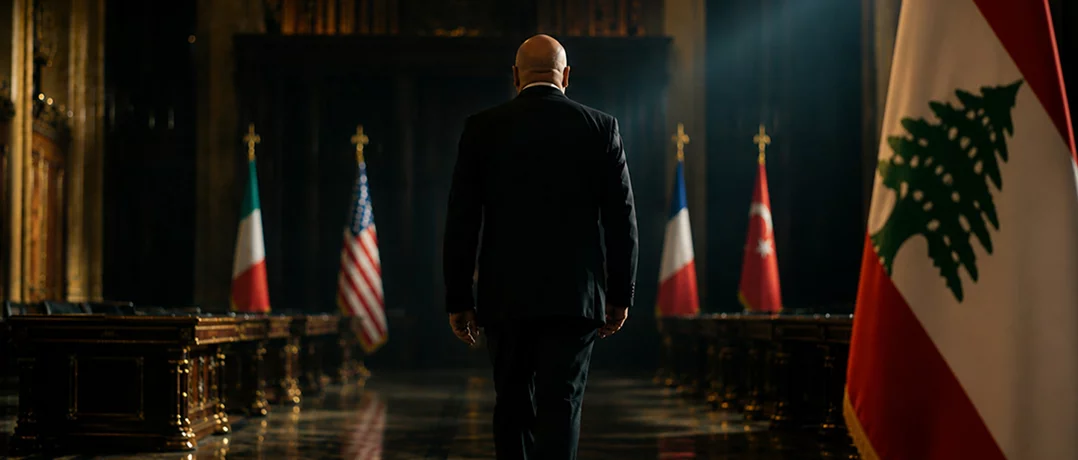
President Joseph Aoun’s recent diplomatic activity has taken him from Washington to Ankara and then Rome and the Vatican, while France is preparing the next major meeting involving Lebanon in September. Across the meetings, Aoun has repeatedly raised Israel’s withdrawal, implementation of the June 26 framework agreement, support for the Lebanese Army, reconstruction and economic recovery. Each capital, however, has had a different role and made different commitments.
France: Paris is next
The next diplomatic step is expected in Paris on September 17, where France will host a preparatory meeting ahead of an international conference to support the Lebanese Armed Forces (LAF) and Internal Security Forces (ISF). Aoun received the invitation from French President Emmanuel Macron on August 19 through French Chargé d’Affaires Bruno Pereira da Silva. According to Macron’s letter, the meeting will focus on what the army practically needs, including equipment, logistics, training and capacity-building. Military commanders from several countries, representatives of international organizations and experts are expected to participate.
Italy: talks on the south and negotiations with Israel
Aoun met Italian President Sergio Mattarella and Prime Minister Giorgia Meloni on August 21. With Meloni, he discussed Lebanese-Italian relations, continued Israeli attacks in the south and implementation of the framework agreement. Aoun asked Italy to help pressure Israel to respect the agreement and thanked Rome for hosting Lebanese-Israeli negotiating sessions and for its role in supporting security and stability in southern Lebanon. His meeting with Mattarella also covered bilateral relations and regional developments.
Meloni’s position was also clear. The Italian government reaffirmed its support for Lebanon’s sovereignty and territorial integrity and backed efforts to reach what it called a just and lasting peace with Israel. One concrete outcome was Italy’s confirmation that it is ready to host further Lebanese-Israeli negotiating sessions.
The Vatican: seeking diplomatic support
On August 20, Aoun met Pope Leo XIV at the Vatican before holding talks with Cardinal Pietro Parolin and Archbishop Paul Richard Gallagher. Aoun asked the Holy See to continue supporting Lebanon’s demands for Israel to stop its attacks, withdraw from Lebanese territory and implement the June 26 framework agreement. He said an Israeli withdrawal would allow reconstruction to begin and displaced residents to return, while Lebanese state authority should extend across the entire country.
The Vatican, for its part, welcomed the signing of the framework agreement but expressed “serious concerns” about difficulties in implementing it. The Holy See said it would continue supporting efforts toward implementation and what it described as a just and lasting peace. The main outcome of the visit was therefore a renewed commitment from the Vatican to support the diplomatic process Lebanon is pursuing.
Turkey: army support, reconstruction and Syria
Before Rome, Aoun travelled to Ankara on July 30, where he met Turkish President Recep Tayyip Erdoğan. It was Aoun’s first official presidential visit to Turkey, and he noted that he was only the third Lebanese president to visit the country in around 70 years. Talks covered the situation in Lebanon and the region as well as reconstruction, energy, economic cooperation and relations between Lebanon and Syria. Aoun said Lebanon wanted a complete Israeli withdrawal, the return of displaced residents, reconstruction and full state sovereignty through its legitimate institutions.
Erdoğan said Turkey would continue supporting the LAF, was ready to help with reconstruction in southern Lebanon and could assist in improving relations between Beirut and Damascus. The two presidents also discussed what forms of Turkish assistance Lebanon might need. The visit ended with commitments to strengthen bilateral cooperation and continued Turkish political, military and reconstruction support.
Washington: Israel, the army and economic support
Aoun’s earlier Washington visit began on July 18, at the invitation of U.S. President Donald Trump. It was the first White House visit by a Lebanese head of state in nearly two decades. Aoun met Secretary of State Marco Rubio on July 19 before meeting Trump on July 21. With Rubio, Aoun called for implementation of the June 26 framework, beginning with an Israeli withdrawal from the first agreed area. He also asked for greater U.S. support for the Lebanese Army and American investment in sectors including energy, telecommunications and transport. Rubio backed efforts to restore Lebanese sovereignty and reaffirmed Washington’s commitment to the framework, while the U.S. position also stressed disarming Hezbollah.
With Trump, the discussions expanded to security, politics and the economy. Aoun again pressed for a full Israeli withdrawal, stronger U.S. support for the army, reconstruction assistance and more American investment. He also raised restoring direct air links between Lebanon and the United States. The meeting ended with an agreement to continue coordination on security, defense and economic initiatives. Trump also directed his administration to move toward allowing U.S. airlines to fly directly to Lebanon again, although security requirements still have to be completed before flights can resume.
Is there a link to what comes after UNIFIL?
The question of what comes after UNIFIL has also surfaced across several of these meetings. Erdoğan said Turkey was ready to take part in initiatives supporting Lebanon’s security after the mission’s withdrawal, while Aoun and Meloni discussed the next phase in the south. France, meanwhile, is preparing a September meeting focused on strengthening the Lebanese Army and security forces. No common framework has been announced, but the issue is increasingly becoming part of Lebanon’s wider diplomatic discussions.
-
-

-
Natalie DurhamResearcher/Writer
Junior research writer focusing on politics, public policy and international affairs.
-
