



Arab League Secretary General Nabil Fahmy's visit to Lebanon highlighted growing diplomatic efforts to support the country amid Israeli attacks, ongoing negotiations, uncertainty over UNIFIL's future and reconstruction challenges.
Arab League fully backs Lebanon’s negotiations with Israel
Arab League fully backs Lebanon’s negotiations with Israel
By Natalie Durham | October 21, 2026

Reading time : 5 min
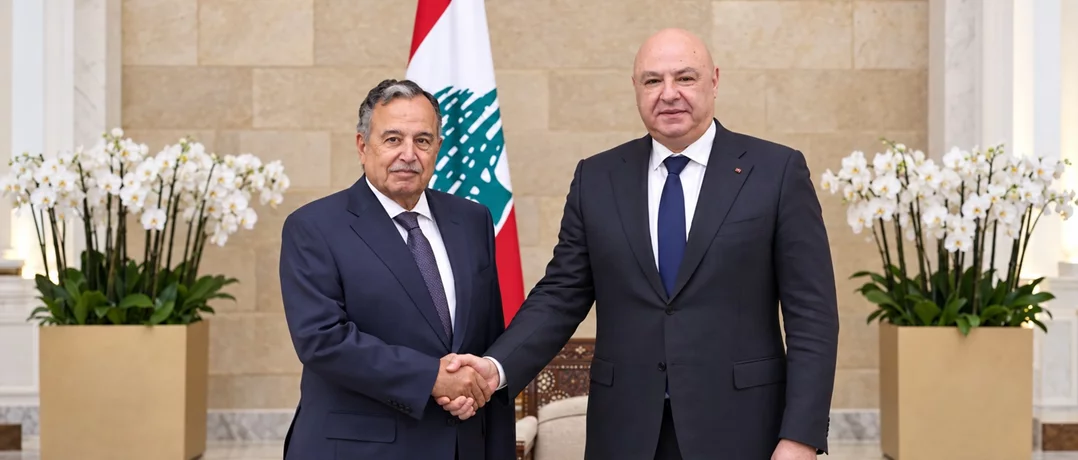
Arab League Secretary-General Nabil Fahmy visited Lebanon on October 19 and 20, 2026, meeting senior Lebanese officials and touring southern Lebanon. His visit focused on Lebanon's negotiations with Israel, continued Israeli attacks, the future of UNIFIL, and the country's security and economic recovery.
Fahmy reaffirmed the Arab League's support for Lebanese sovereignty and state institutions, announcing plans to intensify diplomatic contacts and seek political, economic and financial assistance. His visit followed a recent Arab League ministerial resolution supporting Lebanon and its institutions.
Arab League backs Lebanon's negotiations with Israel
During his meeting with President Joseph Aoun at Baabda Palace, Fahmy described Lebanon as one of the Arab League's priorities and reaffirmed the organization's commitment to supporting the Lebanese state politically, economically and socially. He pledged to increase diplomatic contacts with Arab and Western governments and direct the League's efforts toward Lebanon's needs.
Aoun reiterated Lebanon's commitment to a diplomatic solution with Israel, despite the difficulties facing negotiations. He said Israel had failed to respect the agreed framework and continued its daily violations in southern Lebanon, making it harder for the state to achieve its objectives. He stressed that diplomacy remained less costly than another destructive war, particularly for residents of the south.
Fahmy confirmed that Lebanon's negotiations with Israel enjoyed full Arab support, particularly efforts to end Israeli occupation of Lebanese territory and preserve the country's stability.
The secretary-general also referred to a unanimous decision adopted by the Arab League's Council of Foreign Ministers less than a month earlier. The resolution reaffirmed support for Lebanon's sovereignty, institutions and territorial rights, while rejecting Israeli attacks. Fahmy said the next step would involve increased diplomatic activity and efforts to turn Arab support into practical and financial assistance.
Fahmy also met Foreign Minister Youssef Rajji to discuss regional developments and stronger cooperation between Lebanon and the Arab League, particularly in security and economic affairs. Rajji welcomed the recent Arab League resolution, while Fahmy expressed concern that a future regional settlement could come at Lebanon's expense. This warning reflects fears that an agreement between major regional powers could result in Lebanon losing parts of its southern territory currently occupied by Israel. Israel may seek to maintain its presence until it achieves its security objectives, particularly weakening Hezbollah's military capabilities and preventing threats from Iran.
Meanwhile, the Free Patriotic Movement (FPM), headed by MP Gebran Bassil, welcomed Fahmy's warning about a possible regional settlement at Lebanon's expense. The party called on the government to strengthen its diplomatic efforts and clarify its response to Israeli Defense Minister Israel Katz's claim that Israel controls a 700-square-kilometer security zone inside Lebanon.
UNIFIL's future and security in southern Lebanon
During his meeting with Parliament Speaker Nabih Berri at Ain el-Tineh, Fahmy discussed continued Israeli attacks, developments in southern Lebanon and the future of the United Nations Interim Force in Lebanon (UNIFIL). He said Berri had presented several proposals that he intended to follow up through Arab and international diplomatic channels.
Fahmy said the Arab League preferred maintaining UNIFIL under United Nations authority. He acknowledged that there was a strong movement toward ending the mission and said the League was trying to oppose it. Any replacement force, he explained, would require Lebanon's approval and international legal legitimacy to ensure that attacks against it would concern the international community, not only the participating countries.
The secretary-general also met Lebanese Army Commander General Rodolph Haykal in Yarzeh. Their discussions focused on regional developments and continued Israeli attacks. Fahmy expressed support for strengthening the army's capabilities to carry out its responsibilities throughout Lebanese territory, while both sides stressed the importance of maintaining internal stability.
On October 20, Fahmy toured southern Lebanon to observe conditions firsthand. Accompanied by Social Affairs Minister Haneen Sayed, he visited the Zahrani military base and the Church of the Annunciation in Zawtar al-Gharbiya. This is the first visit by an Arab League secretary-general to southern Lebanon during the war.
During his visit, Fahmy was briefed by Lebanese Army officers on Israeli-controlled areas and the destruction of civilian property. He described the situation as unacceptable and warned against continued displacement and occupation. However, Mayor Abdel Ezzeddine criticized Fahmy for passing through the town square without meeting residents and municipal officials who had gathered to welcome him and express their concerns to him.
Fahmy later visited the Benoit Barakat barracks in Tyre, where he met South Litani Sector Commander Brigadier General Nicolas Tabet. Tabet highlighted how continued Israeli attacks and occupation were preventing displaced residents from returning and obstructing the army's deployment. He called for Arab support to secure an Israeli withdrawal, strengthen the army and prevent a security vacuum after UNIFIL's departure.
As a response, Fahmy stressed that Arab support must translate into concrete measures, pledging continued diplomatic efforts and assistance to Lebanese institutions and displaced communities.
Arab support for reconstruction and Lebanon's recovery
During his meeting with Prime Minister Nawaf Salam at the Grand Serail, discussions focused on Lebanon's reconstruction, economic recovery and the support needed to strengthen state institutions.
Salam stressed the importance of continued Arab backing for Lebanon's efforts to secure a complete Israeli withdrawal and extend state authority across the country through its own security forces. He also called for assistance with reconstruction and helping displaced residents remain in or return to their communities.
The Lebanese prime minister encouraged greater Arab investment in Lebanon, particularly in infrastructure and regional connectivity projects, to support economic recovery and strengthen the country's ties with neighboring Arab states.
Fahmy said the Arab League's September ministerial resolution would serve as the basis for further action, including political, security and economic assistance, support for Lebanese institutions and reconstruction efforts. He explained that he would return to Cairo with an assessment of Lebanon's priorities and work with Arab countries to translate these commitments into concrete measures, stressing that the League's support for Lebanon would continue beyond his visit.
-
-

-
Natalie DurhamResearcher/Writer
Junior research writer focusing on politics, public policy and international affairs.
-
