



Bkassine is home to the Middle East’s largest pine forest, where centuries of natural heritage, village traditions and ecotourism converge.
Bkassine, the village beneath the pines

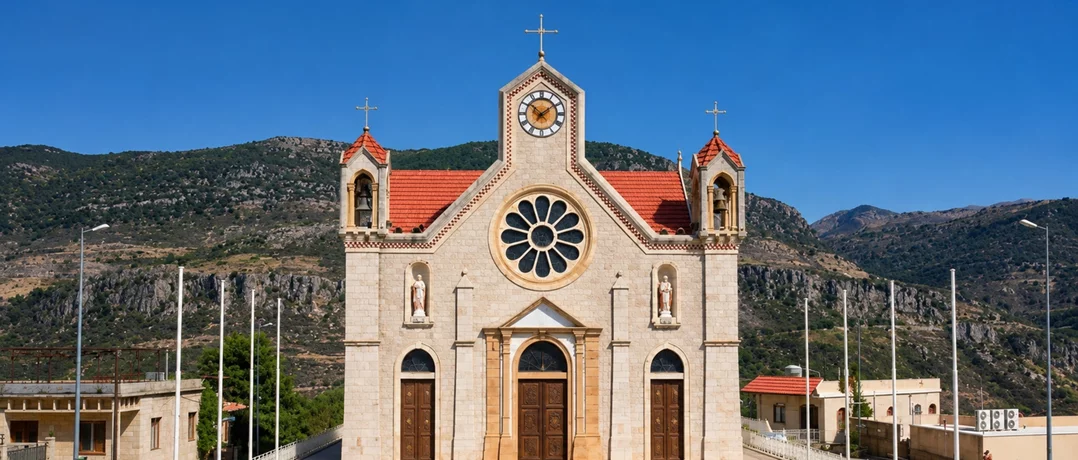
Bkassine, in the Jezzine district of South Lebanon, presides over the largest pine forest in the country and in the Middle East. Seventy kilometers from Beirut at about 800 metres above sea level, the village resides beside the forest that has shaped its character.
The name hints at a hidden place. It derives from the Aramaic-Syriac Beit Kassin, rendered as "the village of the disappeared", describing the nature of a settlement folded into a valley and engulfed by trees. Its origins are believed to return to the Phoenician era, but the documented story begins in 1899, when Bkassine founded its municipality, among the oldest in Lebanon. A century later, in 2001, the National Institute for Heritage awarded it first prize as a model of a preserved traditional village. The stone houses, red-tiled roofs, narrow lanes, and old bridges still exist today.
The centuries old pine forest
The forest is the village's fortune and its signature. Its extent ranges from roughly two to three square kilometers, with more than 120,000 trees, some said to be three or four centuries old. It was planted in the 16th century under Emir Fakhreddine, the ruler remembered across Lebanon for his ambitions for the land.
Owned by the municipality, the forest has been protected since the mid-1990s by a decision of the Ministry of Agriculture and is managed in partnership with the Union of Jezzine Municipalities. It shelters some 168 plant species, 65 of them medicinal. A village nursery opened in 2011 raises about 20,000 seedlings a year, and beneath the canopy runs a system of 14 rainwater catchment tunnels. At the forest’s edge, the Maison de la Forêt, built with European Union support, offers bungalows and rooms named after trees, fruit and the elements, and has helped turn it into one of the south's most visited ecotourism destinations.
Bkassine's spiritual life is attached to its central square, where the Church of Saint Takla stands beside the small souk. Completed in 1909, it is frequently counted among the most beautiful churches in the country. Twenty-four columns carry a stone dome in the shape of a cross, and the Directorate General of Antiquities has classified it as a heritage building. Two native bishops, Abdallah El Khoury and Youssef El Khoury, are buried beneath it. A short walk away is the older Church of Our Lady of Salvation, dated to 1855, and the Saint Joseph Monastery.
Each September the church courtyard becomes the stage for the Saint Takla Festival. A volunteer commission staged the first edition in 1972; it has since grown into a three-day community gathering that draws visitors from across the south, with the village's women preparing organic mouneh and the municipality offering concerts and entertainment.
For walkers, two trails begin in the village. One looks out over Wadi Jezzine and the Bisri Valley before reaching the Karm Chbat Nature Reserve by way of Kfartaala, an old village brought down by the earthquake of 1956. The other departs from the main square and opens onto views of Saida and the Mediterranean from Ain El Zaarour and El Roummani.
Bkassine was featured in UN Tourism's Best Tourism Villages initiative, and a sign at its entrance proclaims it the Lebanese public's favorite village of 2018.
The forest is under strain. Pine yields have shrunk for years, which growers attribute to pests such as the western conifer seed bug and to a shifting climate, as well as the constant threat of fire. In November 2025 a blaze that began near the neighboring village of Aaraya swept through the valley. The main forest was spared, and the municipality scheduled reseeding campaigns within days to restore the scorched ground.
The village has guarded its trees for generations, and it continues to plant, protect and welcome those who come to walk beneath them.
-
-

-
Jenna GeageaReporter/Writer
-
