



Three breast cancer survivors reflect on diagnosis, treatment, family, and the lives they continue to build beyond the disease.
Breast cancer, and the lives beyond it

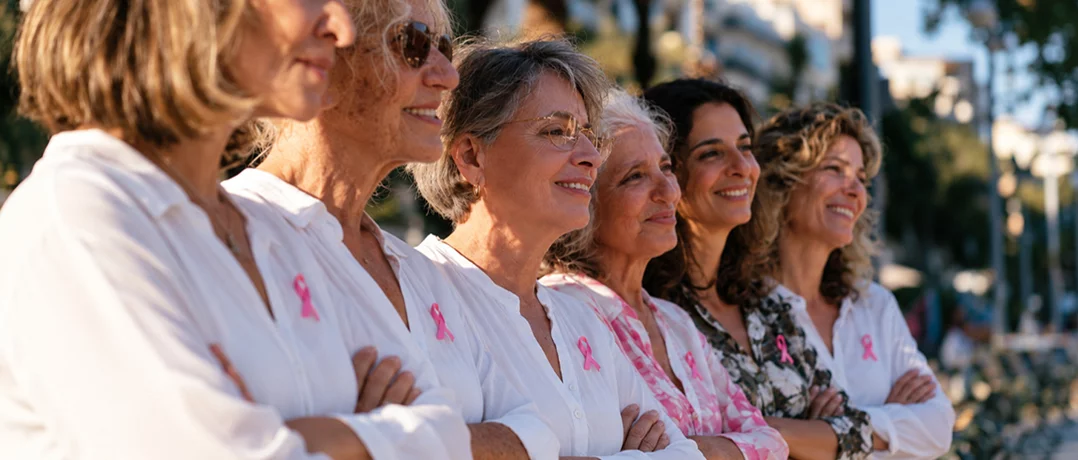
Breast cancer can change the course of a life in ways that extend far beyond a diagnosis. For some, it begins with a routine screening or an unexpected discovery; for others, it follows months of uncertainty, treatment and difficult decisions. Every experience is different, shaped by age, diagnosis, access to treatment and the support surrounding each person. Yet behind the medical charts and statistics are people navigating fear, hope, change and, in many cases, a new understanding of what it means to move forward.
Maribel, 34: "I was still nursing when I found it"
Maribel, a school teacher, found the lump while her daughter Sofia, then two, was falling asleep against her chest. "I told myself it was a blocked duct," she remembered. "Everyone told me that. I'm thirty-four, I'm a mother, this doesn't happen to women like me."
It did. The diagnosis was triple-negative breast cancer, an aggressive form that demands aggressive treatment, six months of chemotherapy, then a double mastectomy.
The hardest moment was was the morning her hair fell out in clumps. "Sofia watched me cry, and she climbed into my lap and patted my bald head very gently. She whispered, 'Mama, you look like a baby bird.' I laughed so hard I cried harder."
Now two years cancer-free, Maribel is back in her classroom. "I used to measure my life in lesson plans," she reflected. "Now I measure it in bedtime stories. I never skip one."
Myrna, 52: "The scan nearly didn't happen"
Myrna, a bank executive, nearly cancelled her annual mammogram. A board meeting loomed, and she had skipped the appointment the year before. Her sister Marie, who died of breast cancer at forty-four, would have been furious.
"I was the woman who fixed everything," she admitted. "Then a radiologist asked me to wait while she called a colleague, and I knew. You always know."
The cancer was caught early, a small tumour that needed a lumpectomy and six weeks of radiation. Genetic testing revealed a BRCA1 mutation, the same one that had likely claimed Marie. That discovery rippled through her family, her two grown daughters now face their own decisions about screening and surgery.
"Telling them was worse than my own diagnosis," she confessed. "I handed my children a piece of my fear. But because of Marie, we caught it. My sister saved my life by dying, and I carry that every day."
Myrna now volunteers at a screening outreach program. "If one woman keeps her appointment because of me," she explained, "then I'm making my angel in heaven proud."
Nathalie, 61: "I didn't want to be a burden"
Nathalie, a CEO, learned of her cancer alone. She drove herself to the appointment, listened to the diagnosis and drove home in silence.
"I sat in my kitchen and thought, who do I even call?" she recalled. “I had the worst news of my life and did not know who to share it with.”
Nathalie hid the news for weeks, determined not to burden anyone. The secret collapsed when a neighbour spotted her struggling with a grocery bag after surgery. Within days, a rota had formed, family members driving her to chemotherapy, delivering soup, sitting with her through the nausea.
Her sister arrived on a Friday and stayed for the winter. "She changed my dressings and never flinched," Nathalie said. "I spent my life fixing other people’s problems. I never imagined anyone would stitch me back together."
She declined reconstruction, and she is at peace with that. "This body carried a lifetime of work. It gets to keep its scars."
Breast cancer survivors rarely describe themselves as warriors, a word they find exhausting. They describe fear that returns before every scan, grief for the people they were before, and gratitude so sharp it sometimes hurts.
Yet each carries something unexpected out of the experience, a daughter's tender joke, a sister's legacy, a family that refused to look away. Their stories are reminders that behind every statistic is a kitchen table, a hand to hold and a person deciding and fighting to stay.
-
-

-
Jenna GeageaReporter/Writer
-
