



The Beiruter put ChatGPT to the test, prompting it to design a first-time visitor's ideal itinerary, complete with sightseeing, Lebanese cuisine and a detailed budget.
Can AI plan the perfect day in Beirut?

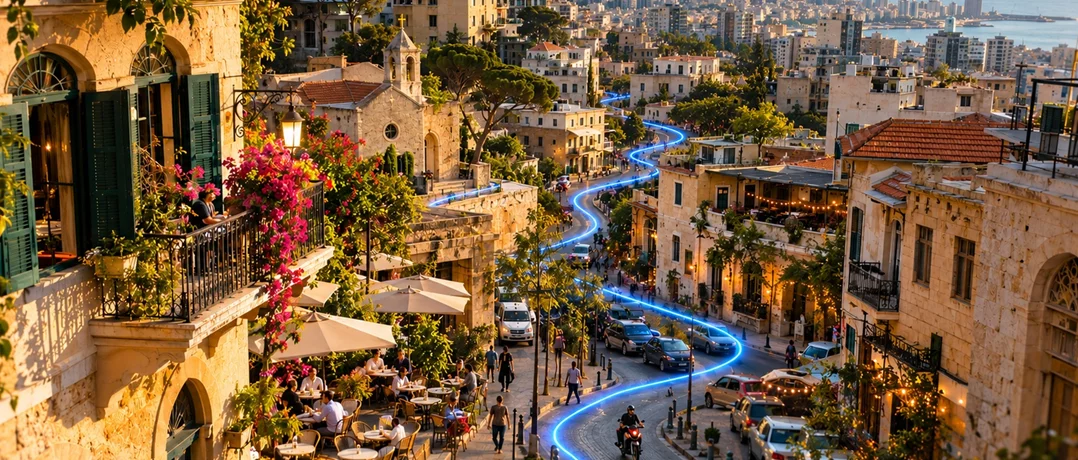
There are few things Beirutis agree on, but where to find the city's best manoushe, which restaurant serves the finest Lebanese mezze, and whether crossing town at rush hour is worth the trouble are guaranteed to inspire spirited debate. ChatGPT, apparently, has no such reservations. Since AI-generated travel itineraries are all the rage, The Beiruter decided to ask the AI chatbot to produce “The Perfect Day in Beirut” itinerary for a first-time visitor. The original prompt was as follows: “The Beiruter is looking to spend a perfect day in Beirut. This is the first time they are visiting the city, so they want to maximize exploring all the “must see sites.” They are also hungry, and would want suggestions for breakfast, lunch and dinner, as well as an afternoon snack, two coffee stops, before-dinner drinks, and (of course), dessert. They have no dietary restrictions and want to enjoy Lebanese cuisine at its finest! They love to walk, but please suggest when to take taxis or public transportation, where necessary. Please also include "tips" or considerations to keep in mind throughout the day, and please provide a budget for the proposed itinerary.” Within seconds, the chatbot had assembled a 15-hour itinerary complete with archaeological sites, historic neighborhoods, Mediterranean views, restaurant recommendations and a carefully calculated budget. “The Perfect Day in Beirut,” the title read, followed by the subtitle, “A first-timer's guide to Lebanon's capital, from morning manoushe to midnight mezze.” It even provided a map. ChatGPT's first instinct was to fit as much of Beirut as possible into a single day. “Beirut is a city best experienced on foot, with frequent interruptions for food, coffee and conversation,” it declared. “In a single day, visitors can explore ancient archaeological treasures, Ottoman-era architecture, historic neighborhoods, Mediterranean views and some of Lebanon's most celebrated culinary traditions.” The proposed itinerary combined the city's essential sights with nine food-and-drink experiences, taking visitors from Hamra to Downtown, Raouché, Achrafieh, Gemmayzeh and Mar Mikhael. The day would begin at 8 a.m. with a za'atar-and-cheese manoushe at Barbar in Hamra, followed by a stroll toward the American University of Beirut and a cup of Lebanese coffee. By 10 a.m., visitors would be exploring Phoenician sarcophagi at the National Museum. An hour later, they would head Downtown to admire Martyrs' Square, the Mohammad Al-Amin Mosque, St. George Cathedral and the Roman Baths. Lunch would consist of traditional Lebanese mezze, followed by a taxi to Raouché for views of Pigeon Rocks and a walk along the Corniche. There would be a street-side ka'ak, naturally, before another taxi carried visitors across the city to Sursock Museum. The afternoon would continue with specialty coffee in Gemmayzeh, a wander through Mar Mikhael and pre-dinner cocktails. Dinner at Loris would follow, with knefeh or baklava providing the final culinary flourish. The chatbot estimated seven to nine kilometers of walking, three or four taxi rides and a budget of approximately $150 per person. On paper, it sounded rather wonderful. But Beirut has never been a city particularly interested in behaving according to plan. Not in the slightest. ChatGPT had, to its credit, anticipated some logistical difficulties. It recommended taxis between distant neighborhoods, comfortable shoes for uneven pavements, and extra time for traffic. It also advised visitors to carry cash, check museum opening hours, and avoid photographing military checkpoints. Still, the schedule left relatively little room for the city's unpredictable traffic, spontaneous detours or the possibility that a leisurely Lebanese lunch might last considerably longer than an hour. Perhaps sensing this contradiction, ChatGPT offered a surprisingly perceptive observation. “Beirut's appeal lies as much in the moments between attractions as in the landmarks themselves,” it wrote. “Leave time to linger over a coffee, wander down a side street or accept a restaurant owner's recommendation. Those unscheduled encounters are often the most memorable part of a first visit.” Sensible advice from a chatbot that had just scheduled nearly every minute of our day. Naturally, we decided to complicate matters. “Ok thank you!” we responded, after the first itinerary was produced. “But what should we do if it is raining? And please provide both a more economical version of $70-100 per person and a more lavish version of $250 per person.” “Rain doesn't have to ruin a day in Beirut,” ChatGPT replied, displaying the optimism of someone who has never attempted to cross a flooded Beirut street. It immediately reorganized the itinerary. Extended walks along the Corniche could be replaced with museum visits, outdoor exploration could become longer coffee breaks, and a street-side ka'ak could be enjoyed inside a bakery. It also produced two entirely new versions of the day. The economical itinerary, priced at $85 per person, included breakfast at Barbar, coffee at Café Younes, falafel at Sahyoun, a visit to Sursock Museum and a casual Lebanese dinner at Le Chef. The budget accounted for food, shared taxis, museum admission and even a small contingency fund. For those with more generous budgets, ChatGPT proposed a $250 experience featuring breakfast at Em Sherif Café, lunch at Em Sherif au Musée (because why go to Em Sherif once when you can go twice?), dinner at Loris, and private transportation throughout the day. According to ChatGPT, Beirut could be experienced through a $5 falafel sandwich or an elaborate mezze served in an elegant restaurant. Of course, the prices were estimates rather than verified quotations, and restaurant availability remained subject to change. ChatGPT could offer contingencies. It could not guarantee that Beirut would cooperate. By this point, ChatGPT had assumed the roles of travel agent, restaurant critic, meteorological adviser, and budget planner. We decided to add souvenir consultant and language instructor to its responsibilities. Because why not. “Thank you, very helpful,” we replied. “Now, what would you suggest we bring home as little gifts for family and friends? And how worried should we be about the language barrier? Assume English fluency, with minimal French and Arabic knowledge.” The chatbot responded with a shopping guide featuring seven categories of Lebanese souvenirs, complete with photographs, estimated prices, and suggested shopping neighborhoods. There was za'atar and sumac for enthusiastic home cooks, olive-oil soap from Tripoli, boxes of baklava and ma'amoul, handmade ceramics, Arabic coffee cups, art prints and cedar-themed keepsakes. Its final recommendation was practical. “Bring home a mixture of edible gifts and locally designed objects. A box of Lebanese sweets for family, za'atar for friends who enjoy cooking, and an illustrated Beirut print for someone special would make a thoughtful collection without requiring much suitcase space.” Then came the language question. “And the good news about the language barrier? English-speaking visitors should have relatively little difficulty navigating Beirut,” ChatGPT assured us, particularly in hotels, cafés, restaurants and major tourist attractions. It even supplied a miniature Lebanese Arabic phrasebook, from marhaba for hello to addesh hayda? for asking how much something costs. How helpful! By now, our hypothetical visitor had everything required for a day in Beirut. An itinerary, three different budgets, a rainy-day contingency plan, a shopping list and enough Arabic to order coffee. There was only one question left. “Great. Lastly, what do you think will surprise us the most about our perfect Beirut day?” Here, ChatGPT abandoned its spreadsheets and schedules. “I think what will surprise you most about Beirut is how many different cities seem to exist within a single city, and how quickly you move between them,” it replied. It described the contrasts between ancient ruins and modern buildings, bustling commercial streets and historic neighborhoods, Mediterranean views and lively restaurants. Then it turned its attention to the people. “But I suspect the people will surprise you even more than the contrasts,” it wrote. “You may find that ordering coffee turns into a conversation about where you're from, that a waiter insists you try one more dish, or that someone offers directions and then spends five minutes recommending their favorite places in the city.” It was a familiar portrait of Lebanese hospitality, perhaps a little romanticized, but not entirely inaccurate. ChatGPT also predicted that visitors might arrive expecting an elaborate dinner to be their culinary highlight, only to discover that their favorite meal was a warm manoushe eaten outside a bakery at eight in the morning. There was something persuasive about this conclusion. After spending much of our conversation attempting to organize Beirut into a precise sequence of attractions, the chatbot ultimately acknowledged that the city's appeal might lie in the moments that could not be scheduled. “By the end of the day, you'll realize that the most memorable part of Beirut wasn't any single monument, restaurant or museum. It was the experience of moving between them, discovering a city where extraordinary history and ordinary daily life are constantly intertwined.” And then, after planning almost every hour of our visit, it offered one last piece of advice. “And despite having planned every hour of your perfect day, you'll probably wish you'd left yourself a little more time to wander.” A day spent wandering in Beirut…now that sounds like the perfect day.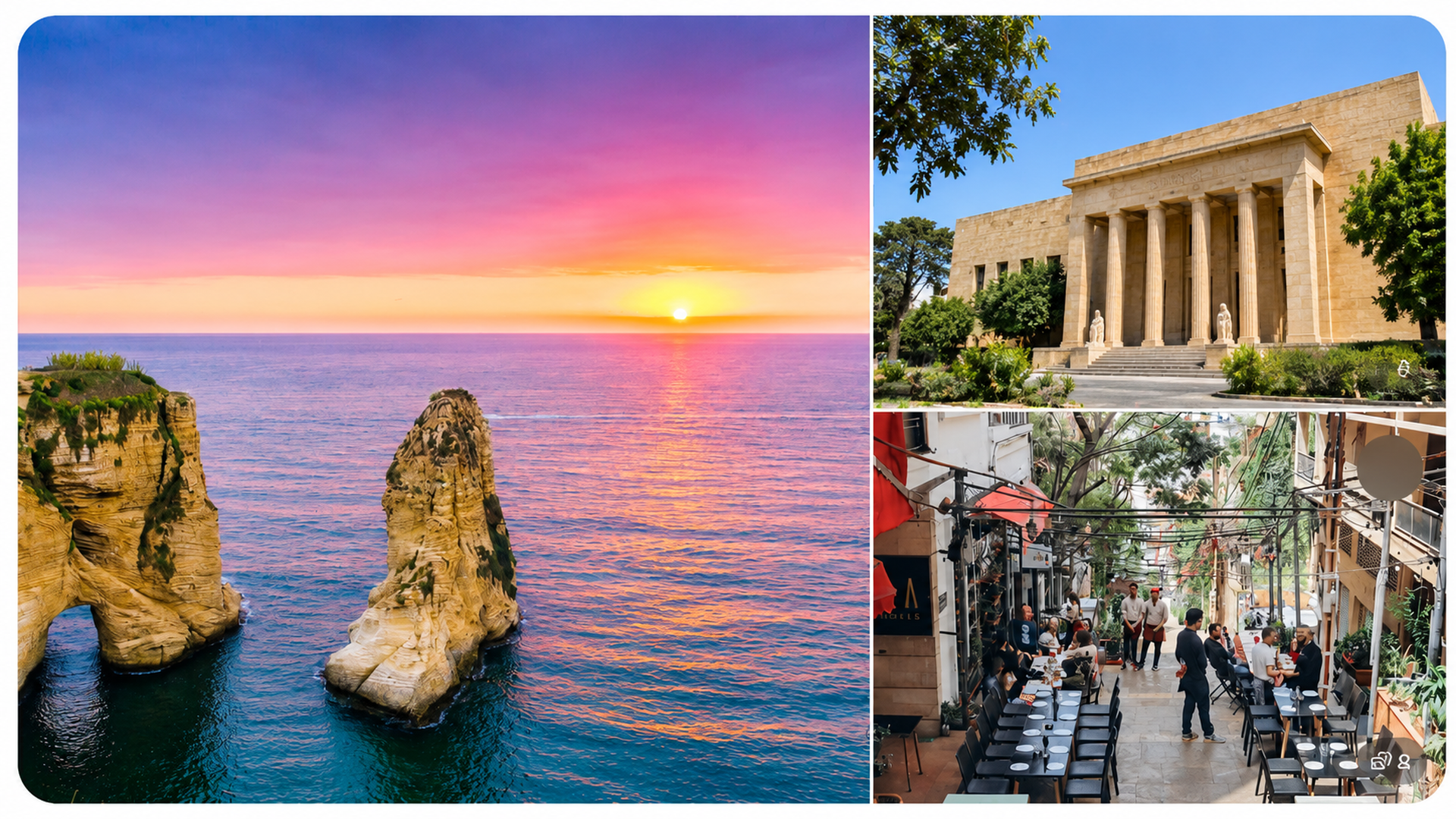 ChatGPT illustrated its ideal day in Beirut with images of Pigeon Rocks, Downtown's historic landmarks and the city's lively streets.
One city, fifteen hours and a lot of food
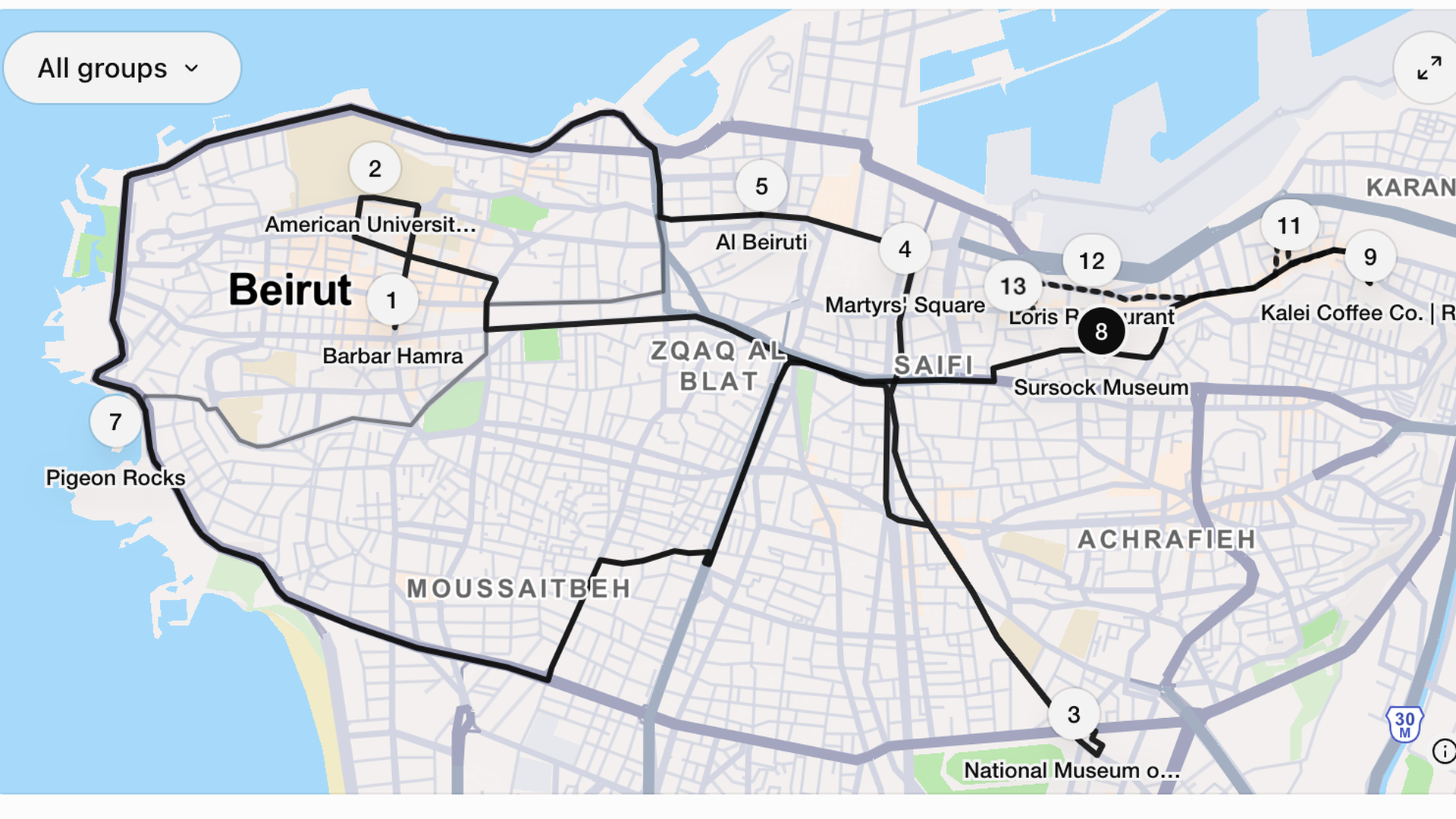 ChatGPT mapped out an ambitious route across Beirut, although two numbered stops, #6 and #10, mysteriously disappeared from the map's display.
What if Beirut refuses to cooperate?
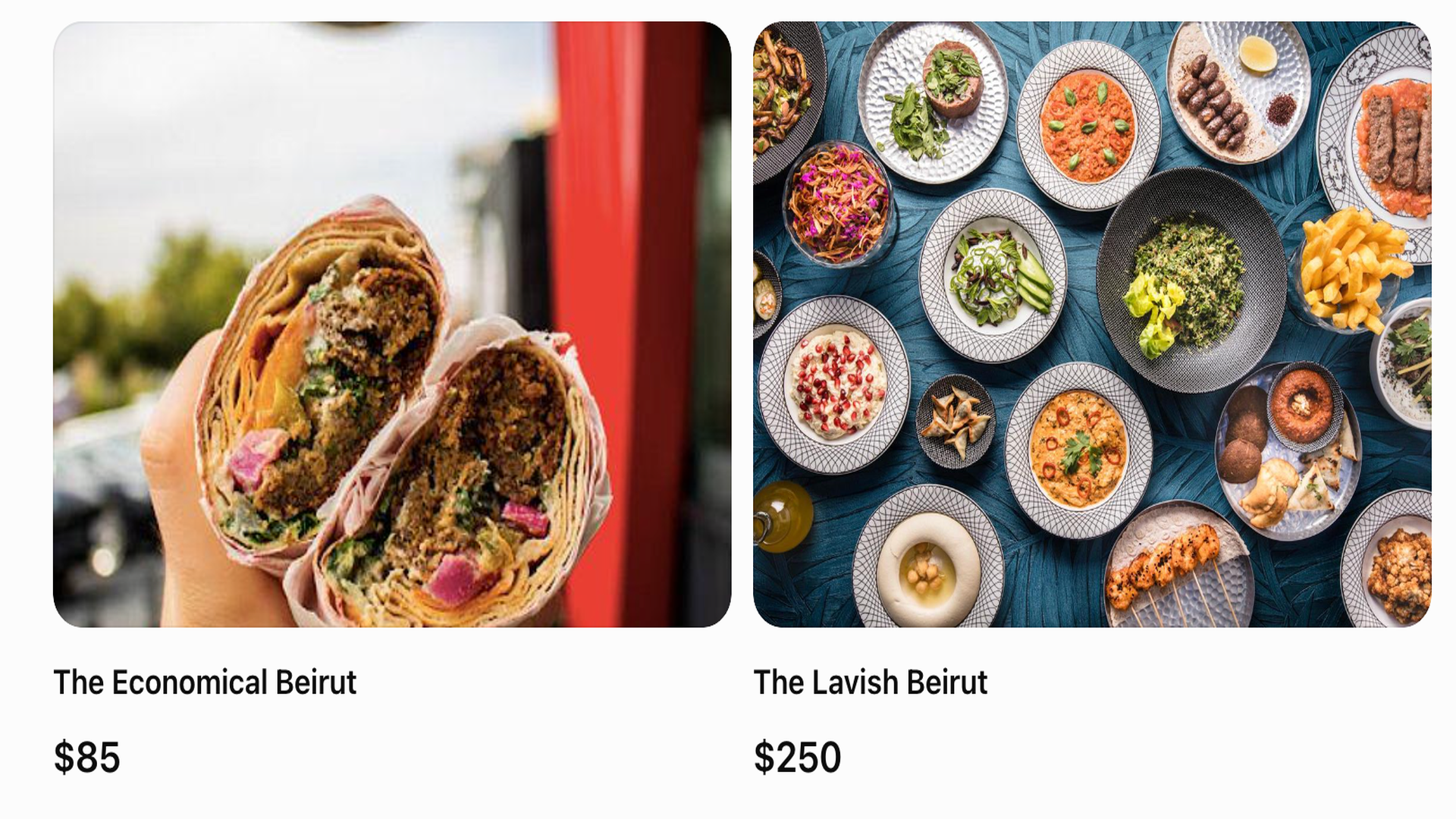 From $5 falafel sandwiches to private chauffeurs, ChatGPT offered two rather different ways to experience Beirut.
Souvenirs, survival phrases and a little Lebanese hospitality
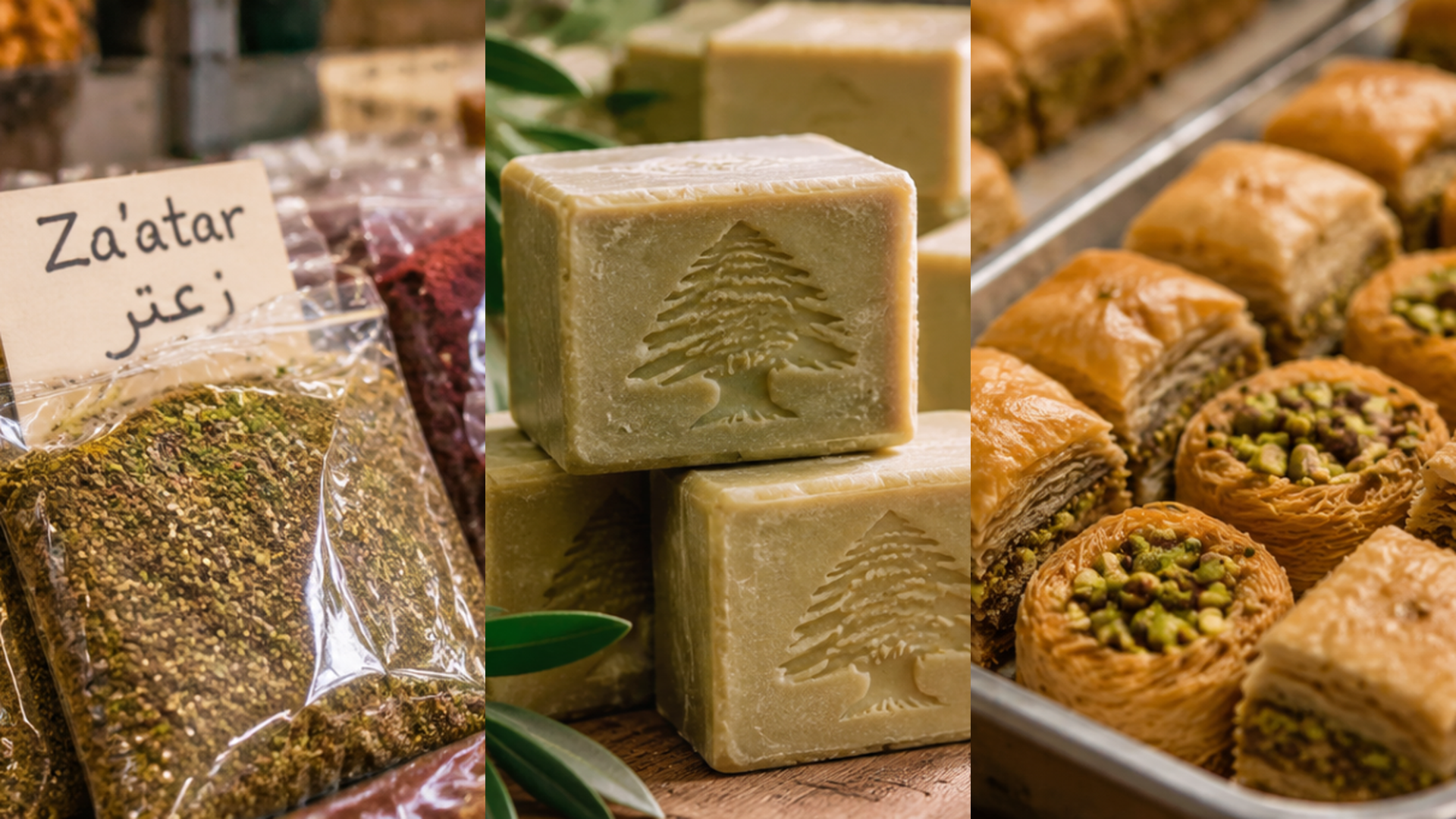 Not content with planning every meal and museum visit, ChatGPT also assembled a Lebanese souvenir shopping guide, complete with gift ideas, photographs and estimated prices.
Can AI understand what makes Beirut special?
-
-

-
The Beiruter
-
