

A Chicago tribute concert honored Ziad Rahbani and highlighted how diaspora music preserves culture as an act of resilience and resistance.
Chicago honors Ziad Rahbani

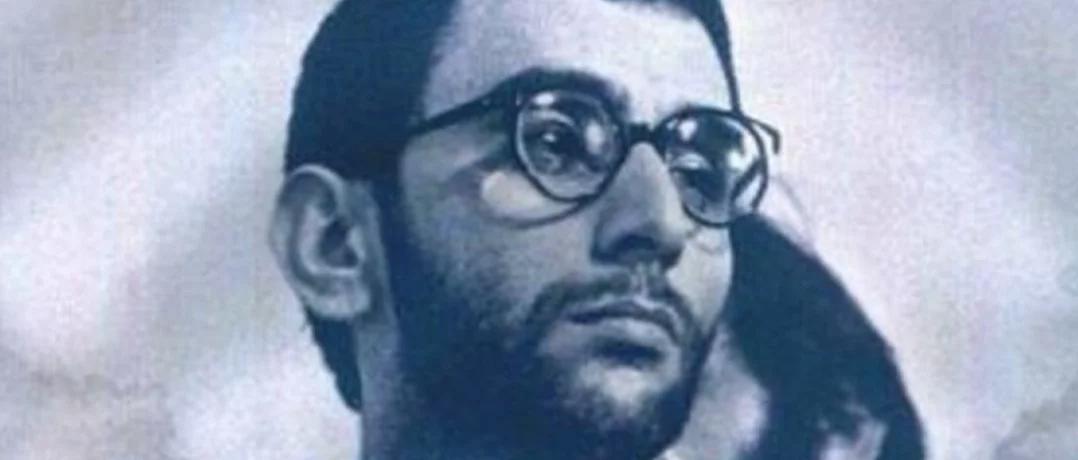
In Chicago’s Chop Shop, a space more familiar with indie sets than Arab orchestral rhythms, nearly 200 people gathered for an evening that felt part tribute, part revival, and part act of cultural defiance. Belly dancers moved with ease and musicians blended the modal language of maqam with jazz-inflected improvisation.
The performance, “From Ash to Bloom” honored the late Lebanese composer Ziad Rahbani, whose death in July marked the end of a seismic era in Arabic music and political satire. But the night was also a wider celebration of communal resilience: a reminder that cultural preservation remains one of the strongest tools of resistance within diasporic communities.
The event, produced by BIYA BIYA Productions, spotlighted TAYF, an ensemble that merges traditional maqam with contemporary jazz, pop, and improvisational techniques. While Rahbani’s legacy anchored the night, the performance also emphasized the creative multiplicity that defines diaspora art, fluid, experimental, and unconstrained by binaries.
Ziad Rahbani’s influence was omnipresent. Born to Fairuz and Assi Rahbani, he reshaped Arabic popular music by infusing it with disco, jazz, and the irreverence of political satire. His work captured the contradictions of everyday life in Lebanon, absurdity, grief, rebellion and offered a blueprint for music as political commentary. For many in the diaspora, Rahbani’s soundtracks were points of connection: reminders of home, of adolescence, of defiance.
Art as a political act
Much of the talent onstage came from the Middle East Music Ensemble at the University of Chicago, a growing community orchestra now numbering around 70 musicians. While most musicians in the diaspora are trained in Western classical or jazz traditions, ensembles like this one act as cultural lifelines, offering formal training in Arab, Turkish, and Persian repertoires. Music, for these musicians, is both refuge and rallying cry.
As political repression, war, and economic collapse shape realities across the region, communities abroad have watched their homelands fracture from afar. In this context, gathering to perform and preserve cultural heritage becomes more than a celebration, it is a form of resistance.
Rooted in Rahbani’s long-standing critique of fascism, colonialism, and dictatorship, the evening carried an unmistakable undercurrent of solidarity. Through shared rhythms and shared grief, the concert affirmed a truth that has shaped diasporic movements for generations: culture is memory, memory is identity, and identity, when expressed collectively, becomes power. In a year defined by crisis across Palestine, Sudan, Congo, and beyond, the melodies that filled the room were not just artistic expressions. They were reminders that liberation is interconnected, and that cultural preservation, in all its forms, is a refusal to be erased.
-
-

-
The Beiruter
-
