



Lebanon’s child abuse figures reveal the scale of violence, neglect and exploitation against children, highlighting the gaps in reporting, the legal protections available and the urgent need for stronger prevention and accountability.
Child abuse in Lebanon and the fight to protect its victims
Child abuse in Lebanon and the fight to protect its victims
By Jenna Geagea | November 18, 2026

Reading time: 4 min
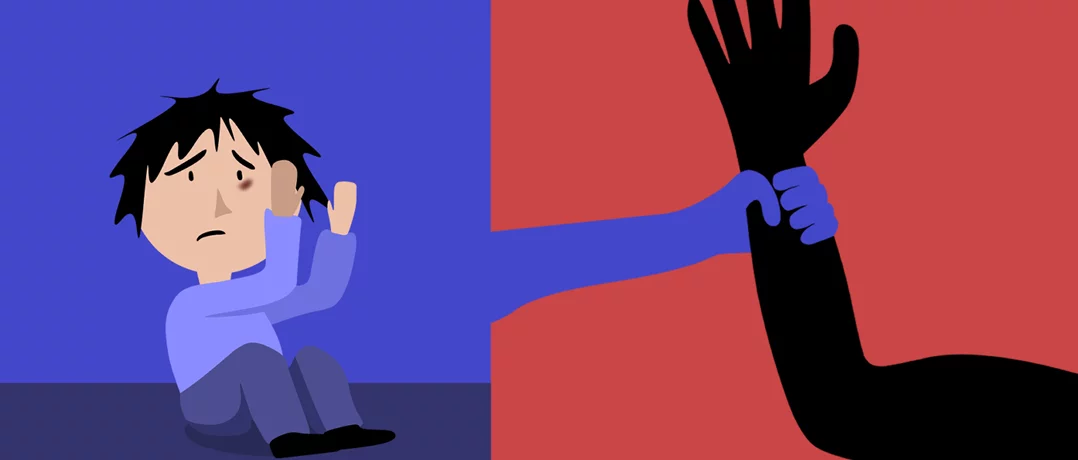
As the world marks the International Day for the Prevention of Child Sexual Exploitation, Abuse and Violence, Lebanon’s child protection figures are alarming, for each number is a child. The country’s recorded cases of abuse, aggression and neglect are only the visible part of a much larger picture, one that depends on whether families, schools and institutions are willing to speak, report and act.
The child protection organization himaya, “protection” in Arabic, received 764 cases of violence against children in 2026. Physical abuse led the list with 263 cases, roughly a third of the total. Psychological abuse followed with 166, then neglect with 143 and sexual abuse with 134. Another 42 children presented with psychological distress, and 16 were victims of exploitation.
The team cautioned The Beiruter that these numbers are a floor, not a ceiling. “Some cases are never reported and never reach the right authorities,” the team pointed out, which is why it treats prevention, reporting and accessible services as the keys to a safe childhood.
Himaya has pursued that goal for 18 years. Its founder, Viviane Debbas, built it on the conviction that every child on Lebanese soil deserves safety, whatever their nationality, religion or income. The spark was a study suggesting that “one in six children in Lebanon is exposed to sexual violence,” a figure the team called alarming.
The organization works through a socio-ecological model, reaching the child, the family, the community and the institutions and laws meant to protect them. In schools and community spaces, staff teach children about bodily autonomy, boundaries and how to refuse. The goal is to give each child “the prevention skills to know how to protect himself.”
The results are measurable. Himaya managed 1,139 abuse cases last year and closed 687 with positive outcomes. Its prevention work reached 5,350 children and 861 parents and caregivers, trained 379 professionals and frontliners, and helped five institutions adopt Child Protection Policies.
Parents sit at the center of the effort. “Some parents are not aware that they are abusing their children,” the team observed, pointing to emotional and physical abuse. Where cases demand legal action, himaya’s psychologists provide long-term support to survivors and families, and the organization campaigns to amend Law 422, Lebanon’s main child protection legislation.
The legal safety net
Legally, there is a two-layer framework: the international conventions Lebanon has ratified, and the domestic laws that carry them out. Ratifying countries must write protective measures into national legislation.
The domestic violence protection law covers children as well as women. A judge of urgent matters, rather than a criminal court judge, can bar a husband, father or other abuser from approaching the victim and place that victim under protection. The Internal Security Forces maintain a specialized unit for such cases.
Lawyer Tommy Yaghi examined the problem from the courtroom’s side. Sexual harassment, he explained, is any unwelcome behavior of a sexual nature aimed at another person, and it is, “naturally, an attack on that person’s dignity and honor.”
The Penal Code once dealt with such acts only in broad terms. Law 205 of 2020, published in the Official Gazette on January 7, 2021, changed that by naming the offense, defining it and attaching penalties. The punishment grows heavier when the victim is a minor.
The base sentence is one year in prison plus a fine. For a child victim, Yaghi told The Beiruter, the penalty rises to between two and four years, and “when the sentence reaches four years, it exceeds the three-year threshold and the offence is classified as a felony.” Fines run from 30 to 50 times the minimum wage. Repeat offenders face doubled sentences and fines.
Reporting is simpler than many assume. A parent or guardian can file a complaint at a police station or with the Public Prosecutor’s Office at the Court of Appeal. And prosecution does not hinge on a complaint: “Even if the authorities become aware of the incident without a complaint being submitted,” Yaghi stressed, they can open proceedings.
The law also follows offenders online. Suggestive remarks, images, videos and conversations count as harassment even when sent electronically, and victims may join proceedings as civil claimants. Evidence can disappear with a deleted message, yet he urged victims not to wait for perfect proof. “Even if someone does not have strong evidence, they should still report the perpetrator,” he insisted, so that authorities can investigate and deter further abuse.
Silence is the real enemy. Because the abuser is sometimes a relative, many survivors say nothing for decades. “This issue absolutely needs to be discussed,” Yaghi warned, “because its psychological consequences can affect a person’s entire future life.” Reporting also protects others: “That perpetrator may not stop with one victim.”
Responsibility is shared. Schools and teachers must supervise children on campus and on trips, and negligence can bring civil liability. He urged children to be taught about dangers such as accepting things from strangers or leaving with unfamiliar adults. “Awareness is fundamental,” he stressed.
On rehabilitation, Law 205 foresees a fund within the Ministry of Social Affairs, financed by taxes, donations and other revenues, to support victims and treat offenders. “Simply imprisoning someone is not enough,” he argued, since an offender released without psychological follow-up may strike again.
Lebanon’s figures represent cases that reached the organizations and authorities equipped to respond, while countless others remain unreported, often behind closed doors and within families themselves.
Preventing abuse therefore demands a step further than legislation. It requires parents who listen without judgment, schools that take responsibility, institutions that act without delay and a justice system that protects victims beyond the moment a complaint is filed. Above all, children must grow up knowing that their bodies belong to them, that no form of abuse is their fault and that speaking out will not cost them their safety or dignity.
-
-

-
Jenna GeageaReporter/Writer
-
