



Child abuse… the wound that does not heal

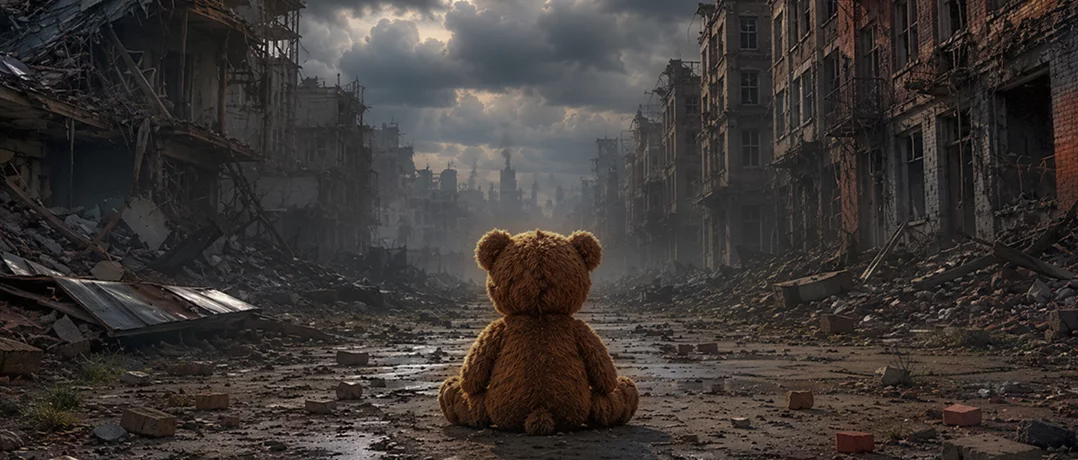
In Lebanon, the childhood many children know is not one of safety and belonging. It is one shaped by fear, fear inside the home, fear of the person who is supposed to provide love, fear that has no name because no one gave them the words for it.
The numbers behind that fear are staggering. According to Himaya, one of Lebanon's oldest child protection organizations, one in six children in Lebanon is exposed to sexual violence. A UNICEF study found that 82% of children aged 2 to 14 experienced violent "discipline", physical punishment or psychological aggression, in their homes. In 2021, UNICEF determined that one in two children in Lebanon was at serious risk of physical, emotional, or sexual violence. Between October 2020 and October 2021 alone, cases of child abuse and exploitation handled by UNICEF and its partners surged by nearly half, from 3,913 to 5,621.
Himaya to The Beiruter: "we see what is needed, and we adapt"
Himaya, "protection" in Arabic, has been fighting that reality for 18 years. Founded by Viviane Debasel, the organization was built on a foundational belief: every child on Lebanese soil, regardless of nationality, religion, or economic background, deserves to be safe.
"Himaya was established because there was a need to address child abuse in Lebanon," the team explains. "There was a study that showed that one in six children in Lebanon is exposed to sexual violence, which is a very big and alarming number."
The organization works through a socio-ecological model that addresses the child, their family, their community, and the institutions and laws meant to protect them. In practice, this means going into schools and community spaces to build what they call prevention skills, teaching children about bodily autonomy, boundaries, how to recognize danger, and how to say no. "We try to build him the prevention skills to know how to protect himself from any further abuse," the team says.
Last year, the impact of that work was measurable. Himaya managed 1,139 cases of abuse, of which 687 were successfully closed with positive outcomes. Through prevention, the organization reached 5,350 children and 861 parents and caregivers. It trained 379 professionals and frontliners and supported the implementation of five Child Protection Policies across different institutions.
Work with parents is central to the mission. "Often, you find that some parents are not aware that they are abusing their children, I'm talking about emotional abuse, physical abuse. Especially in this last period, with the economic situation." When cases are severe enough to require legal intervention, Himaya's team of psychologists provides sustained psychosocial support to survivors and their families, and advocates for amendments to Law 422, Lebanon's primary child protection legislation, to better serve children's needs.
Alexander: "I thought what was happening to me was normal"
Behind every statistic is a child who lived it. Alexander, now in his late twenties, was physically and sexually abused by a family member throughout his childhood. For years, he had no framework to understand what was being done to him.
"When I was a child, I thought what was happening to me was normal," he says. "I didn't have the words to call it abuse. I only knew that I was scared all the time. As a kid, you don't understand why someone hurts you, you just assume it's because there's something wrong with you. I carried that belief for years."
The confusion abuse breeds in children is one of its most insidious features. Without language, without a trusted adult, children turn the violence inward, and carry it long after childhood ends.
"People think abuse ends when the bruises fade or when the child grows up. It doesn't," Alexander says. "I'm an adult now, but there are days when I still feel like that frightened little boy. I struggle to trust people. I overthink every conversation. I apologize for things that aren't my fault. I push people away when they get too close because part of me is still waiting to be hurt. The hardest part is grieving the childhood I never had."
A wound that follows
What Alexander describes is clinically recognized, and extensively documented. "Child abuse leaves effects that extend far beyond the immediate experience of harm," says psychologist Dr. Lynn Mrad. "During childhood, abuse can disrupt a child's sense of safety, trust, and self-worth at a critical stage of emotional and psychological development."
Children who experience abuse often struggle with emotional dysregulation, difficulties forming secure attachments, and a distorted understanding of their own worth. Research has linked childhood abuse to higher risks of depression, anxiety disorders, PTSD, substance misuse, and self-harm. In severe or prolonged cases, survivors may develop complex PTSD, marked not just by flashbacks and hypervigilance, but by deep disruptions to identity and the capacity for intimacy. The impact extends to education, employment, and physical health, as chronic exposure to fear during childhood affects biological development itself.
"Survivors may face difficulties maintaining healthy relationships, setting boundaries, or developing a stable sense of identity and self-esteem," Dr. Mrad notes. And yet she is clear: healing is possible. "Many survivors demonstrate remarkable resilience through support, therapy, and protective environments."
Breaking the silence
On the International Day of Innocent Children Victims of Aggression, child abuse remains one of the most devastating yet often overlooked crises facing societies worldwide. Yet there is nothing hidden about its consequences.
They are reflected in the anxiety that follows a child into adulthood, in the relationships they struggle to trust, in the opportunities they feel unworthy of pursuing, and in the parts of themselves they spend years trying to rebuild. The violence may last for a moment, a year, or an entire childhood, but its effects can endure for a lifetime.
Yet if abuse is learned in silence, protection begins with speaking. The true measure of a society is not how it treats its most powerful, but how fiercely it protects its most vulnerable.
-
-

-
Jenna GeageaReporter/Writer
-
