

Psychotherapy helps reshape mental maps, guiding patients to explore new perspectives and break repetitive thought patterns.
Could psychotherapy work by changing how we navigate our own minds?
Could psychotherapy work by changing how we navigate our own minds?
By The Beiruter | November 16, 2025

Reading time: 3 min
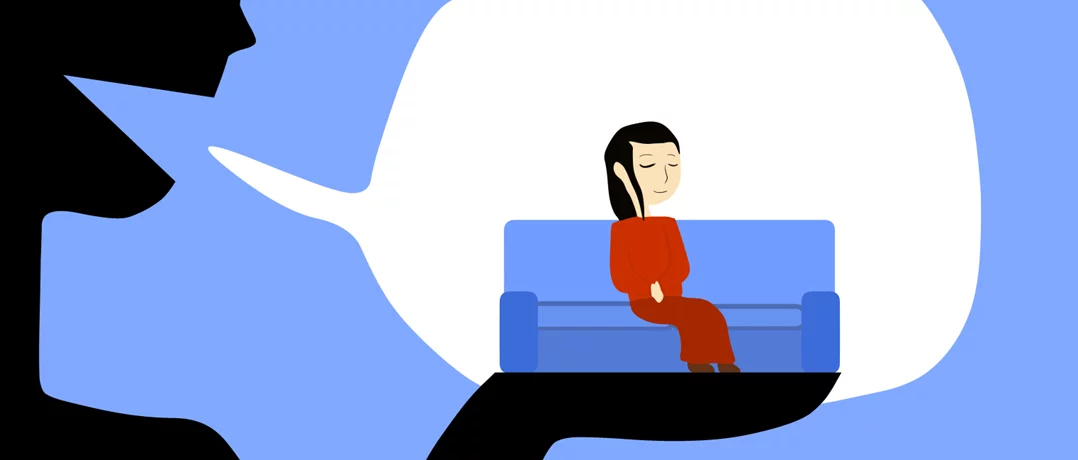
The key mechanism behind talk therapy may lie in how we mentally map and remap our inner worlds. For more than a century, psychotherapy has been grounded in a familiar scene: a patient on a couch, guided by a therapist through memories, emotions, and long-buried patterns. The goal, across traditions, has been the same: to bring unconscious thoughts into awareness. Yet despite its long history, the cognitive mechanisms that produce this “insight” remain largely undefined.
A new theoretical framework offers a fresh way to understand what happens inside the brain during psychotherapy. Therapy may work by expanding a person’s cognitive map, the internal model through which we organize memories, beliefs, and relationships, and navigate our mental lives (University of Tartu, University of Zurich).
A map inside the mind
The cognitive-map theory builds on decades of neuroscience research. In the hippocampus, “place cells” activate when an animal occupies a specific location. In the entorhinal cortex, “grid cells” fire in a geometric pattern, forming an internal coordinate system that enables spatial navigation. More recent studies have extended this framework beyond physical space: grid-cell-like activity appears to encode abstract domains, such as social hierarchies, time, sound, and linguistic meaning. This growing body of evidence raises a compelling idea: the brain may use the same navigational architecture to move through thoughts as it does to move through space.
Therapy as a form of mental navigation
Associate professors Aru and Kabrel analyzed language used in psychotherapy sessions and found that both therapists and patients relied heavily on spatial metaphors. Phrases like “I’m stuck,” “I keep ending up here,” or “this is unfamiliar territory” appeared far more frequently than in casual conversation. This observation supports their argument that introspection may be grounded in cognitive navigation and that psychological distress may arise when people become confined to narrow mental paths.
How Changing the Map May Change the Mind
Consider depression: a person may repeatedly interpret events through the belief that they are inherently flawed. Each time they revisit this interpretation, the mental path grows more entrenched, much like a footpath in a forest that widens with use. Therapy, in this framework, helps clients identify alternate routes. By prompting new interpretations or highlighting previously unseen connections, therapists may guide patients toward unexplored regions of their cognitive map.
Kabrel offers an example of what this might sound like in practice:
This is where we keep getting stuck. We return to the same place every time, let’s try to expand this.
This reframing does more than change a thought. It changes the underlying structure through which thoughts are accessed.
Beyond illness: A broader cognitive challenge
Aru argues that the implications extend beyond clinical disorders. “People often operate with very narrow maps, very narrow ways of thinking,” he said.
Expanding those maps may be a goal not only for psychotherapy but for society.
If thinking is a form of navigation, then education, reflection, and meaningful conversation may all serve as tools for widening the terrain of the mind.
A theory ready for testing
The authors hope their framework will push psychologists and neuroscientists to design studies that can directly test the neural mechanisms behind mental navigation. They acknowledge that some may be skeptical particularly regarding the connection to grid-cell activity.
But Aru sees this as a strength rather than a weakness. “This is the fun part of science,” he said. “You make connections that seem ambitious, and sometimes they turn out to be true. And when they do, we end up understanding something we couldn’t grasp before, and we expand our own mental maps in the process”. As researchers begin to explore this theory further, it may reshape psychotherapy and how we understand thinking itself.
-
-

-
The Beiruter
-
