As internal displacement grows across Lebanon, economists warn that its long-term costs on public finances, infrastructure, and economic growth far outweigh any short-term boost in consumer spending.


As internal displacement grows across Lebanon, economists warn that its long-term costs on public finances, infrastructure, and economic growth far outweigh any short-term boost in consumer spending.

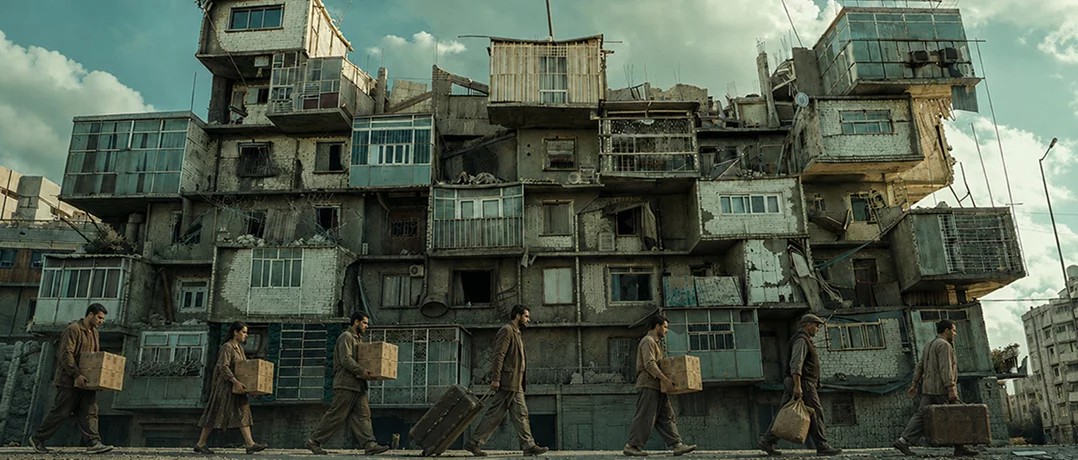
Amid the overlapping economic, financial, and social crises facing Lebanon, internal displacement has emerged as one of the most pressing challenges confronting the state and its institutions. Beyond the humanitarian and social consequences that accompany any large-scale movement of people, the phenomenon raises fundamental questions about its impact on public finances, infrastructure, production, and consumption in a country already struggling with limited resources and weak capacities.
As displacement expands and pressure on host communities intensifies, debate has resurfaced over its true economic cost and whether it represents a net burden on the Lebanese economy or generates some positive effects through increased demand and local market activity. Between these two perspectives lies the need for a rigorous economic assessment that distinguishes between short-term effects and long-term outcomes, while clarifying the direct and indirect costs borne by the state and the national economy.
Jassem Ajaka, professor of economics at the Lebanese University, argues that “internal displacement in Lebanon is one of the most complex issues from a macroeconomic perspective, given the direct strain it places on already scarce resources, in addition to the structural changes it imposes on market activity and consumer demand.”
Speaking to Nidaa Al Watan, Ajaka explains that assessing displacement as either a net burden or a driver of economic activity reflects two sides of the same reality.
“Economically, we are dealing with an equation that contains two unequal sides that do not balance each other,” he says.
“The first side is the negative impact, which places a substantial structural burden on the economy through intense pressure on infrastructure, depletion of national resources, and reduced production across several vital sectors, particularly in areas that have experienced large waves of displacement.”
“The second side, which could be described as a ‘bookkeeping positive,’ is the increase in consumer demand resulting from displaced populations relocating to new areas. This is reflected in higher spending on food, medical supplies, fuel, and rental housing. However, this boost remains temporary and is largely limited to the trade and services sectors, generating only short-term cash circulation.”
Ajaka stresses that “this type of stimulus is not economically healthy because it is inflationary in nature. It does not lead to genuine economic growth or increased production; rather, it merely causes a forced shift in the demographic geography of consumption within the Lebanese economy.”
On the distinction between direct and indirect costs, Ajaka explains that economists rely on two primary approaches when measuring the scale of the crisis.
“The first is the direct cost, which consists of immediate financial expenditures incurred by the public treasury to manage the crisis. These include spending on shelters, emergency food, medical and in-kind assistance provided by the ministries of health, social affairs, and education, as well as the costs of security, military, and logistical mobilization, in addition to damage to infrastructure and housing. Together, these elements make up the direct economic cost.”
He adds: “Indirect costs are deeper and more dangerous. In economics, they fall under what is known as the ‘opportunity cost.’ These include increased strain on infrastructure in host areas, accelerating the deterioration of sewage, water, electricity, and road networks and raising maintenance expenses.”
“Indirect costs also include economic losses resulting from declining production. When people are displaced from their regions, agricultural, industrial, and commercial activities are disrupted—particularly in the South and the Bekaa, leading to lower GDP. Lost tax revenues are another major component, as reduced economic activity, especially in areas affected by conflict, weakens the state’s ability to collect taxes and fees.”
Asked about the impact of displacement on the budget deficit and public debt, Ajaka notes that Lebanon has already been facing a severe financial crisis since 2019 and has suffered from chronic budget deficits since 1993, making any additional crisis a multiplier of fiscal pressures.
He explains that “the 2026 state budget was drafted with the aim of achieving fiscal balance, but developments related to displacement have introduced new realities.”
“On one hand, the crisis has generated emergency expenditures that were not accounted for in the budget, increasing pressure on public finances. On the other, a large portion of the additional revenues collected over the past two years through higher taxes and customs duties has been consumed by the costs and requirements associated with displacement.”
Regarding public debt, Ajaka points out that “the issue is not limited to the growth of debt itself. It also involves the decline in GDP, which automatically increases the debt-to-GDP ratio—one of the key indicators used by international financial institutions to assess a country's economic health and recovery prospects.”
As for Lebanon’s capacity to sustain these pressures over the long term, Ajaka believes that “the country lacks the financial and structural resources needed to absorb this reality for an extended period.”
“Lebanon’s central bank reserves are limited, the banking sector remains largely paralyzed, and international confidence in the country was already weak even before the displacement crisis worsened.”
Ajaka warns that “if the current situation continues without substantial and direct external financial inflows, it will lead to a range of serious consequences. These include the erosion of citizens’ purchasing power due to rising inflation in real estate and food prices, a decline in the quality of essential public services, particularly healthcare and public education, and the expansion of the cash economy, which deprives the treasury of revenues and complicates Lebanon’s relationship with international institutions.”
Ultimately, internal displacement cannot be viewed solely through the lens of short-term market activity or immediate economic figures. Its consequences extend beyond direct spending to affect the very structure of the economy and its capacity for growth and sustainability. Between the financial costs borne by the state and the indirect losses affecting production, revenues, and infrastructure, the challenges continue to mount against the backdrop of Lebanon’s already fragile economic conditions.
