



Lebanon’s new Media Law takes center stage as political and legal figures debate the balance between freedom of expression, accountability and the growing threat of online hate speech.
Freedom, hate speech and Lebanon’s media landscape
Freedom, hate speech and Lebanon’s media landscape
By Jenna Geagea | October 28, 2026

Reading time: 4 min
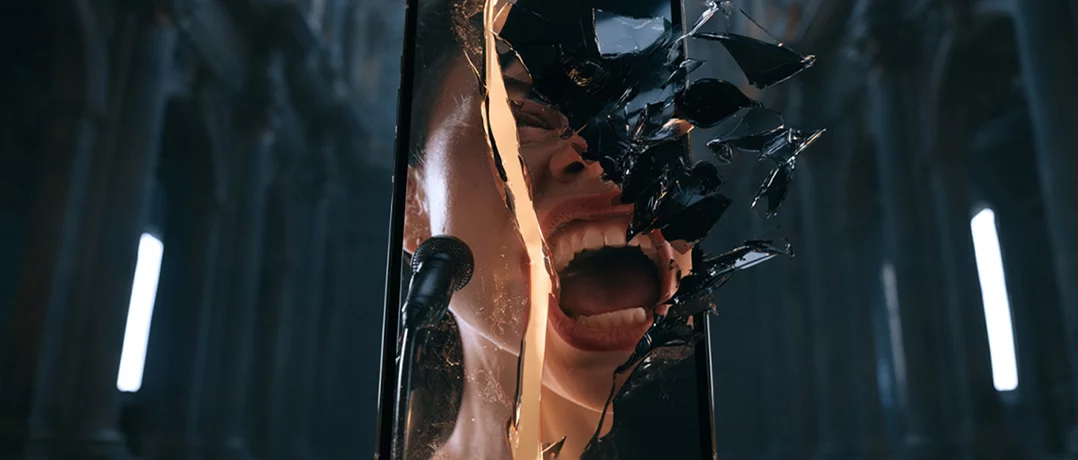
The expansion of digital platforms has fundamentally reshaped the media landscape, transforming how information is produced, disseminated and consumed. As traditional media structures adapt to this evolving environment, questions surrounding freedom of expression, accountability and the regulation of harmful content have become central to public debate. The challenge lies in determining how societies can safeguard the right to free expression while addressing the risks posed by an increasingly interconnected information ecosystem.
Information Minister Paul Morcos: “A social responsibility”
Information Minister Paul Morcos, who is also a lawyer and founder of the JUSTICIA law firm, presented the law as a historic first.
Speaking to The Beiruter at USEK’s first session of its new monthly Seminar moderated by media personality Dany Haddad, he explained that “after nearly 70 years under the Press Law and 40 years under the Audiovisual Media Law, Lebanon now has a new Media Law that combats hate speech”. “This is the first time such a provision has been introduced into Lebanese legislation.” He added that websites are regulated by law for the first time.
He was careful about where his ministry’s responsibility ends. “We are not the judiciary,” he highlighted. “If freedom of opinion, expression, or the media is overstepped, it is up to the judiciary to address the matter.” The ministry still has a social responsibility. It has produced about 15 videos with UNESCO, the UNDP, the International Committee of the Red Cross and UNIFIL, and taken them to schools and universities.
The minister explained that the youth treat social media as a battlefield and imagine it can substitute for actual warfare. He described one campaign video in which an actor holds a conversation with himself in front of a mirror. “When you engage only with yourself, you are effectively erasing the other person,” he noted. “That is no longer genuine interaction or communication.”
His warning was aimed at the principle itself, “if we take freedom to the extreme and end up destroying society, even unintentionally, there will eventually be no place left for us to exercise that freedom.”
Justice Minister Adel Nassar: “The atmosphere has changed”
At the seminar titled “Media and Social Media: Between Freedom and Hate Speech”, Justice Minister Adel Nassar insisted on removing political considerations from the nominations to the Higher Judicial Council and the Judicial Inspection Authority, and claimed measurable results. “In some judicial districts, productivity has increased by between 7% and 400%, depending on the sector,” he told The Beiruter, promising a full review at the end of the year.
He did not claim the laws are enforced everywhere. “There is an armed group that does not abide by the laws,” Nassar explained, describing “a challenge to the authority of the state and a confrontation between the state and this group.” Even so, he said the courts deserve praise, “they are working seriously and diligently, and they are handling all cases. I would like to pay tribute to them from this platform.”
On the media law, he acknowledged that critics’ objections center on the provisions that keep criminal liability. He conceded that many of those concerns could be answered through compensation without criminal law. He also pointed to a change in practice. Since the government took office, public prosecutors have handled cases involving journalists differently, and the pretrial detentions that were common before have not recurred.
MP George Okais: “The timing was right”
MP George Okais, MP and former judge who presided over the First Instance Tribunal in Beirut, voiced to The Beiruter how the law was made.
He recalled that when he took over as chair of the committee, the draft had been waiting since 2010. In that time, he said, “four, five, or perhaps six ministers of information had come and gone,” each withdrawing the text to insert his own amendments. Meanwhile the world changed. “Algorithms were not as pervasive, artificial intelligence was not part of everyday life, and deepfakes did not exist in the way they do now,” he expressed.
He rejected the argument that a fractured country needs tighter censorship. “I firmly believe the timing was right for what we did,” he noted. Under the committee’s approach, “ordinary defamation and insult should be stripped of their criminal nature and instead become grounds for civil compensation.” He assured, “if you are insulted in the media or on my social media platforms, you should have the right to obtain substantial civil compensation.”
Ultimately, protecting freedom of expression in Lebanon requires a balance between individual rights, social responsibility and the need to confront hate speech without undermining the freedoms the law is meant to protect.
-
-

-
Jenna GeageaReporter/Writer
-
