



Sudden Israeli evacuation orders forced over 500,000 residents of Beirut’s southern suburbs to flee, creating one of the largest displacements in years.
Half a million flee Beirut’s southern belt

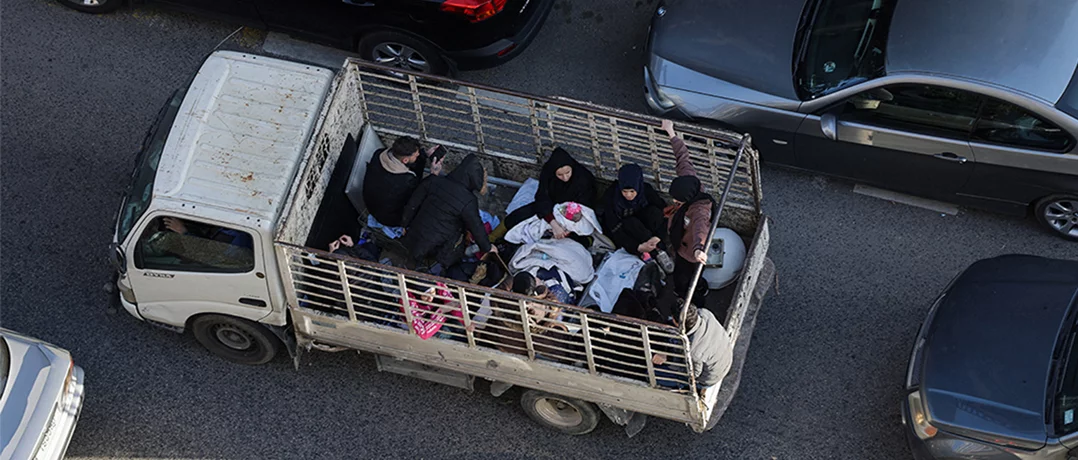
In the latest escalation, an evacuation warning posted online by the Israeli military triggered one of the largest sudden displacements Beirut has witnessed in years. Residents of Borj el-Barajneh, Hadath, Haret Hreik, and Chiyah were told to evacuate immediately, with Israeli military spokesperson Avichay Adraee urging people to move north and east and warning that remaining in the area could endanger their lives. According to Red Cross statistics, 500,000 people fled their homes within hours, transforming one of Beirut’s most densely populated districts into a corridor of utter havoc.
Lives on the move
Television footage and eyewitness accounts showed vehicles packed with families inching through traffic toward Mount Lebanon and northern districts of the capital. In some areas, residents fired warning shots into the air to alert neighbors of the evacuation order as confusion spread through the densely populated suburbs. The exodus overwhelmed major routes leading out of the area. Highways and smaller neighborhood roads alike became clogged with cars, while thousands of residents walked for kilometers to reach safer neighborhoods. For many, there was no clear destination.
Families began arriving across Beirut and Mount Lebanon late into the night. Some found temporary refuge with relatives or friends. Others slept in cars parked along seaside roads, public squares, and residential streets. The sudden movement of half a million people turned Beirut into a city absorbing displacement once again. Questions emerged quickly: How long will the people remain displaced? And what systems exist to absorb such a massive population shift? For now, the answers remain uncertain.
Ahmad Azzedine: “We didn’t know where to go”
For Ahmad Azzedine, one of many, the night of the evacuation ended on a sidewalk in downtown Beirut. Like thousands of others fleeing the southern suburbs, he left his home with little time to plan. Streets were already choking with traffic, families rushing in every direction as the evacuation warnings spread. “People were carrying their children in their arms,” he told The Beiruter.
Some were half-asleep, some crying. The streets were packed and no one knew where they were supposed to go.
Amid the chaos, Azzedine tried to move through the crowds with his young son. “It felt like everyone was running at once,” he says. “There was confusion everywhere. Cars, people shouting, phones ringing.” By the time they reached central Beirut, there was nowhere left to go. Father and son spent the night on the ground in downtown Beirut after a young woman gave them a mattress. “A girl we didn’t know came and gave us a mattress,” he says. “We put it on the floor and slept there.”
For Azzedine, the moment captured the strange duality of the night: mass displacement unfolding alongside small acts of solidarity between strangers. “We lost our home in one night,” he says quietly. “But people were still trying to help each other.”
Maryam Kanbar: “I carried them and just walked”
Maryam Kanbar tells The Beiruter, “I didn’t pack a bag, I just took my children and went down.” With no clear way out, Kanbar and her children joined the flow of residents trying to reach the main roads. “There were children everywhere,” she says. “People carrying them, people crying, people trying to find a car.” Eventually, a passing driver slowed and offered them a ride north. Kanbar and her children climbed in alongside strangers who had also been picked up along the way.
“We didn’t know them,” she says. “But everyone was just trying to help whoever they could.” The ride was quiet. Her children, exhausted from the chaos of the evacuation, fell asleep against her.
You leave your house like that, with nothing, and you realize how fragile everything is.
For Kanbar, the moment that stays with her most is not the warnings, nor the traffic, but the silence inside the car filled with strangers who had all fled the same place. “No one was speaking,” she recalls.
The geography of fear
War reshapes geography in brutal ways. What had once been ordinary neighborhoods becomes a marked zone on a military map. Beneath the political calculations that produced this night lies a more devastating truth: for hundreds of thousands, war is not measured in strategy or ideology. It is felt as a mother’s aching back as she carries her children through the chaos, as a child’s terrified screams echoing through crowded streets, as the silent despair of parents unsure if they will ever return home. It is experienced in the tight grip of strangers sharing a car, in the cold nights spent on asphalt.
War, in these moments, is not abstract, it is lived, painfully, in every heartbeat, every breath, every step away from what was once safe.
-
-

-
Jenna GeageaReporter/Writer
-
