



Hezbollah’s increasingly vulgar rhetoric is portrayed as a symptom of deeper political and strategic decline following shifting regional power balances and recent conflict.
Hezbollah’s vulgar discourse: The sound of a fading role
Hezbollah’s vulgar discourse: The sound of a fading role
By Marwan El Amine | February 02, 2026

Reading time: 3 min
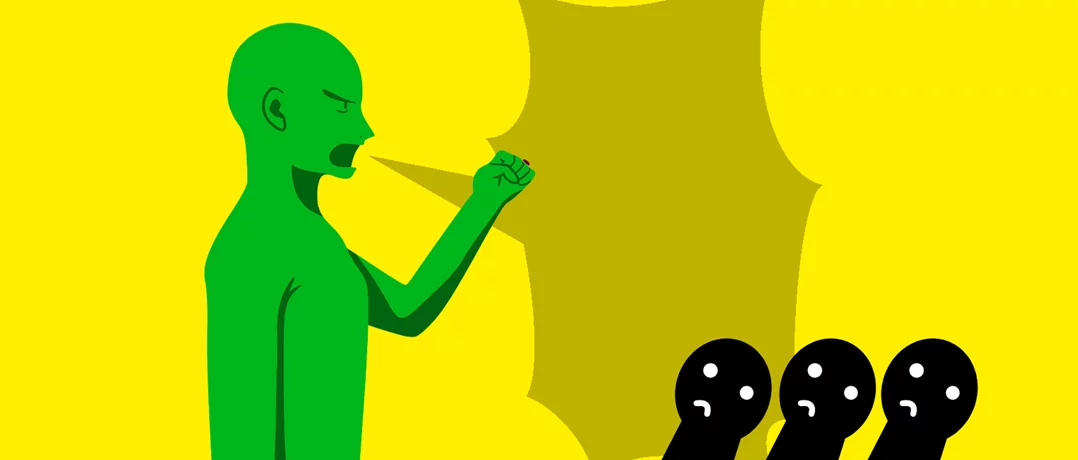
It is as if Hezbollah, with all its long military and political history, now possesses only one remaining and effective arsenal: verbal vulgarity. From the crude language used by Naim Qassem to the daily stream of insults poured out by a network of party-affiliated media figures and so-called “influencers,” many reportedly managed by Wafiq Safa, obscenity has become the dominant register of its public voice.
This language is not incidental. It is neither a slip of the tongue nor an individual deviation that can be dismissed or isolated. At its core, it is a symptom of political decay. What we are witnessing is Hezbollah’s transition from a military-political force that once played a central role in shaping regional balances, into a discordant noise machine, one that specializes in manufacturing illusions, stoking anger, and running systematic bullying campaigns. This shift is itself an unspoken admission: the capacity for real influence has waned, leaving shouting, insults, and incitement as substitutes.
The defeat here is not merely rhetorical; it is structural. The regional balance of power that for years allowed Hezbollah to present itself as a decisive actor in matters of war and peace has fundamentally changed. The latest war, with all its military and security consequences for the party, shattered the carefully crafted image it had built of itself. It exposed Hezbollah’s fragility and the limits of its capabilities when measured against Israel, and it completely collapsed the narrative of “deterrence and protection.” Faced with this reality, traditional mobilizing discourse no longer persuades. Retreating into street language is simply easier than confronting hard questions.
In this context, insults and delirious claims function as a form of psychological compensation for loss. Figures close to the party speak of Iran possessing capabilities “stronger than artificial intelligence,” or predict that the next war will eliminate Israel and destroy the U.S. naval fleet. Such statements belong neither to politics nor to strategy, but to denial. When you are unable to read power balances, you turn to myth. When you fail to convince your audience with facts, you promise miracles.
What is particularly striking is that this rhetorical collapse coincides with the justification, and even encouragement, of symbolic violence against individuals, especially women. Weaponizing disability or private life in political conflict is not merely vulgarity or a collapse of values; it is a declaration of total moral bankruptcy. It also signals something more dangerous: either the party is no longer capable of controlling its media environment, or it is actively endorsing this behavior. In both cases, the message is the same: mobilize the Shiite base at any cost, use it to defend weapons at all costs, even if the price is the destruction of what remains of social, cultural, and ethical fabric.
No matter how loud it grows, this shouting builds no future, restores no influence, and creates no legitimacy. It is merely the echo of a role that has reached its end, and a desperate attempt to postpone acknowledging reality. Parties that possess a project speak the language of politics. Those that lose their compass are left only with insults as a substitute for meaning, and noise as a mask for defeat.
