



How Hezbollah’s decision to reopen the southern front has reignited war in Lebanon, deepening the human, economic, and political costs for Lebanese society.
Hezbollah’s war and the silencing of dissent
Hezbollah’s war and the silencing of dissent
By Marwan El Amine | March 09, 2026

Reading time: 4 min
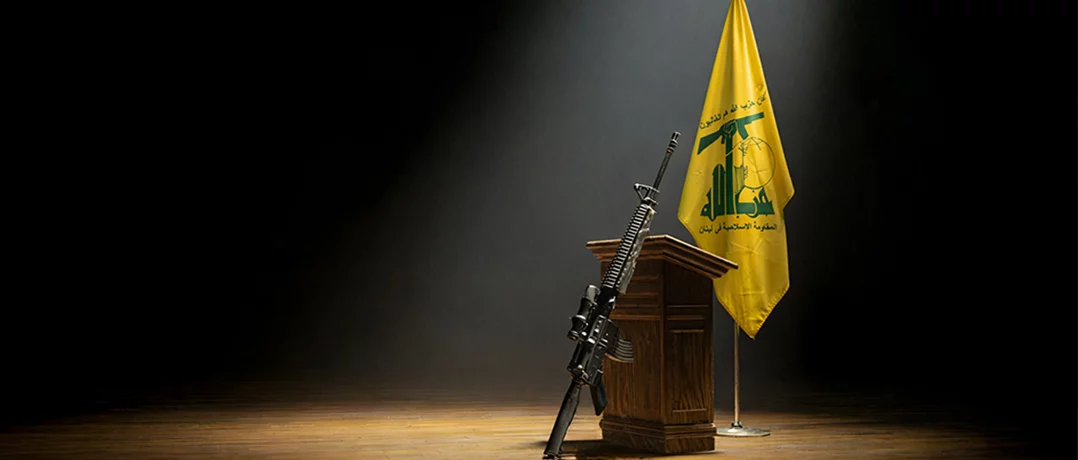
Each time Hezbollah decides to open a new military front and draws Lebanon and its people into another devastating war, the same pattern reappears. A sharp mobilizing discourse quickly emerges, one built on incitement and accusations of treason. This rhetoric is designed primarily to stir the instincts of the party’s base. It functions as a political tool to keep that audience preoccupied with internal side battles, diverting attention from the catastrophic causes and consequences of these decisions, especially since the party’s own support base often bears the greatest share of the damage.
Rather than confronting public opinion from a position of accountability, the party tends to invoke a series of arguments far removed from reality. These narratives serve as a shield, insulating its supporters from uncomfortable truths and discouraging the kind of questions grounded in reason and logic. Most of the wars in which Lebanon has been drawn, due to decisions taken by Hezbollah, have not been shaped by calculations tied to Lebanon’s national interest or priorities. Instead, they have largely reflected considerations linked to the strategic interests of the Iranian regime and its efforts to consolidate regional influence.
This is where the core dilemma lies: when Lebanon becomes an arena for conflicts that extend beyond its borders, all Lebanese end up paying the price for choices in which they were never genuine participants.
Hezbollah’s latest decision to reopen the southern front, under the banner of supporting Iran and retaliating for the assassination of Ali Khamenei, places the party in one of its most awkward moments before its own constituency. That very community has barely begun to recover from the aftermath of what was called the “support war for Gaza.” Entire villages in southern Lebanon remain devastated, thousands of families are still unable to return to their homes, and parts of the south remain under occupation.
Against this landscape of accumulated losses, the party’s decision to ignite the southern front once again has effectively reopened the gates of hell for its own environment. Instead of addressing the destruction left by the previous war and restoring life to devastated areas, residents have found themselves thrust into the center of yet another confrontation.
Shortly after midnight, many southerners were forced to leave their homes in haste after Hezbollah launched six largely symbolic rockets that caused no damage on the Israeli side. The move triggered Israeli military operations, which in turn led to a widening wave of evacuations across large parts of southern Lebanon, the southern suburbs of Beirut, and areas of the Beqaa.
This war now appears open to uncertain and unpredictable scenarios. No one has a clear vision of its trajectory or where it might ultimately end, especially amid reports circulating in Israeli media about the possibility of expanding the occupation zone in the south as far as the Litani River.
Weeks earlier, Sheikh Naim Qassem had declared that Hezbollah would not remain neutral if Iran were targeted or if the life of Ali Khamenei were threatened. The party has now acted on that pledge. Yet this stance has triggered a noticeable wave of resentment within Hezbollah’s own base and its broader supportive environment.
The criticism stems from a comparison frequently voiced within that community. When Lebanon itself was enduring the hardships of war, or when Hezbollah suffered severe blows, including assassinations targeting its senior leadership, among them its Secretary-General Hassan Nasrallah, Tehran maintained its neutrality and did not open a military front in support of the party or in retaliation for Nasrallah.
Within this equation, feelings of anxiety and frustration are growing inside the Shiite community, which once again finds itself bearing the cost of decisions that do not necessarily reflect its own interests or everyday security and economic priorities. As this unease intensifies, Hezbollah has responded by escalating its rhetoric of accusation and incitement against critics, seeking to redirect public anger toward its opponents rather than toward itself, while deflecting attention from its direct responsibility for a new cycle of bloodshed, destruction, and displacement.
This mobilizing rhetoric is not merely a form of political defense; it also serves as a mechanism to reassert internal discipline within the party’s supportive environment. Instead of opening a discussion about the costs and consequences of military choices, the battleground is shifted to questions of loyalty and betrayal, where dissent or even raising questions becomes synonymous with treason or alignment with the enemy.
Through these campaigns, Hezbollah appears to pursue two goals simultaneously. First, channeling public anger toward a presumed “internal enemy,” rather than toward the party that made the decision to go to war. Second, exerting deterrent pressure on dissenting voices by cultivating a climate of moral and political intimidation, one that raises the cost of opposition and may even make it dangerous for many to speak out.
In such an atmosphere, the space for public debate inevitably shrinks, and the ability to hold decision-makers accountable for choices that shape people’s lives and futures steadily erodes.
