



MasterChef Australia’s latest Lebanese-themed challenge highlighted how migrant family food became mainstream Australian culture.
How MasterChef Australia put Lebanese food back in the spotlight
How MasterChef Australia put Lebanese food back in the spotlight
By Adella Beaini | May 24, 2026

Reading time: 3 min
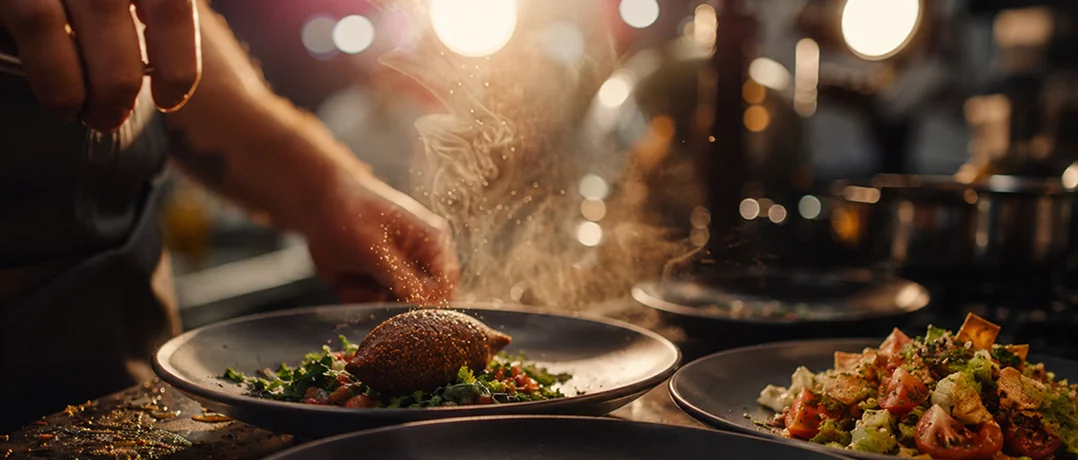
Lebanese cuisine took centre stage on MasterChef Australia this week, with contestants forced to cook around one of the country’s most iconic ingredients in a high-pressure elimination challenge.
In Monday night’s episode, contestants facing elimination had to choose between five flags — Lebanon, Mexico, Japan, Italy and Vietnam — without knowing which ingredient was attached to each country.
The Lebanese flag revealed eggplant, while Vietnam drew lemongrass, Japan miso, Italy tomatoes and Mexico corn.
Within minutes, the MasterChef kitchen was filled with smoky eggplant, tahini, lamb and dishes inspired by the flavours many Lebanese Australians grew up eating at home.
In a clip shared by MasterChef Australia, the judges discussed “taking us to Lebanon with eggplant”, while contestant Lydia served stuffed eggplant with lamb, rice and tahini yoghurt.
For many Lebanese-Australian viewers, it felt instantly familiar.
How Lebanese food became mainstream in Australia
Over the past two decades, Lebanese food has become one of Australia’s most recognisable cuisines, moving far beyond suburban bakeries and charcoal chicken shops into mainstream food culture.
And MasterChef has played a major role in that shift.
Over the years, the franchise has helped introduce dishes like kibbeh, kafta, toum, fattoush and baba ghanoush to a national audience — often through contestants proudly cooking the food they grew up with.
The Lebanese-Australian contestants who changed the kitchen
Lebanese-Australian contestants have also become some of the franchise’s most recognisable success stories over the years.
In 2019, Larissa Takchi made MasterChef history when she became the youngest winner of the competition at just 22 years old.
Takchi, whose grandparents migrated from Lebanon to Australia, has previously spoken about growing up in a large Lebanese family where food sat at the centre of almost every gathering.
Her win turned her into one of the show’s breakout stars, with Takchi later building a major social media following and becoming known for her dessert creations.
Years earlier, Samira El Khafir introduced many viewers to Middle Eastern home cooking during her run to the finals in 2013.
El Khafir later launched her Melbourne café Modern Middle Eastern and released a cookbook centred around traditional family recipes and Lebanese flavours.
More recently, Adelaide cook Rose Adam brought Lebanese food back into the spotlight during her time on the series.
Adam, who grew up in her family’s deli business, has spoken about being inspired by the food she ate growing up in a close-knit Lebanese household.
After the show, she opened Adelaide café The Middle Store with her siblings, serving modern Middle Eastern dishes influenced by her family background.
Together, contestants like Takchi, El Khafir and Adam have helped turn dishes once mostly associated with migrant family kitchens into mainstream Australian food culture.
From migrant family recipes to national food culture
This season’s challenge also landed at a time when Middle Eastern food is increasingly dominating restaurant trends, social media cooking videos and supermarket shelves.
Ingredients once considered niche — pomegranate molasses, za’atar, labneh and toum — are now stocked in major supermarkets across Australia.
Social media reactions praised the visibility of Lebanese cuisine on prime-time television, particularly at a time when Arab representation in mainstream entertainment can often feel limited or reduced to stereotypes.
Australia is home to one of the largest Lebanese diasporas in the world, with Lebanese migration to Australia dating back to the late 1800s.
Today, suburbs across Sydney and Melbourne have become synonymous with Lebanese food culture, from late-night bakeries and charcoal chicken shops to high-end modern Middle Eastern restaurants.
MasterChef’s willingness over the years to spotlight home-style migrant cooking has helped reshape perceptions around what “Australian food” looks like.
Former contestants have regularly spoken about the importance of cooking dishes connected to family, migration and identity rather than trying to imitate fine dining trends.
More than a Cooking Challenge
The trend reflects a wider appetite for nostalgic, home-style cooking and cultural storytelling.
For Lebanese Australians watching Monday’s episode, seeing eggplant elevated from a humble home ingredient into the centrepiece of a national cooking competition felt bigger than just another elimination challenge.
It was another reminder that the foods many migrant families grew up eating are now firmly part of Australia’s mainstream food culture.
