



How photography transformed the way we see the world, through the lens of Lebanese photographer Rami Rizk.
How photography changed our perception of the world
How photography changed our perception of the world
By Jenna Geagea | August 19, 2026

Reading time 4 min
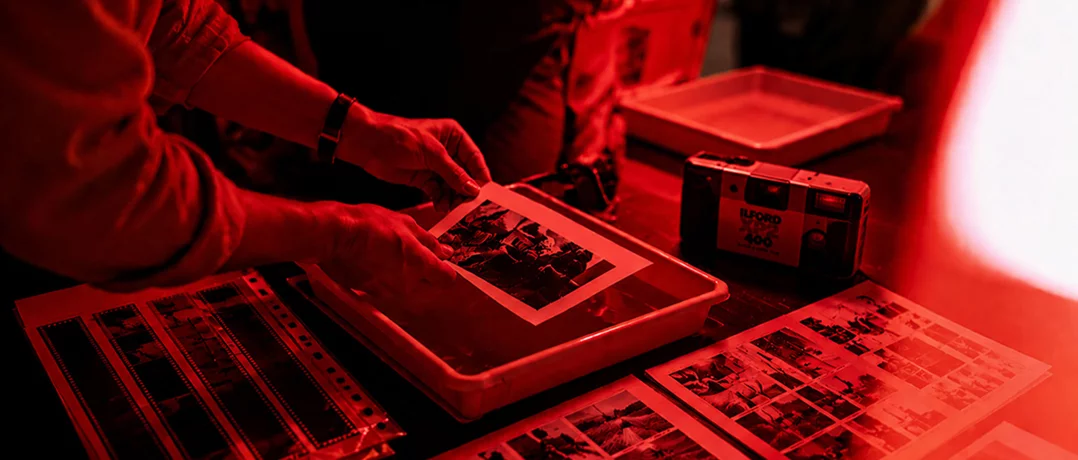
Every August 19th, the photography world pauses to mark an anniversary most people never think about, the day, in 1839, when a French government made a strange new invention free to the world. World Photography Day exists because of that single act of generosity, and nearly two centuries later, the medium it launched has traveled from copper plates to camera phones to algorithms that can generate an image without a camera ever being present at all.
A brief history of vision
Photography's roots stretch back to the camera obscura, known to the ancient Greeks, but its true birth came in 1826, when Joseph Nicéphore Niépce produced the first permanent photograph using a painstaking process called heliography that required hours of exposure. His collaborator Louis Daguerre refined that process into the daguerreotype, a polished, silver-coated copper plate exposed briefly in a camera, then treated with mercury vapor to reveal a lifelike image. Daguerre sold the invention to the French Academy of Sciences in exchange for a lifetime pension, and on August 19, 1839, the process was made public and shared freely with the world, the moment World Photography Day now commemorates.
In 1851, Frederick Scott Archer's wet collodion process replaced the daguerreotype with sharper, duplicable glass-plate images. By 1884, George Eastman had replaced heavy copper plates with flexible film, freeing photographers from toxic chemicals and cumbersome equipment, a shift that helped move photography out of professional studios and into ordinary hands.
The next great leap arrived with the digital era. Kodak engineer Steven Sasson built the first digital camera in 1975, and digital sensors steadily improved over the following decades, giving rise to DSLR and mirrorless cameras. By the 2000s, digital had overtaken film entirely, and the iPhone's 2007 arrival brought photography to the masses.
Today's frontier is computational rather than chemical. AI-powered cameras can now recognize scenes, optimize settings automatically, and even generate artistic interpretations of a photograph, while smartphones increasingly rival dedicated cameras in quality. Two centuries after Niépce's first exposure, the tools have changed almost beyond recognition, but the underlying instinct, to freeze a moment and hand it to someone else, has not.
In conversation with Rami Rizk
To understand what that instinct looks like from behind the lens today, The Beiruter spoke with Lebanese photographer Rami Rizk, known for his aerial photography of Lebanon.
Rizk's path into photography began far from any art school. "I was lucky enough to be born in a beautiful town called Jezzine, and I always liked finding photos of it online. Eventually, I thought, why don't I take some myself?" His entry into aerial work was almost accidental, born from a childhood hobby. "I used to have RC helicopters... One time, I tried putting a small spy camera on one. It was tiny, but it could carry it, and the view was incredible."
What separates his work from ordinary drone footage, he insisted, is a refusal to let novelty substitute for craft. "Just because a photo is taken with a drone and has a different perspective doesn't automatically make it a great photograph. I believe a drone photo should be just as strong as a photo taken with a regular camera. It needs to have all the elements of good photography." That standard, he said, was born from frustration. "I started wondering: why, when I use the same drone, do my photos look ordinary, even though the view itself is beautiful?" The answer pushed him toward workshops, relentless practice, and a self-description that explains much of his output. "I'm usually very obsessive about things. I don't like doing something halfway."
Lebanon itself, and Jezzine specifically, remain his central subject. "I feel that if I hadn't been born in Lebanon, I might never have discovered this passion for photography... I've already been to more than 200 villages, and there are still so many places and beautiful stories to photograph." But his relationship to that subject shifted after the 2019 revolution and the Beirut port explosion.
I always used to say that I didn't want to show the ugly image of Lebanon... But then the port explosion happened, and I started thinking, I also need to show the painful side, so that the people who brought us to this point understand that this is Lebanon too.
Despite the crises, and even a year-long pause from photographing altogether, Rizk hasn't lost the dissatisfaction that keeps him working. "I'm never fully convinced by what I photograph. I always think I could have done it better." That restlessness, he said, is precisely his point. "No person ever gives 100 percent of what they are capable of. There is always more you can give. That's what helps me love photography even more."
The same instinct with new tools
From silver-coated plates that took hours to expose, to algorithms that can render an image in seconds, photography has continually redefined what it means to capture a moment. What Rizk's story makes clear is that no technological leap, drone, sensor, or AI, replaces the discipline underneath it. Two centuries after Niépce's first fragile exposure, the tools keep evolving. The passion to capture the essence of a moment remains.
-
-

-
Jenna GeageaReporter/Writer
-
