



Three young adults reflect on how their parents’ divorce shaped their childhoods, relationships, sense of stability and understanding of love long after the separation.
How separation can shape a child's life

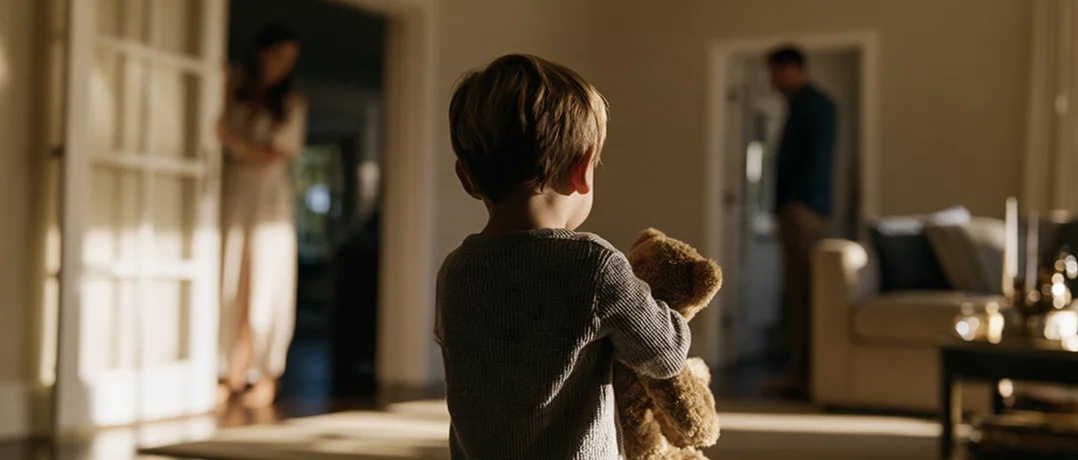
Divorce does not end with the moment two parents decide to separate. For a child, it can mark the beginning of a different childhood, one shaped by new homes, altered routines, difficult questions and absences that may only become fully understood years later. Three young adults, now looking back on their parents' separation, describe what remained long after the divorce itself was over.
The parent who was gone
Alec was eight when his parents divorced. A custody dispute ended with his mother moving to Qatar. "I was too young to really understand what divorce meant," he told The Beiruter. "I just knew that suddenly my life was changing, and I did not have any say in it."
For a child, there was only one way to read it. "It felt like abandonment. That is the simplest way I can describe it." He spent years asking why she left, and the anger lingered. "It took me a long time to forgive her, and even longer to understand that forgiving her did not mean pretending that what happened did not hurt me."
His father stayed, and he never doubted his love. But it arrived as provision rather than presence. "Sometimes a child does not need something bought for them. They need their father to sit beside them and ask how they are doing." Alec described the result as a hole that neither parent knew how to fill, "with my mother, it was her physical absence. With my father, it was an emotional absence."
Therapy and personal growth followed. Now 28, he has rebuilt his relationship with his mother, though he is honest about what remains. "I think some wounds become scars. They do not control you anymore, but they are still part of you."
Now, he would tell his eight-year-old self, "none of this is because you were not enough."
Two homes or no home
Yasmina's parents shared custody equally, and she moved between their houses every other week. On paper, it looked fair. "Technically, I had two homes," she explained. "Emotionally, I never really felt like I had one."
The routine of packing, leaving and unpacking wore her down. "You have different routines, different rules, different environments. You are always leaving something behind and going somewhere else." Stability, she realized, is something you only notice once it is missing. "I wanted one place that felt completely mine."
She loves both parents, yet she feels she received only fragments of each. "It is almost like I got two halves of two different people, but I never got the full experience of having both parents together." She is careful to say that neither parent failed her. "Nothing is necessarily wrong with either parent individually. It is the combination of what was missing."
The constant movement also made her unusually attuned to other people's feelings. "You become aware of things children should not have to think about," she said, like whether one parent will be hurt if she spends more time with the other.
At 22, she sees the imprint clearly. "I want consistency. I want to know where I stand with people." Her hardest part comes down to one sentence, "it was feeling like I never had one complete home."
The lessons children absorb
Natasha lived with her mother after the divorce and saw her father about once a week, between his work trips. She understood why he travelled. As a child, though, only the result registered. "I just knew that he was not there."
What she missed were the small, ordinary moments. "There are certain bonds that are built through everyday life, having breakfast together, coming home from school, talking about your day." She does not blame him but she makes a distinction: "Understanding the reason does not erase the effect it had on me as a child."
She also knew her father had cheated on her mother, and that knowledge shaped her view of love. "I started associating relationships with betrayal. For a long time, I had this idea in my head that maybe every man would eventually cheat." Her mind could argue otherwise, but her feelings took longer to follow. "You can know logically that one person's actions do not represent every person in the world, but emotionally, it takes much longer to learn that."
With time, she learned to separate the divorce, the betrayal and the absence, which had once blurred into a single grievance. What the divorce left her with was a set of questions. "About love, loyalty, trust and whether people stay."
What stays
Adults tend to experience divorce as an event, with a date, a settlement and a new address. Children experience it as a climate. It changes the weather inside their homes and inside themselves, and they carry that weather into adulthood, into friendships, into romantic relationships, into what they expect from the people who love them.
What these young adults describe is the distance between being loved and feeling secure. Love that arrives in pieces, in packed bags or in gifts or in weekly visits, can still leave a child feeling that something essential is missing.
But that work is rarely done by the child alone, and it should not have to be. What helps children most is not a perfect family structure. It is reassurance that the break was never their fault, consistency they can rely on, and a reminder that they are enough.
-
-

-
Jenna GeageaReporter/Writer
-
