



For years, Hezbollah has repeatedly dragged Lebanon into wars it did not choose, fought in the name of the "Axis of Resistance," the "Unity of the Fronts," and Iran's regional agenda. The Beiruter compares the human and economic toll of the wars of 2006, 2024 and 2026, while security analyst Riad Kahwaji explains that “Hezbollah suffered tremendously and its situation is irreversible”
In numbers, Hezbollah’s wars on Lebanon

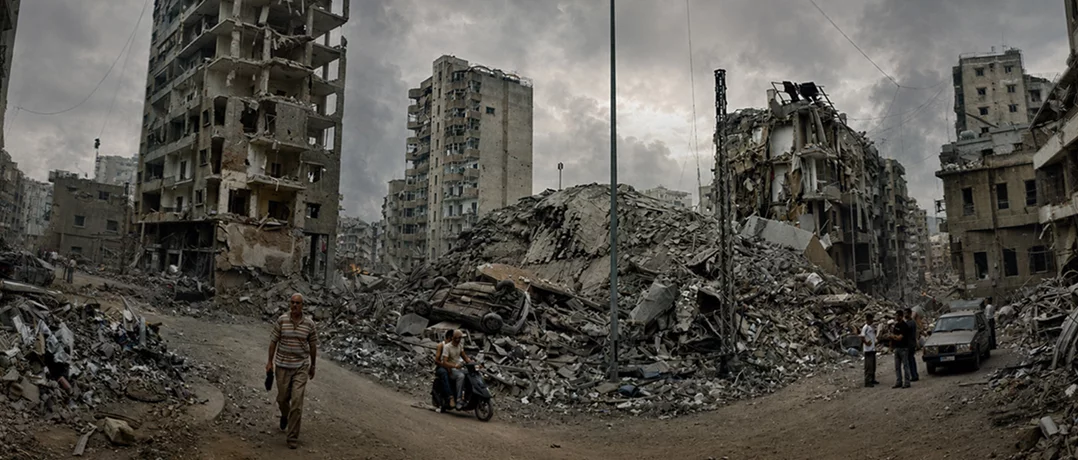
For years, Hezbollah has repeatedly dragged Lebanon into wars it did not choose. Fought in the name of the "Axis of Resistance," "Unity of the Fronts," and Iran's regional agenda. The slogans changed but the outcome never did. Thousands died, billions were lost and a nation pushed deeper into collapse.
Catastrophic numbers
What many Lebanese have long described as “the wars of others” on Lebanese soil has left the country exhausted. The human, economic and social costs have reached staggering levels.
The July 2006 war. According to figures provided to The Beiruter by Information International, the conflict inflicted approximately $5.3 billion in damages.
Infrastructure: $900 million
Housing: $2.2 Billion
Commercial and industrial enterprises: $470 million
Agriculture, environmental damage and fires: $450 million
Rubble removal and related expenses: $50 million
Indirect economic losses: $1.2 billion
The human toll was equally devastating:
Approximately 900 deaths and 4000 injured
Mass displacement nearly 600.000 civilians
The 2024 War “In Support of Gaza”. Eighteen years later, the scale of destruction proved even greater.
The conflict generated nearly $9.97 billion in losses:
Infrastructure: $570 million
Housing: $4.25 billion
Commercial and industrial enterprises: $470 million
Agriculture, environmental damage and fires: $900 million
Rubble removal and related expenses: $390 million
Indirect economic losses: $3.38 billion (from October 8, 2023, to September 16,2024: $6 million per day, equivalent to roughly 10% of the GDP, resulting in $2.06 billion in losses over 343 days.
From September 17 to October 31, 2024: $30 million per day, equivalent to nearly 50% of the GDP, generating an additional $1.32 billion in losses over 44 days.)
The human cost was severe:
Approximately 1.347 deaths and 2.865 injured
Mass displacement nearly 1.2 civilians
The 2026 War. The latest conflict has pushed Lebanon even deeper into crisis.
According to Information International, the war has caused approximately $10 billion in losses from March 2, 2026, until today. Combined with the economic damage accumulated between October 8, 2023, and March 1, 2026 estimated at $13 billion. The total cost reaches roughly $23 billion.
According to Lebanon’s Ministry of Public Health, between March 2 and July 9, 2026:
The number of casualties reached 16.525, 12.204 injuries and 4.321 death
In 2026, The confrontation expanded beyond Lebanon into a broader regional conflict involving Israel, Iran and the United States, and targeting Arab countries.
Once again, Lebanon became an active battlefield in a conflict whose strategic decisions were taken beyond its borders and the consequences were catastrophic. These figures represent far more than destroyed infrastructure. They reflect generations of lost investment, businesses that never reopened, families forced into displacement, children whose education was interrupted, and a country repeatedly denied the opportunity to rebuild
After three wars, the question facing Lebanon is no longer only what these conflicts have cost the country, but whether they have fundamentally altered Hezbollah itself.
Security analyst Riad Kahwaji believes they have.
“Hezbollah suffered tremendously and its situation is irreversible” security analyst Riad Kahwaji told The Beiruter.
According to Kahwaji, the group's military, financial and strategic position has been transformed by a series of regional developments that extend well beyond Lebanon. Chief among them is the collapse of the Assad regime in Syria, long considered Hezbollah's strategic lifeline and Iran's main corridor for transferring weapons and military support.
"Syria was the bridge that allowed Iran to build and strengthen Hezbollah over the years," he said. "The stronger and more stable the new Syrian government becomes, the more irreversible Hezbollah's decline becomes."
He also points to a shifting political landscape in both Beirut and Damascus. With Lebanon's new leadership moving closer to Western allies and Syria increasingly distancing itself from Tehran, Hezbollah finds itself more isolated than at any point in its history.
According to Kahwaji, the group is now largely dependent on its remaining internal resources, while external supply routes continue to shrink under tighter border controls and growing international pressure.
"Financially, there is a strong chokehold by the Americans that continues to tighten," he said.
Militarily, he argues, Hezbollah has sustained losses that cannot easily be reversed.
"A significant portion of its weapons arsenal has been depleted, and its manpower has also suffered. That is why we are increasingly seeing foreigners and underage recruits on the front lines."
The changes are not limited to the battlefield. Kahwaji says discontent is also emerging within Hezbollah's traditional support base, while Iran, its principal backer, continues to face mounting military and economic pressure.
"Regionally, everything is changing," he said. "Iran is being weakened, and the stronger the Lebanese state becomes, the weaker Hezbollah becomes."
Yet Kahwaji cautions against expecting a swift resolution.
In his view, the confrontation is likely to continue intermittently until at least late 2027, shaped by broader regional dynamics, including developments in Israel, Iran and the United States.
"This is no longer only about Lebanon," he said. "The regional conflict is evolving, with new priorities emerging. But one objective has become increasingly clear: stripping Iran of its Lebanese card while minimizing the repercussions inside Lebanon."
-
-

-
Joanne NaoumHead of Political Desk
-
